
It's Mother's Day. A day which for the last 10 years has been pretty hard for me. I'm not that interested in becoming a mother myself so that's not where I carry my pain. But 10 years ago in 2016 we lost both my own mother, Marilyn; and her mother, Shirley. Joining them was my paternal grandmother Pat in late 2015.
Meaning I lost all my family matriarchs within a period of about 8 months. It was rough. And today hasn't been the same for me since. So if today is a sad day for you too, I understand.
But 2026 marks the 10th anniversary of both my mother Marilyn and my Gran Shirley's passing. And it's Mother's Day.
For the last few years I've spent a lot of time researching my family history. That includes documenting our family's recipes here on this website.
But I've realised recently that I've never properly introduced you to these women whose lives shaped my own in ways I didn't even know about until recently.
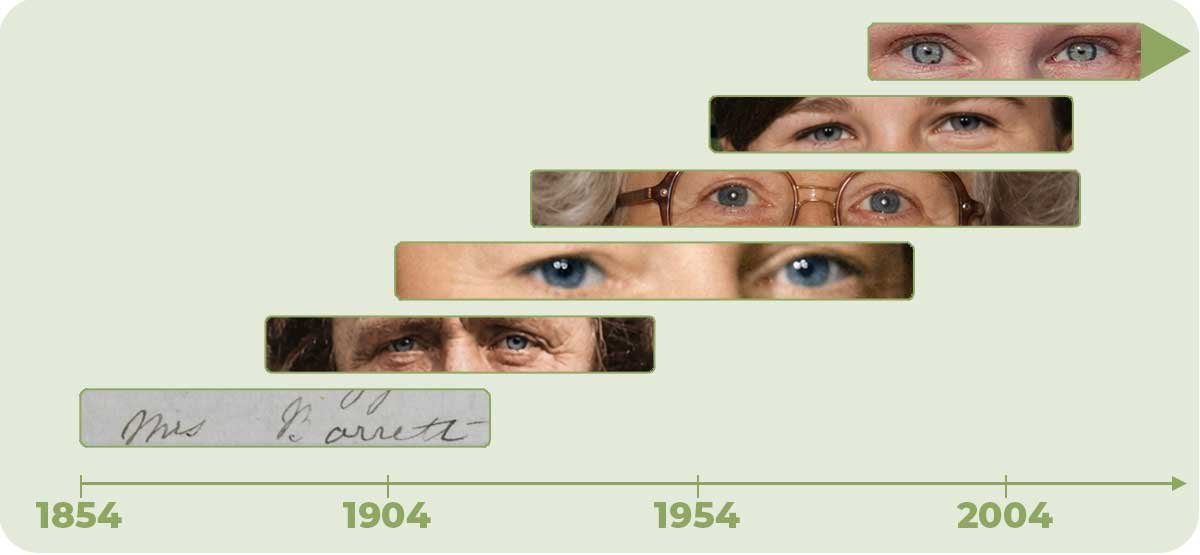
So I've been working with a few family members to introduce you to my mother's matrilineal line. All the way back to the woman who immigrated to Aotearoa-New Zealand nearly 150 years ago, in 1876.
My mother Marilyn
Marilyn Lesley Fulton was born in Napier in April 1956.
She grew up in Napier, and later moved with her family to the Māhia Peninsula, where her father (my Popa Les) had decided to build a motor camp.
Until beginning high school, she lived in a camp that was both under construction, and in-business.
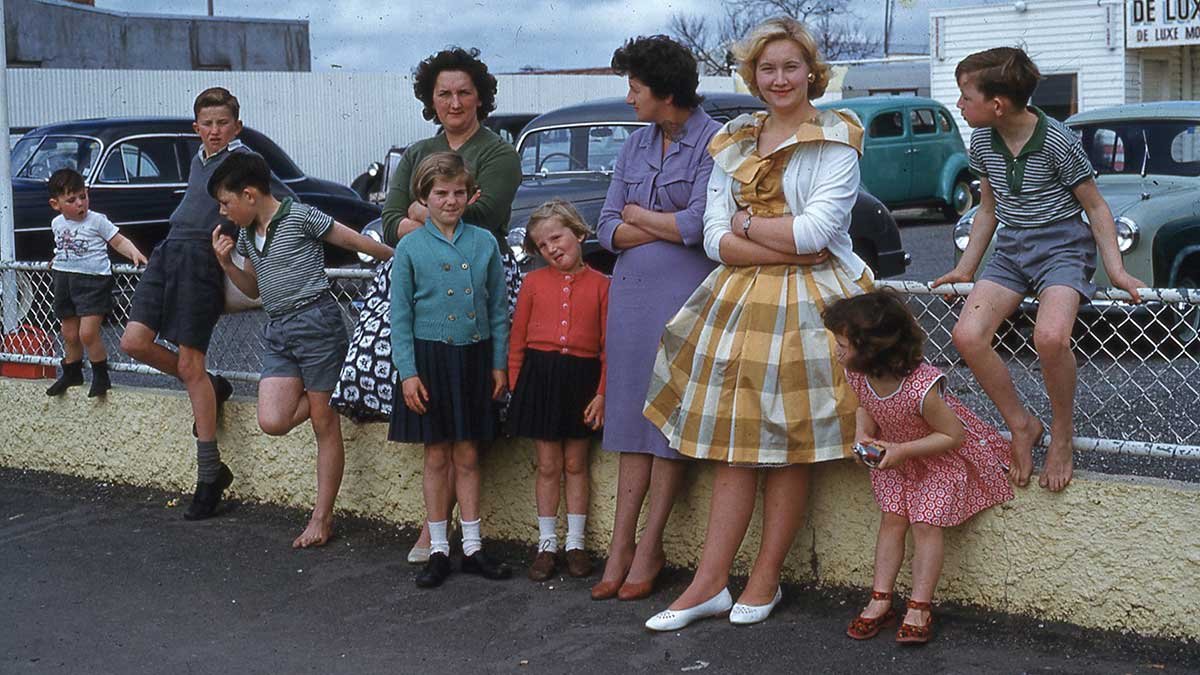
Marilyn (center in red) with her sister Joce (teal) and mother Shirley (purple). Her elder brother Rob is leaning against the fence in grey uniform. Napier, early 1960s. From the collection of Pat Fulton. Original colours, no AI.
Marilyn attended Opoutama Primary School, working weekends and holidays in the camp shop with her sister and cousins.
In 1970, she left to begin boarding at Hewett House at Napier Girls' High School.
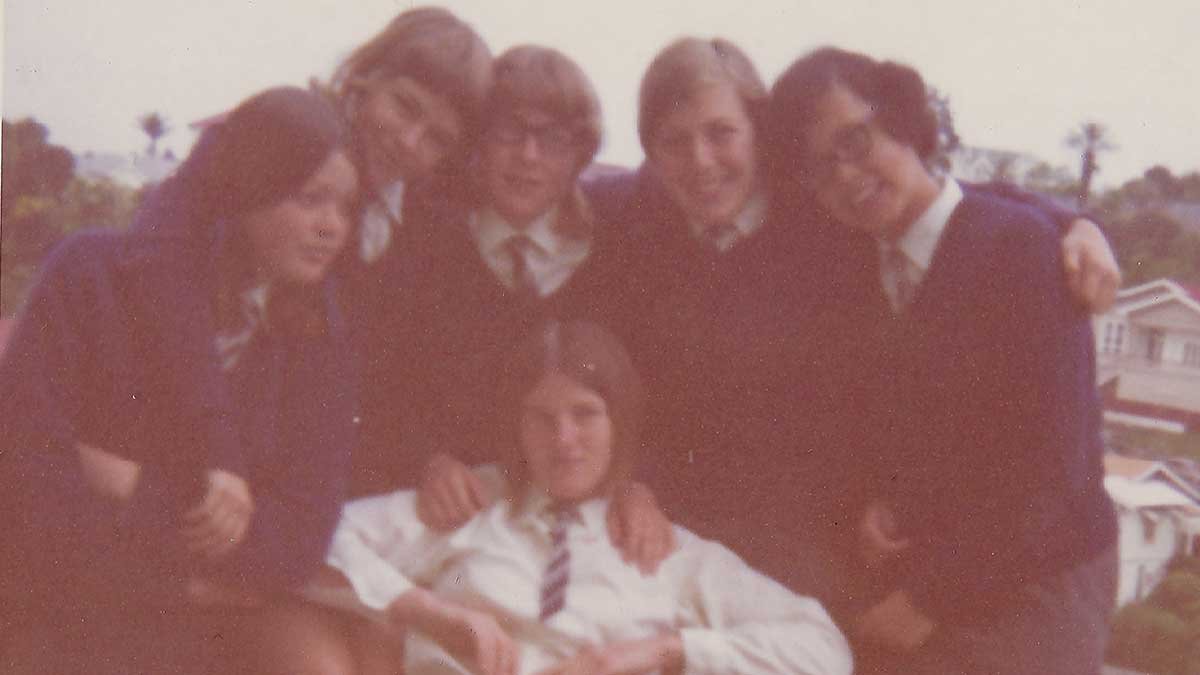
Marilyn (front) with friends from Napier Girls' High School 1970-71.
She lasted two years, leaving at the end of 1971, aged 15.
Her school reports show she was engaged and got pretty good grades to begin with. But as the terms wore on, you can see signs of disengagement in her grades. As her daughter I know she struggled with probable-dyslexia and being-a-teenager stuff.
After leaving school, she worked on fishing boats and in factories. She spent some time living in Christchurch, and rode a motorcycle.
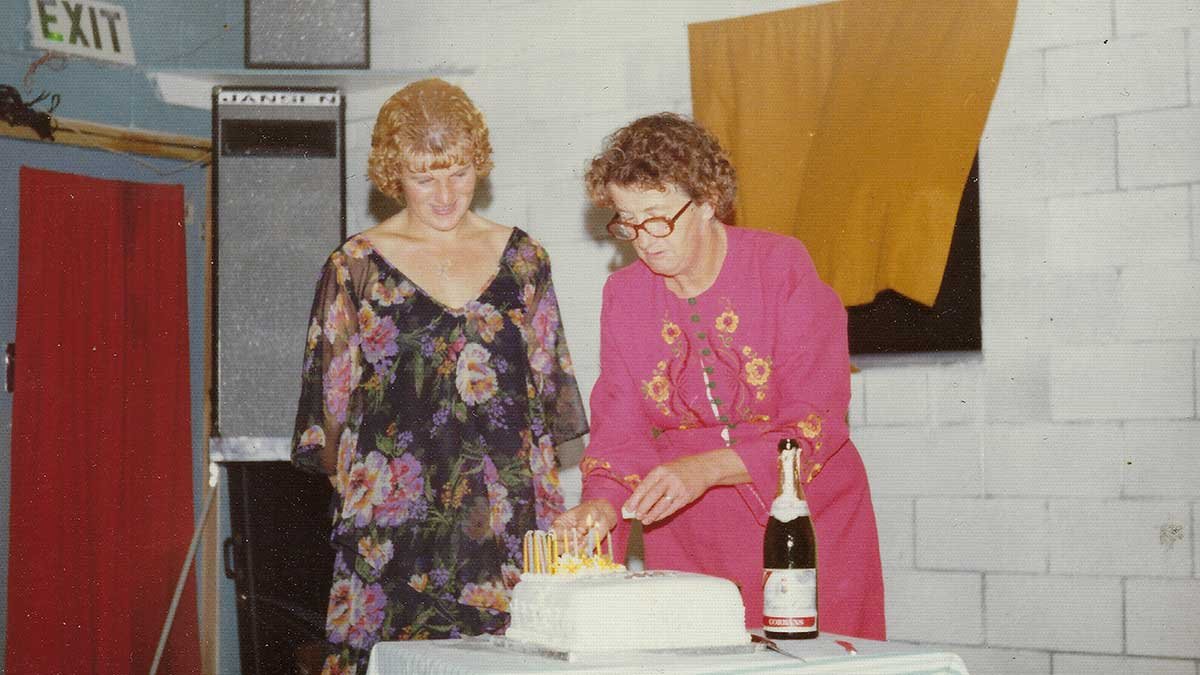
Marilyn with her mother at Marilyn's 21st birthday, 1977.
In February 1980, Mum bought her own house on Moeller Street in Napier. Documents show she received a $5,000 loan from her father, on top of a $3,900 deposit she brought herself.
Including legal fees and disbursements, the house cost her $18,978.86 ($126,608.94 in 2026 dollars).
She was working at either the Rothman's or Watties Factory and she had flatmates to help cover the mortgage. That's how she met my Dad.
He was hunting for the Forestry Service and needed a place for when he was out of the back-country where he was working.
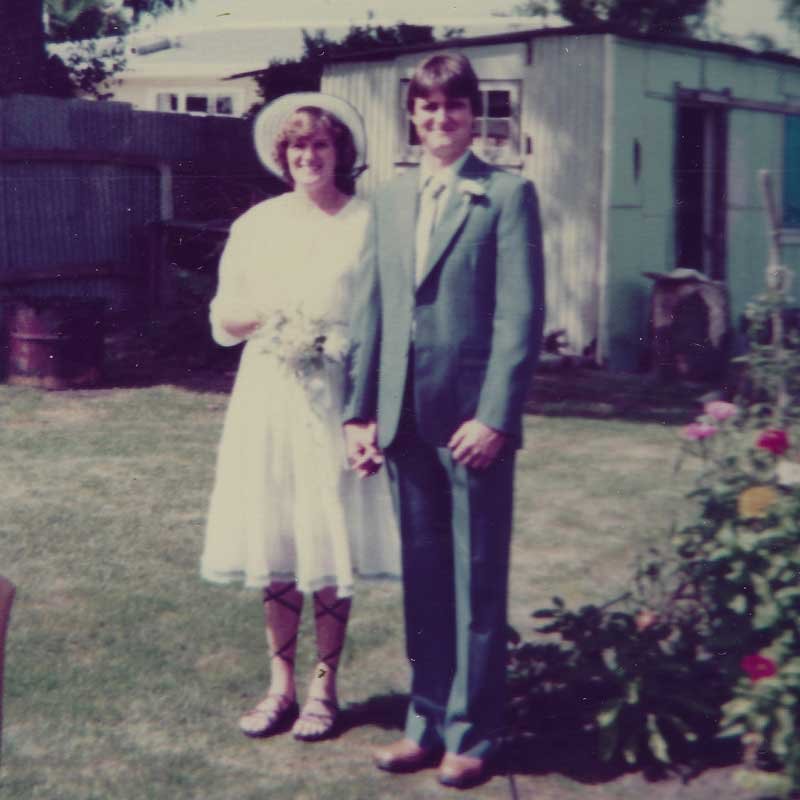
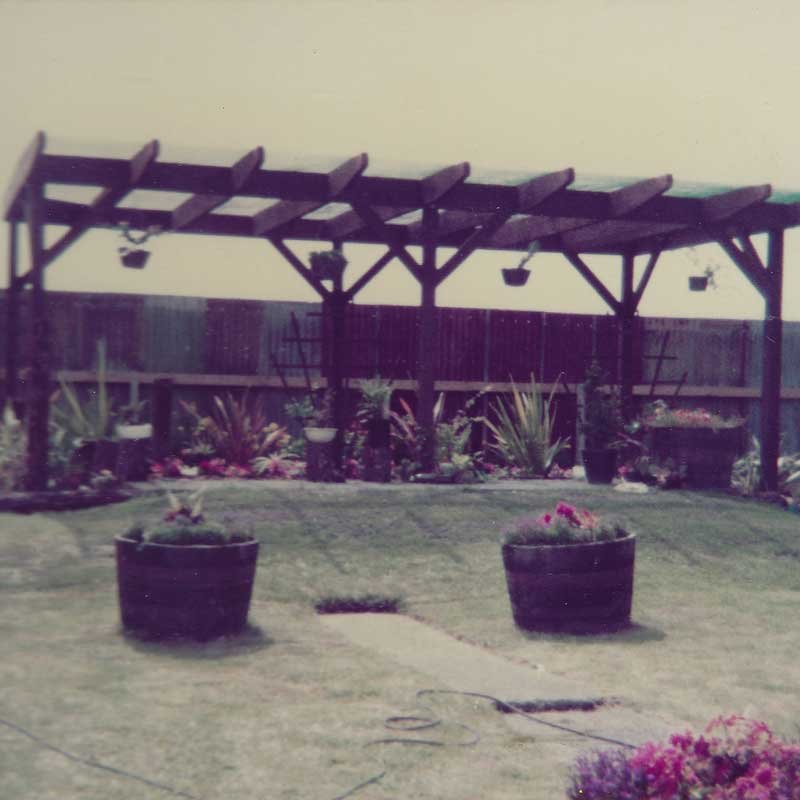
The wedding of Chris Jenkins and Marilyn Fulton in March 1982 was held in the back yard of the Moeller Street house.
Mum and Dad married in March 1982, then moved to Palmerston North (where they kept chickens). I was born later that year, and my brother joined us three-and-a-bit years later. Not long after that, we moved to Rotorua where we both grew up.
In Rotorua, Mum explored her entrepreneurial and creative sides. She went back to school and completed School Certificate in wood-working. Then she turned that skill into a home-crafted toy business making wooden puzzles and mobiles, which she sold at the local craft market.
The puzzles were sold under the name "Timeless Toys" and will have the phone number (07) 357 4302 stamped on the back. If anyone out there happens to have one, I would love to extend the family collection and would be happy to buy them off you.
Alongside the business, Marilyn maintained (and then didn't really maintain) a huge vegetable garden. She was a great cook, and that vegetable garden grew us.
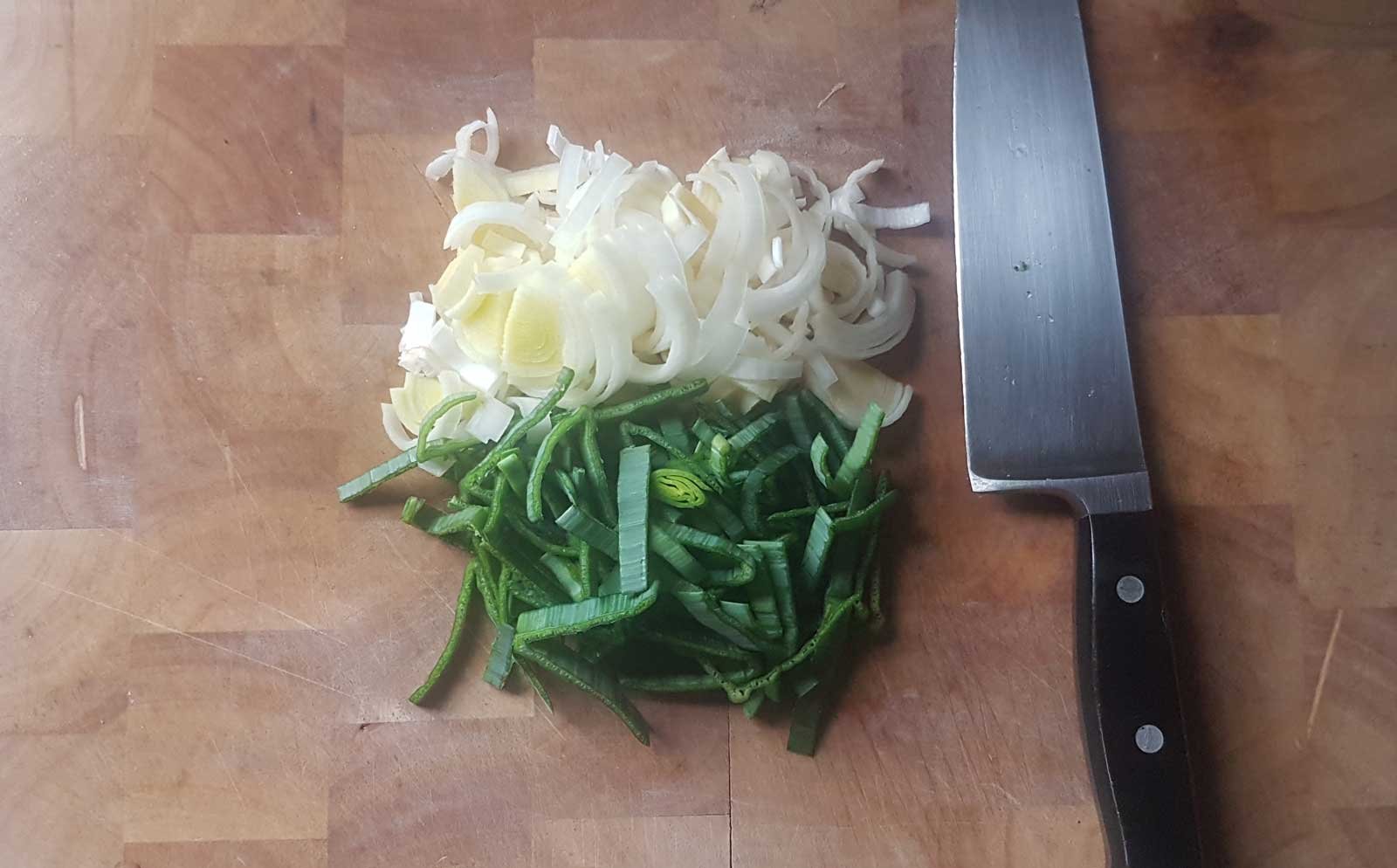
Marilyn's cheesy leeks
The ultimate winter comfort food, in my humble opinion. Mum's cheesy leeks.
Later on, after selling that business (and after I'd left home to go live my own life), Mum went back to school again and earned a Bachelor's degree in Applied Social Science with a focus on adventure therapy.
Dad got a new position in Whangārei in 2004. After a few years there with him and working as a social worker in the community, Mum left on her own adventure.
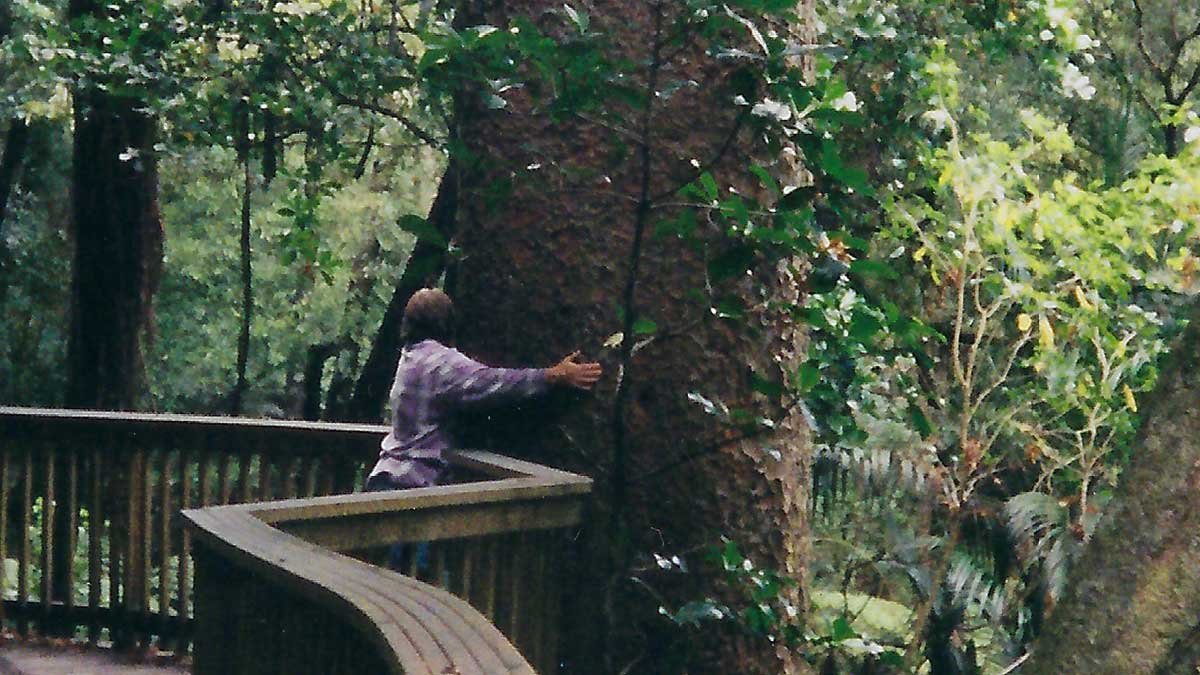
They amicably divorced and Mum moved into a house truck, travelling about the country and just living her freedom.
Along the way she scouted potential locations to build a dream a lot like the one I'm living today, but she never made it that far. I'm the one living that dream alone today.

In 2015, Mum spent most of the year packing up the family house in Māhia. She held garage sales and aggressively cleared out her parent's home to prepare it for sale in the new year.
In early December, she said goodbye to me in Wellington, then jumped on a ferry to explore the South Island properly.

Two months later on 31 January 2016—in a housebus parked at Franz Josef—Marilyn had a heart attack and passed away, aged 59.
Marilyn's mother Shirley
Shirley Kathleen Warman was born in Whangārei in 1927.
As a blog reader, you might know of her as "Gran Shirley", the wonderful woman who brought us so many of the family recipes which are beloved by readers of this website.

Gran Shirley's sponge-top pudding
A flexible, economical, and delicious way to use fruit and feed the family.
It's thought she was in Napier for the 1931 earthquake, and she lost her father to post-operative complications when she was six.
Everything I've learned indicates she grew up in a house filled with love, despite some bitter tragedy.
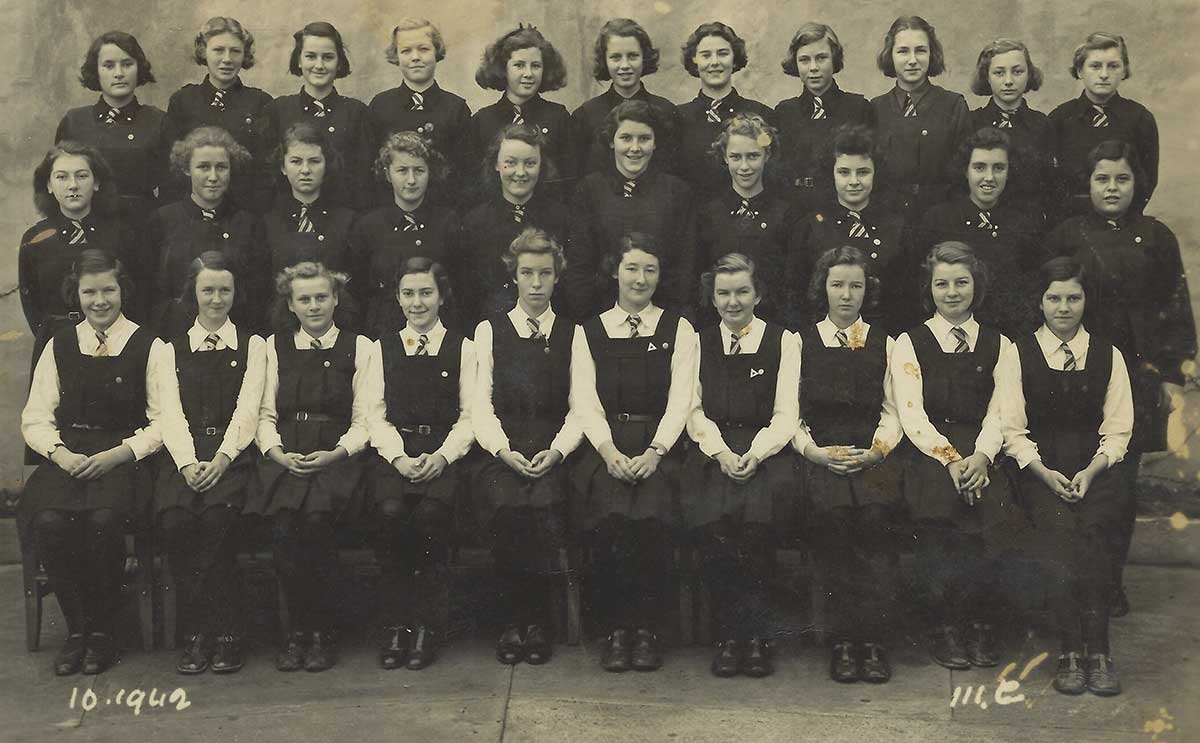
Shirley is in the middle row, fourth from the left (click to expand).
She attended Napier Girls' High School, though we are unsure as to how long for.
In the above photo she is wearing the winter uniform of a dark navy serge tunic; (optional) dark navy flannel for warmth; long black woollen stockings (held up by a garter, as was standard at the time); black leather lace-up shoes; and the tie, which NGHS pupils still wear today.
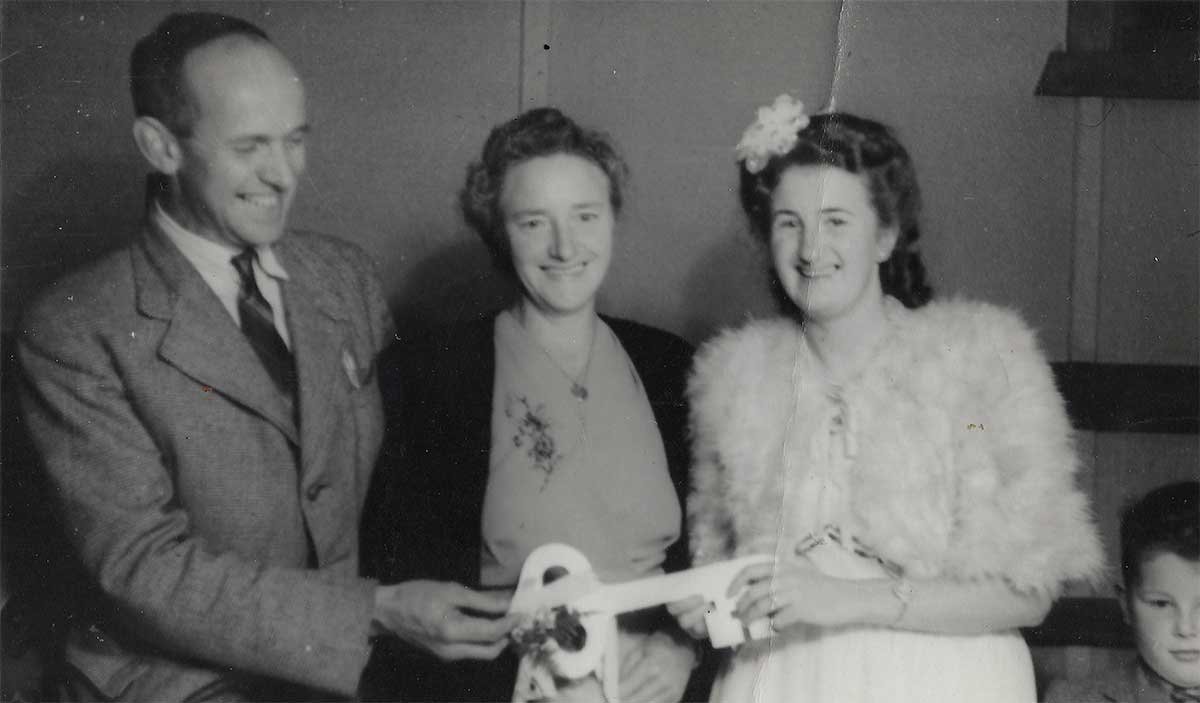
Jack and Tot Retter (Shirley's step father and mother) present Shirley Warman with a key on her 21st birthday in June 1948.
After leaving school, Shirley worked at Woolworths—a department store, rather than a supermarket—as a shop assistant before she was married.
Shirley married Leslie ('Les') John Fulton in October 1948.
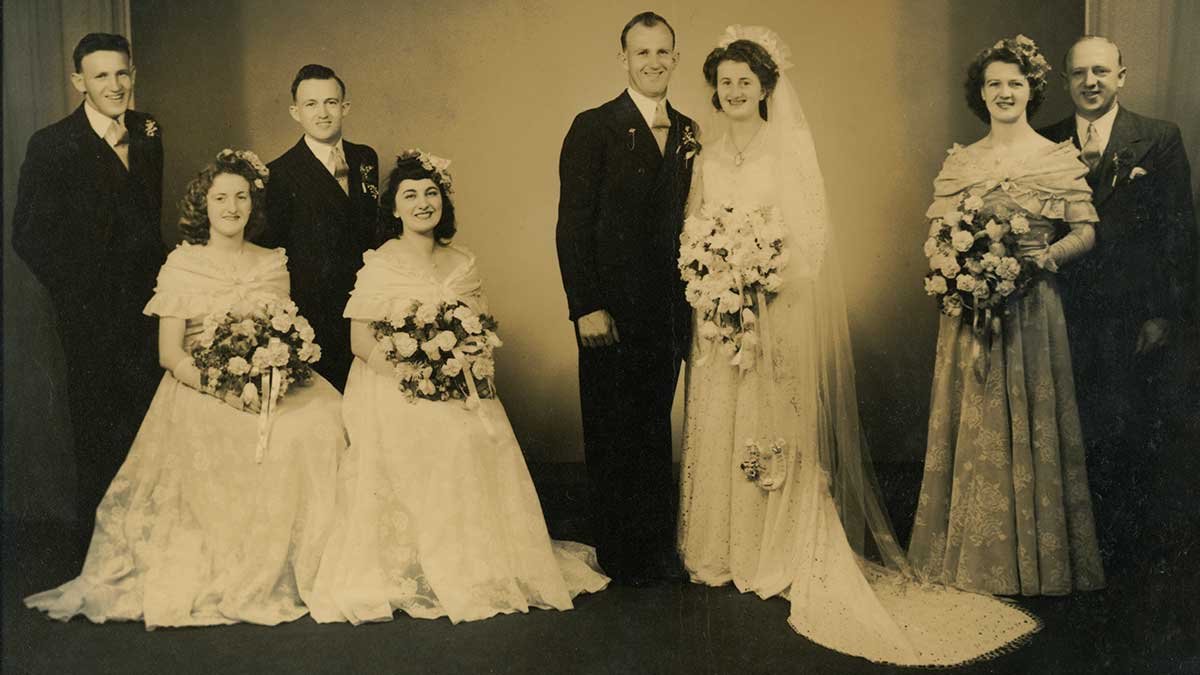
From left: Alan Fulton, Jean Warman, Ron Fulton, Gloria Montaperto (Shirley's best friend from NGHS), Leslie Fulton, Shirley Fulton (nee Warman), Edith Johnson (nee Fulton), and Harold Fulton, October 1948.
They had three children: my Uncle Rob, Aunty Joce (both of whom occasionally appear in the comments of this website), and my mother Marilyn over the next 8 years.
For the first few years of marriage they lived in Greenmeadows near Napier. They had pets, both dogs and cats. Gran's love of animals shone through in people's recollections. She also sold eggs to her neighbours from a flock of backyard chickens.
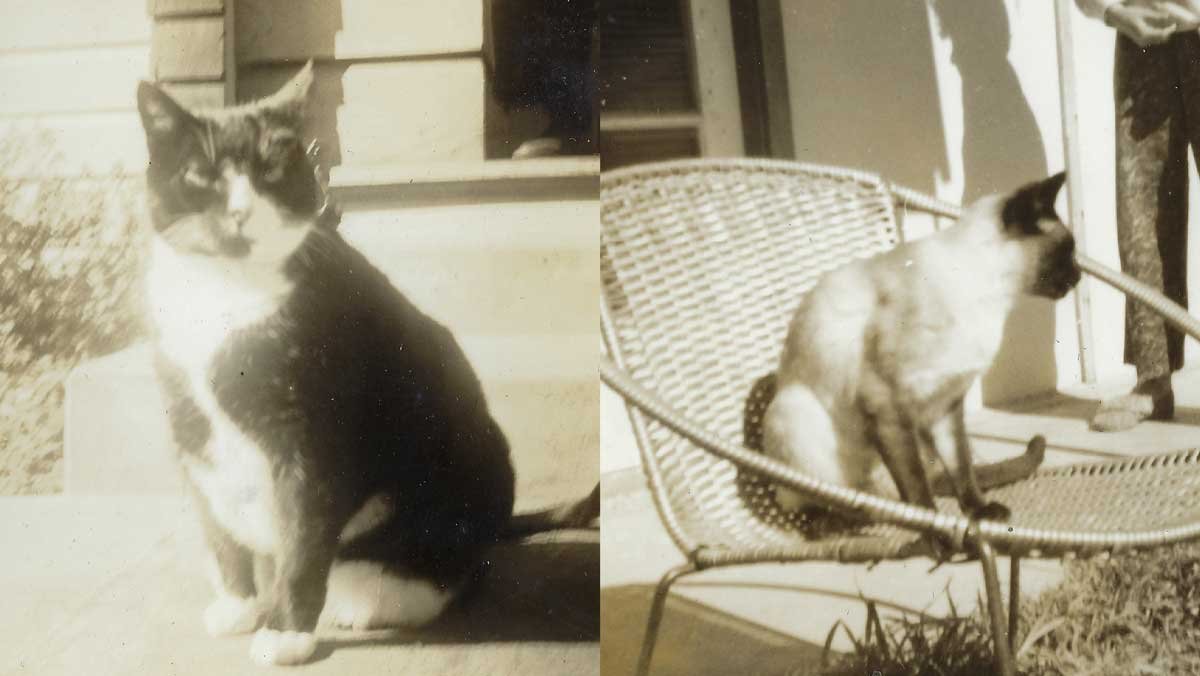
Left: Poddy, the cat Shirley had when she was married. Right: Sheeba, who lived so long even I got to meet her!
Les worked during the 1950's and 1960's delivering fruit and veggies, and later as a wool buyer. That took him away from home a lot.
Shirley held down the fort at home while he was working, and used it as an opportunity to cook the things Les didn't like, like rice risotto.
It was on one of those trips that Les 'discovered' Māhia. In 1963, he signed a 33-year lease on a patch of land where he wanted to build a motor camp.
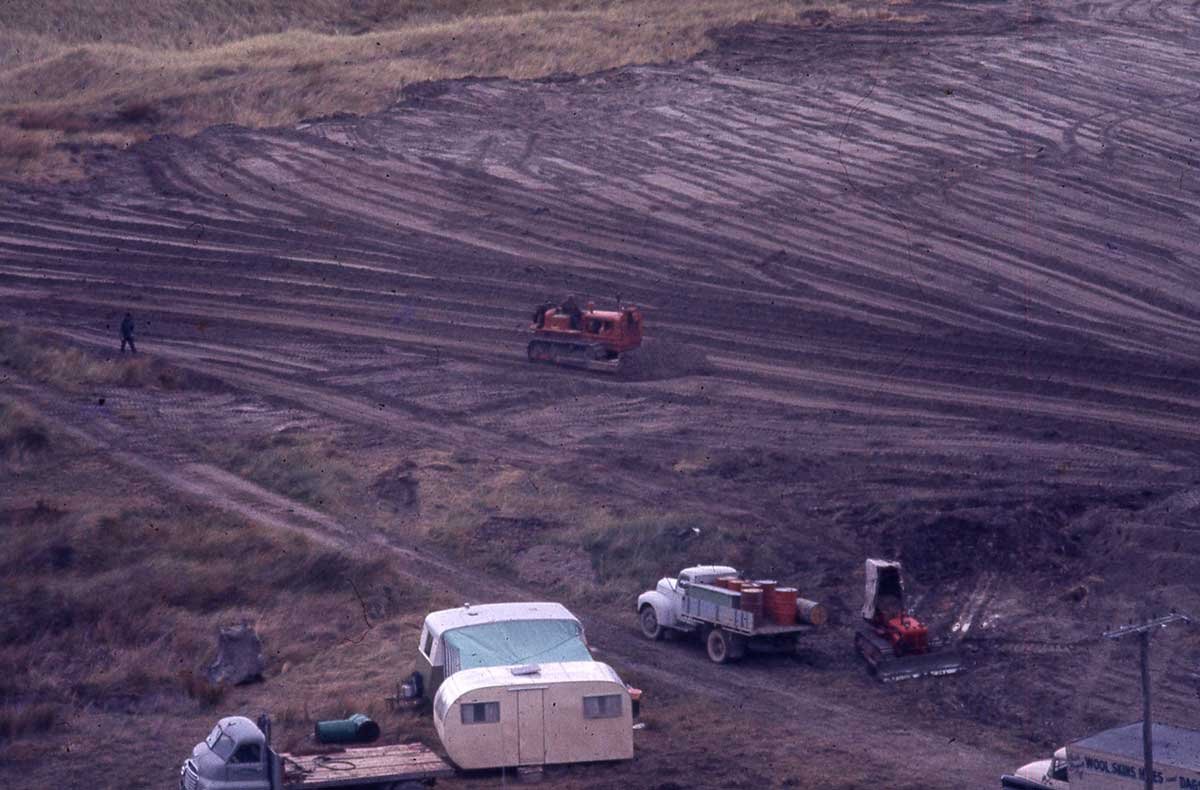
A bulldozer on the dunes at Māhia, around 1963. In the foreground is the caravan the family slept in on weekends. From the collection of Pat Fulton. Original colours, No AI.
And that's exactly what he did. With the help of their wider families, Shirley and Les built what is now the Māhia Beach Resort.
For the first year, the family commuted between Napier and Māhia. Two large tents were erected on-site for both Les and Shirley's family, and the family of Ron—Les' younger brother. There was a caravan which acted as the living space and kitchen.
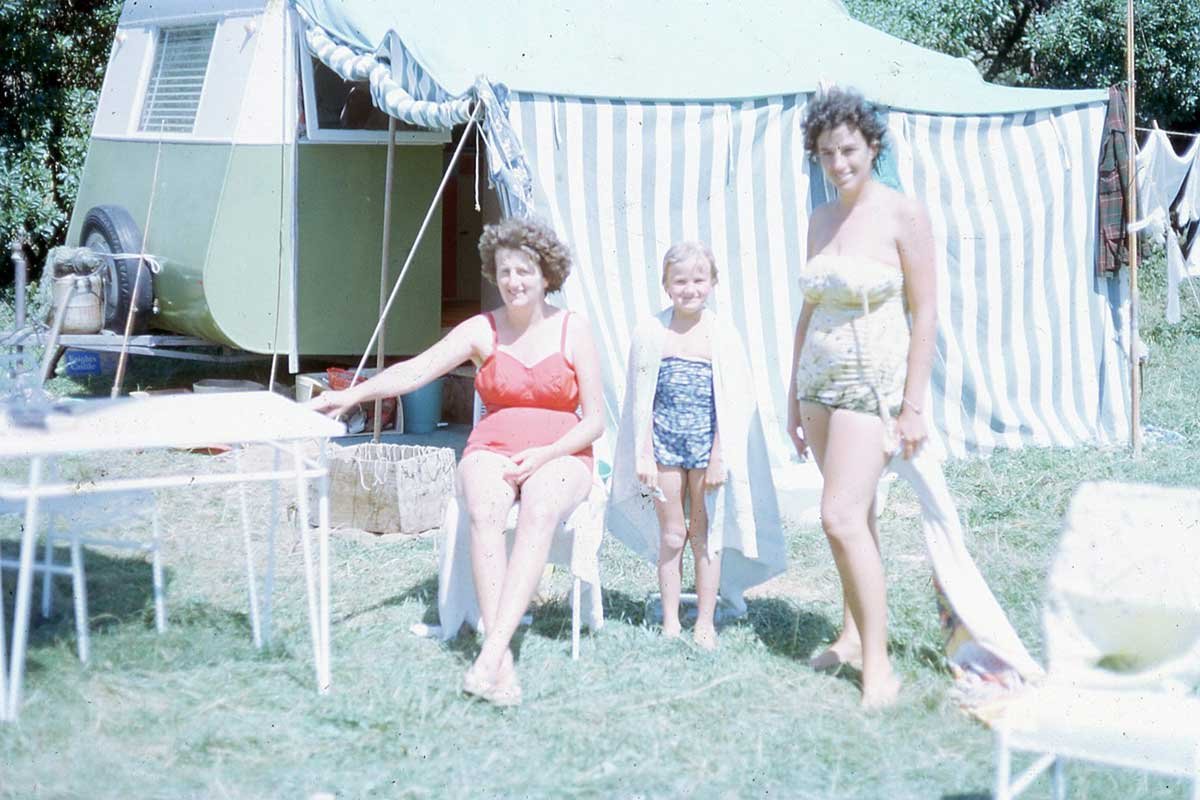
Shirley Fulton, Marilyn Fulton, and Pat Fulton (nee Joines) in front of their caravan at Māhia, mid-1960's. From the collection of Pat Fulton. Original colours, no AI.
After bulldozing the dunes, they built bathroom blocks; a communal kitchen; a shop with an office and a family home; two cabin blocks; and two motel blocks over the next 20 years.
Shirley helped with the organisation of the place. One delicious detail was a proto-spreadsheet Gran used to maintain each summer to keep the bookings in order.
Shirley created what is described as "a huge, highly coloured cardboard grid" listing every room and tent site. It ran from 10 December to 10 February and took at least 3 large sheets of cardboard.
She wrote the bookings into her grid and somehow managed to keep it all straight every busy summer camping season. It was described as "easy to find bookings", and sounds like something that takes a special kind of genius to design and maintain to me.
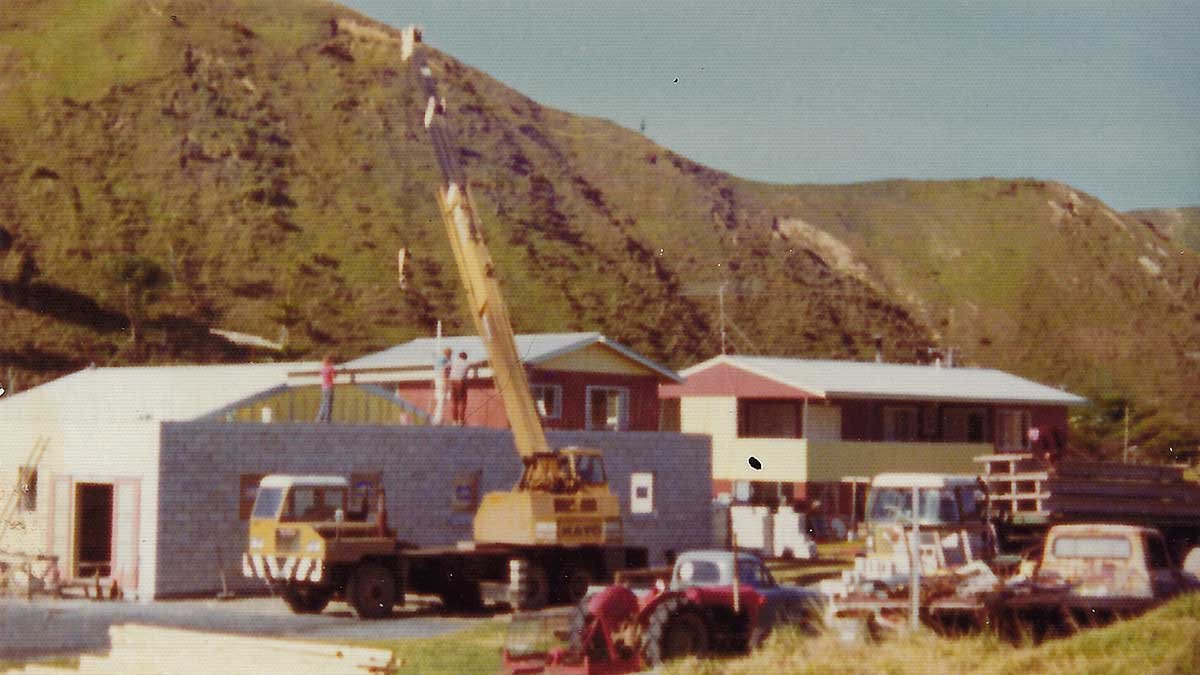
Building the 'ocean view' motel block at Māhia. From the collection of Pat Fulton. Original colours, No AI.
Shirley hired help with cleaning over the busy season, but in the off-season she did almost-everything.
She was the camp cleaner, ran the shop, and managed all the bookings.
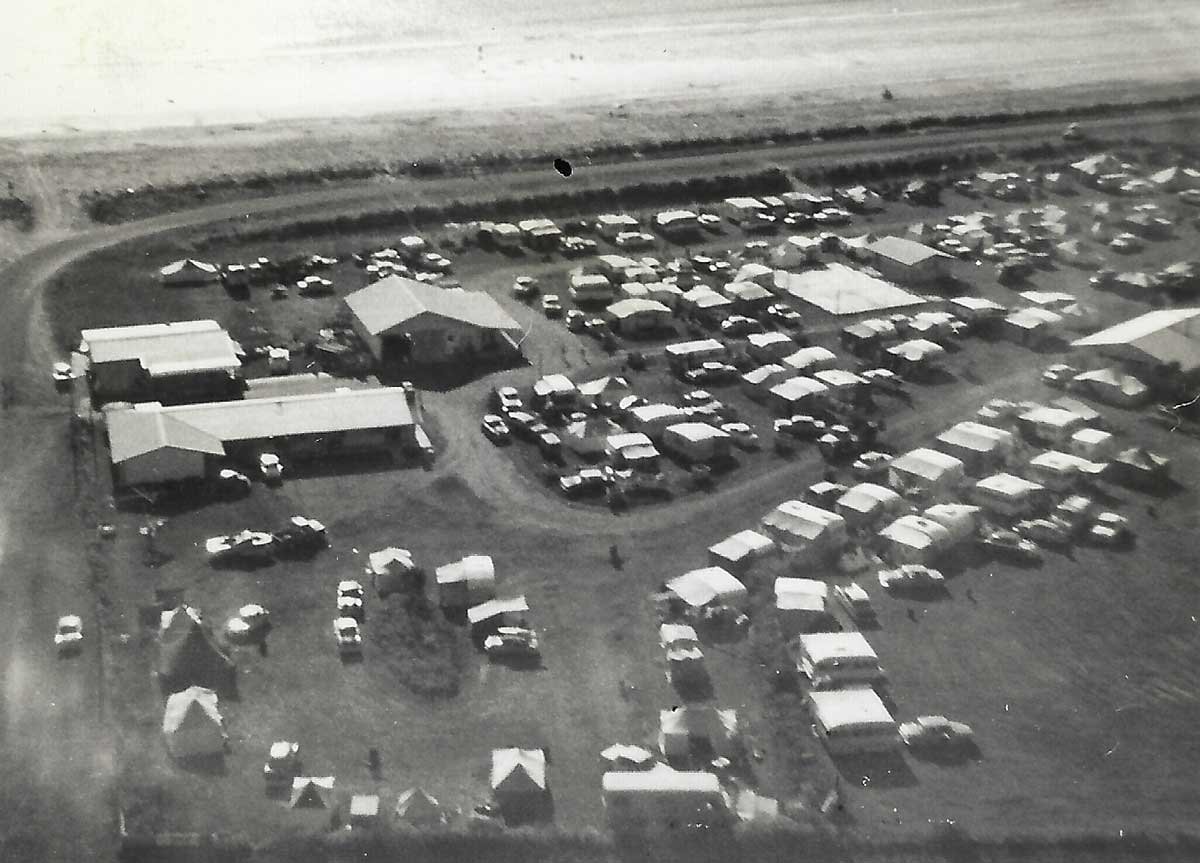
Māhia Beach Resort in the summer season 1968-69.
Les worked as a cray-fisherman in the off-season to help support the family, but was in charge of cleaning the camp bathrooms and kitchen, as well as guiding people to their campsites, and driving the train.
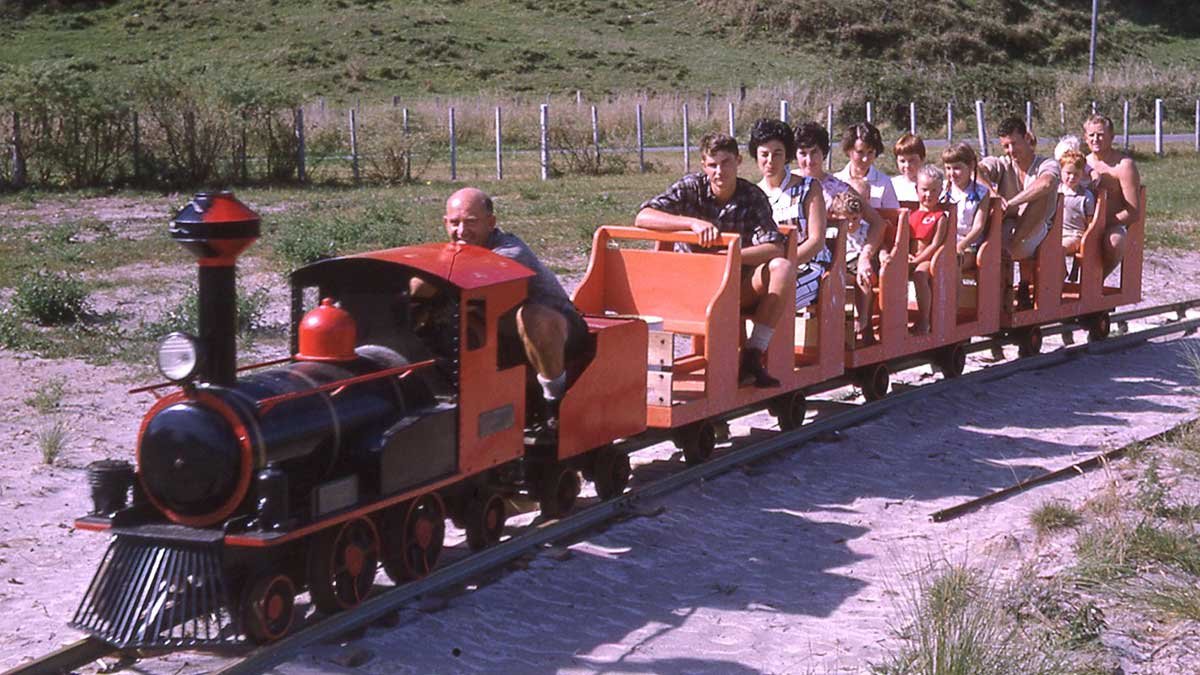
Les driving the miniature train at the Māhia Holiday Park.
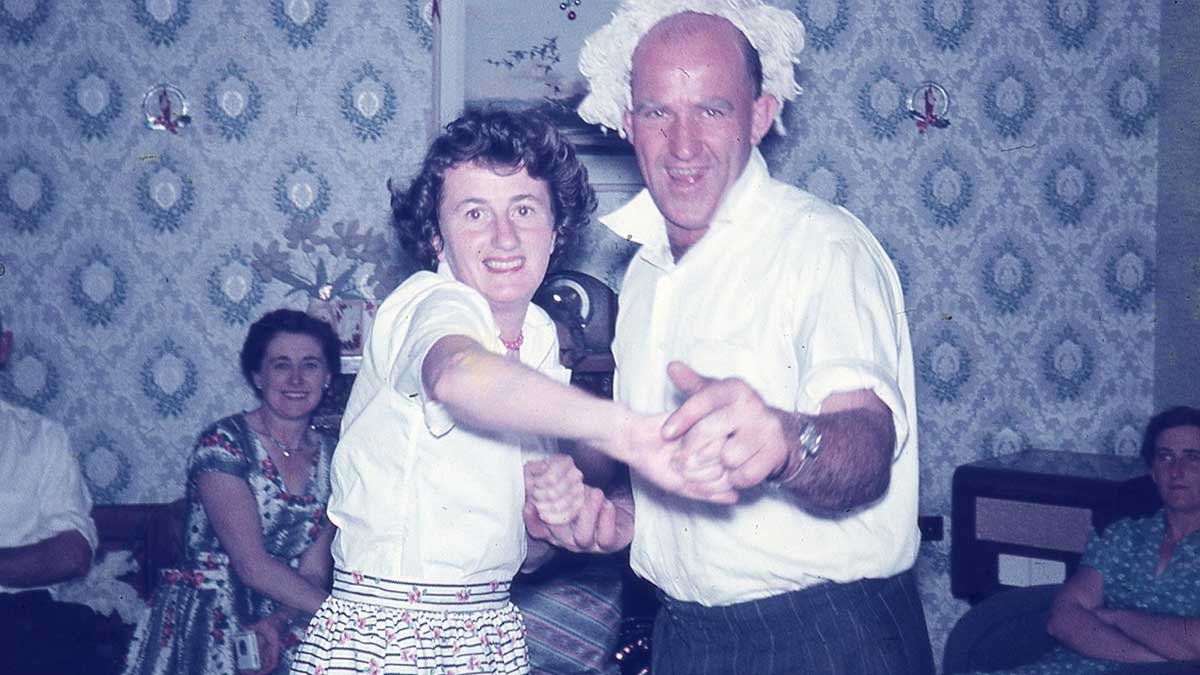
Shirley and Les enjoying their lives.
Probably both 1960s. From the collection of Pat Fulton. Original colours, no AI. Click to expand.
They loved to host, and a good get-together. I remember Popa would hold court while Gran interjected with corrections and made sure everything ran smoothly in the background. That is a pattern I believe the two of them had maintained for most of their marriage.
In the early 1980's Les and Shirley leased out the camp, and retired into a house they'd built themselves down the road.
Known by family as "the window house", it was designed and built around a set of windows Les had picked up for a bargain after the original commissioner had to cancel their build.
This is the period of their lives, and the house, I am personally more familiar with.
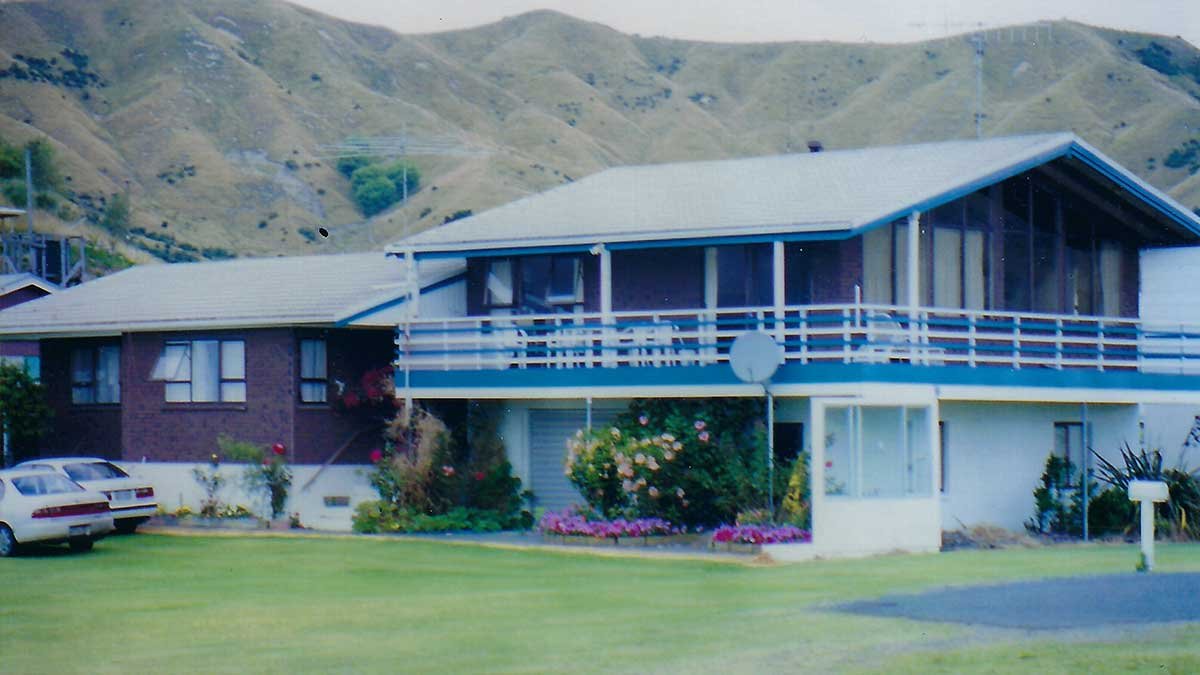
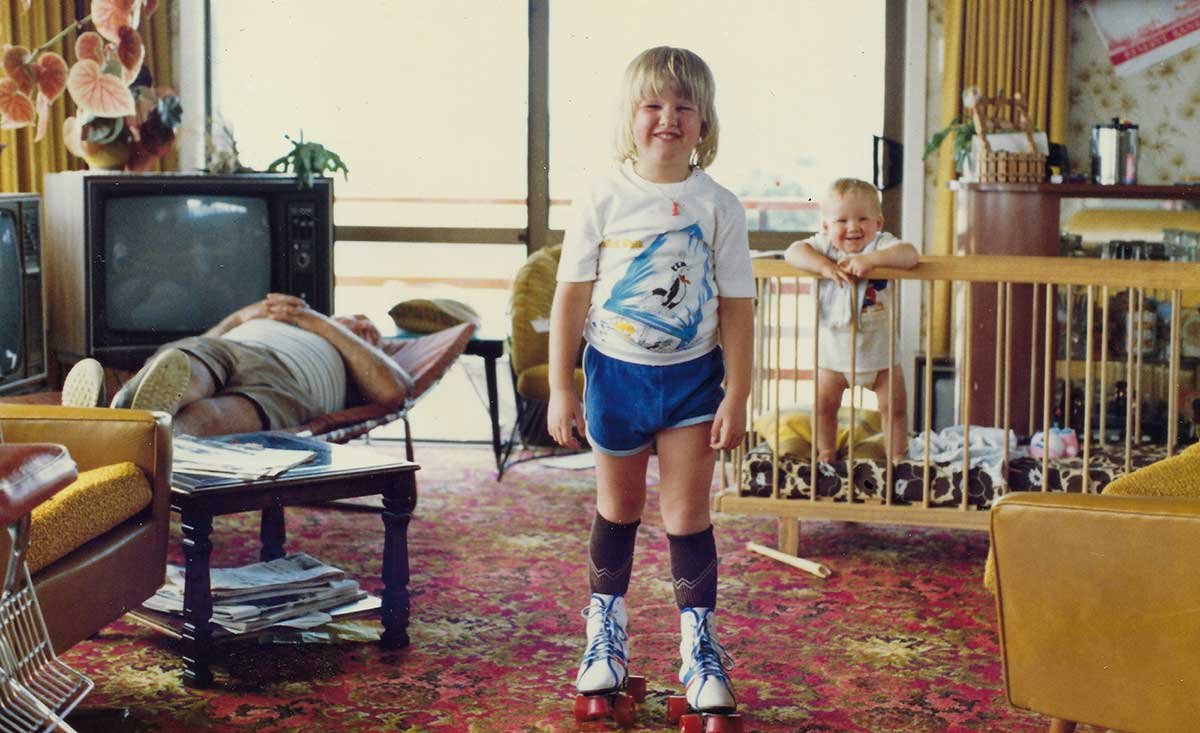
Left: Shirley and Les' "window house" on Pohutukawa Drive in Māhia. Right: Me at Christmas, late 1980s. My brother in the crib behind me, and Les asleep on a stretcher. Click to expand.
I remember Popa as the gardener and fisherman, and Gran in the kitchen. She knitted me itchy sweaters, and loved a crossword puzzle.
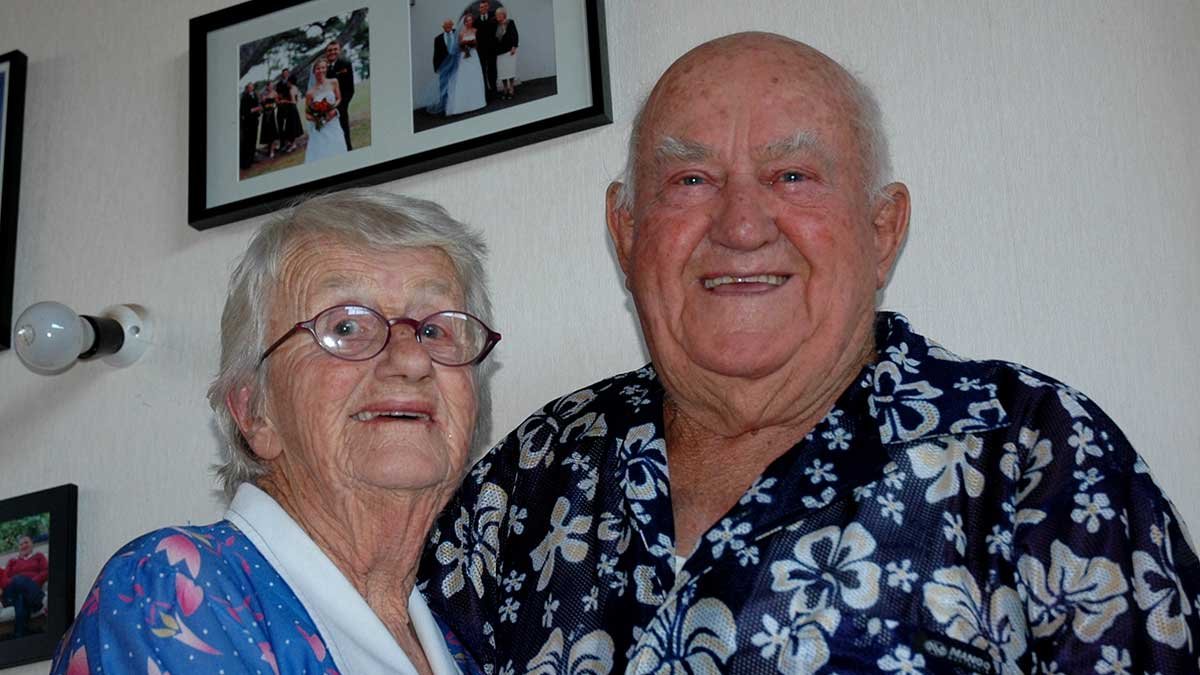
And these are the details people most remember about Shirley. She loved a good joke, especially after a whiskey, and would ring people just to tell them one.
But she is most remembered for her cooking. Like her mother before her, Shirley had a magic biscuit tin that never ran out of treats. I actually remember several tins.
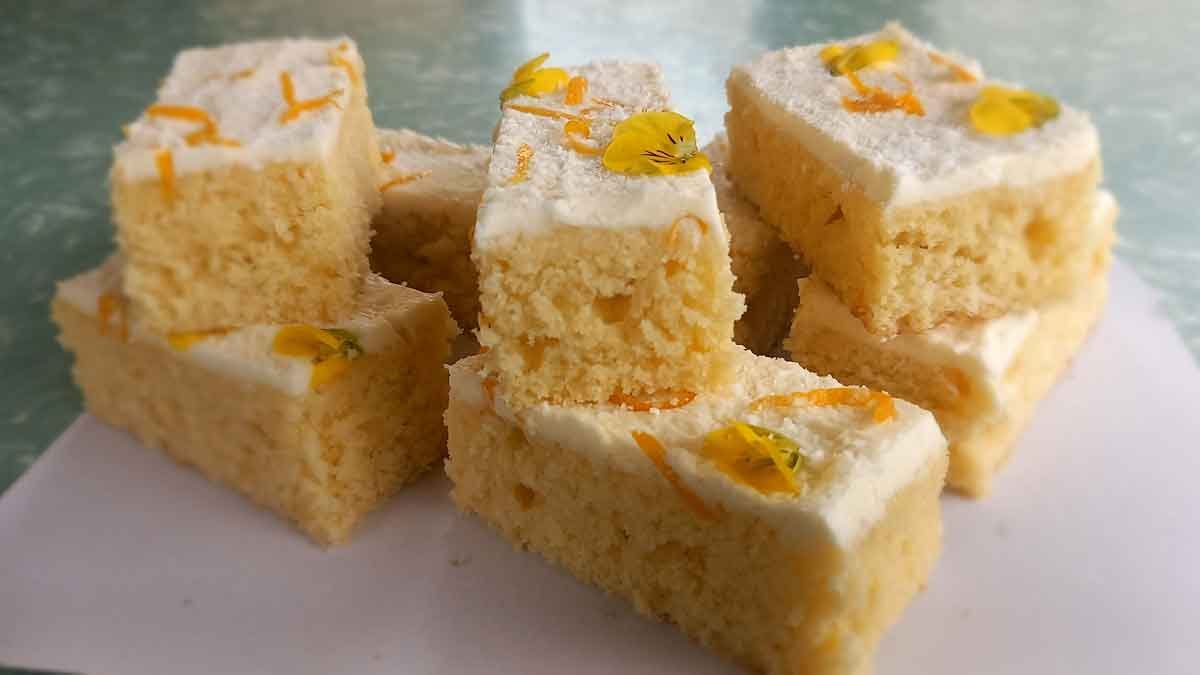
Gran Shirley's Coconut Slice
A simple and delicious slice which was on regular rotation in Gran's biscuit tins.
Gran had an entire room under the stairs dedicated to preserving the fruit and vegetables her husband grew.
Everyone remembers their own favourites. It was the tomato relish all the way for me.
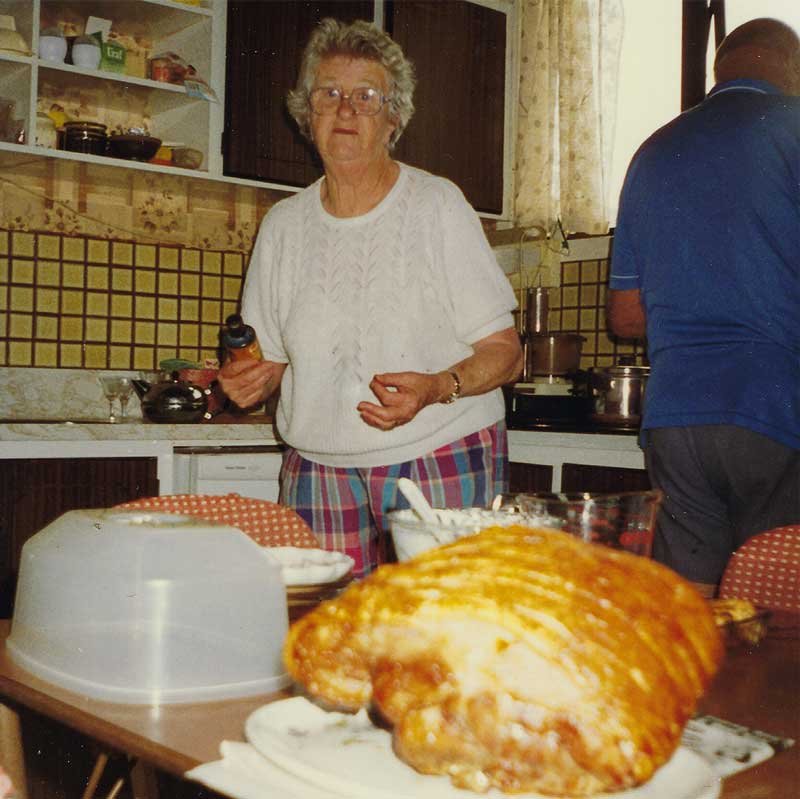
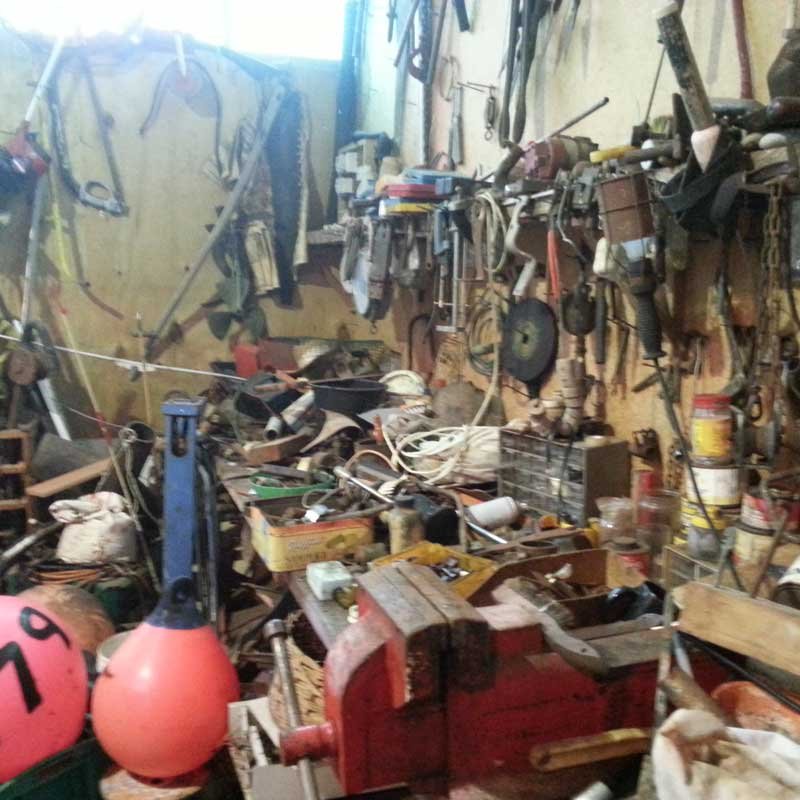
Left: Shirley (and Les' back) in the kitchen at Māhia, late 1990s. Right: Les Fulton's shed was almost as big as his house, and everywhere you looked, it looked like this. Click to expand.
Les passed away in 2013, leaving Shirley a widow. In time, it was decided she should move closer to family in Hastings.
When my mother was cleaning out the Māhia house in 2015, I was lucky enough to spend a couple of months with her there. During the process I snagged some very precious things.
Some practical, like the enamelled cast-iron frying pan Shirley got for her 21st birthday. But the most valuable thing I picked up was Gran's hand-written recipe book.
This part of my family history work crosses over into my blogging-world. I grow the ingredients, then I use them to try out my Gran's recipes.
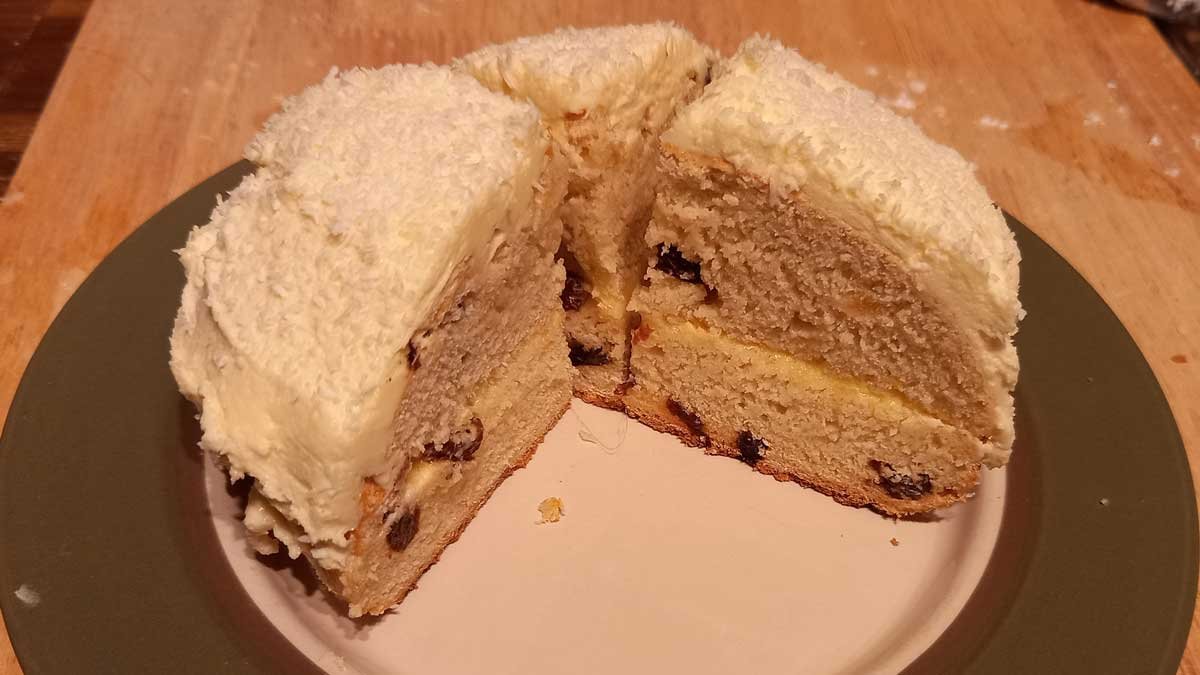
Gran Shirley's Sally Lunn
Did you know a proper sally lunn contains mashed potato? Surprisingly amazing.
Sometimes those recipes end up on this blog. It really tickles me that my cousins and all Shirley's descendants can search for "gran's fruit sponge recipe" and pretty easily find it.
Not every recipe is worth keeping, and plenty of her best stuff isn't in there (I'm still trying to figure out that relish). But some of them are real gems worth being remembered for.
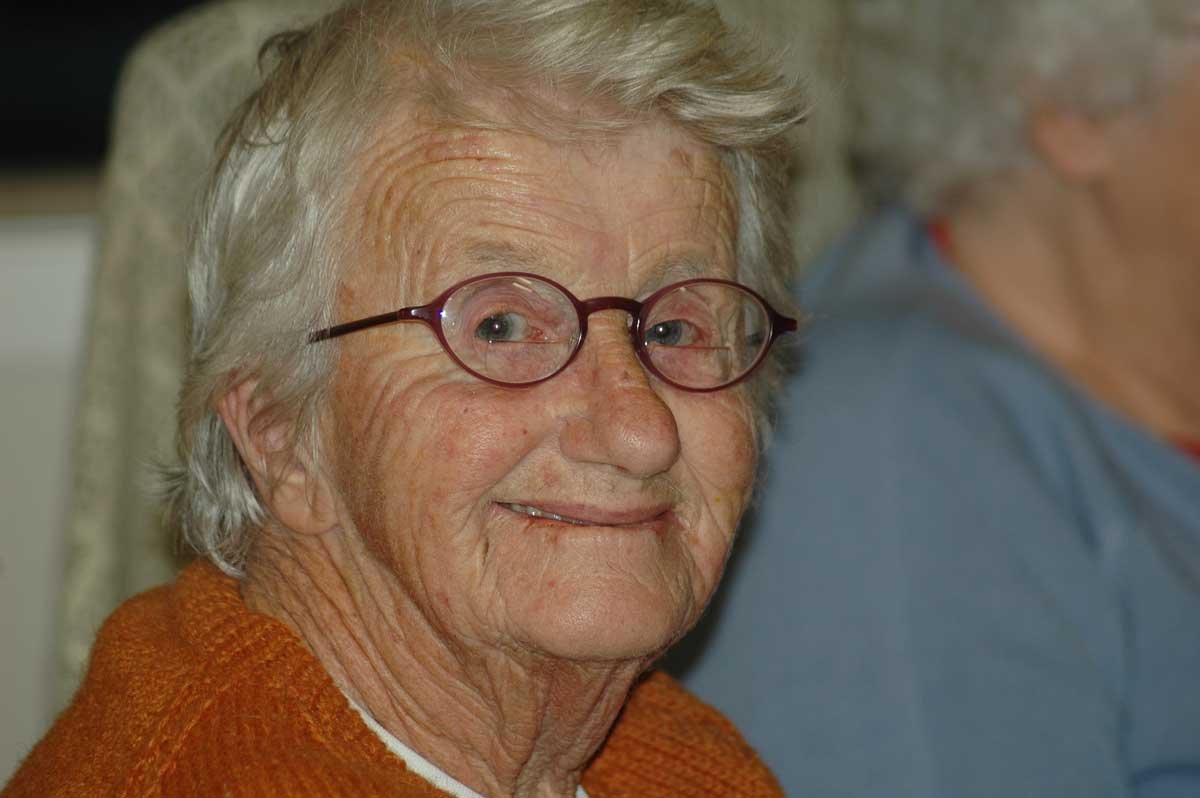
Shirley outlived her youngest daughter by about 5 months, passing away on 15 July 2016 in Hastings at the age of 89.
She is at rest with Les in Hastings Cemetery.
Shirley's mother Tot
Better known to me and the remaining members of the family as "Nan Retter", Annie Kathleen Thora Schaeffer was born in May 1905 in Hastings. Everyone called her Tot.
In early 1926, Tot married George Ernest Warman. He was an English immigrant and ANZAC war veteran 12 years her senior. They moved to Northland, living primarily around Kaipara where he worked as a butcher.
They had three children: Shirley, John, and Jean.
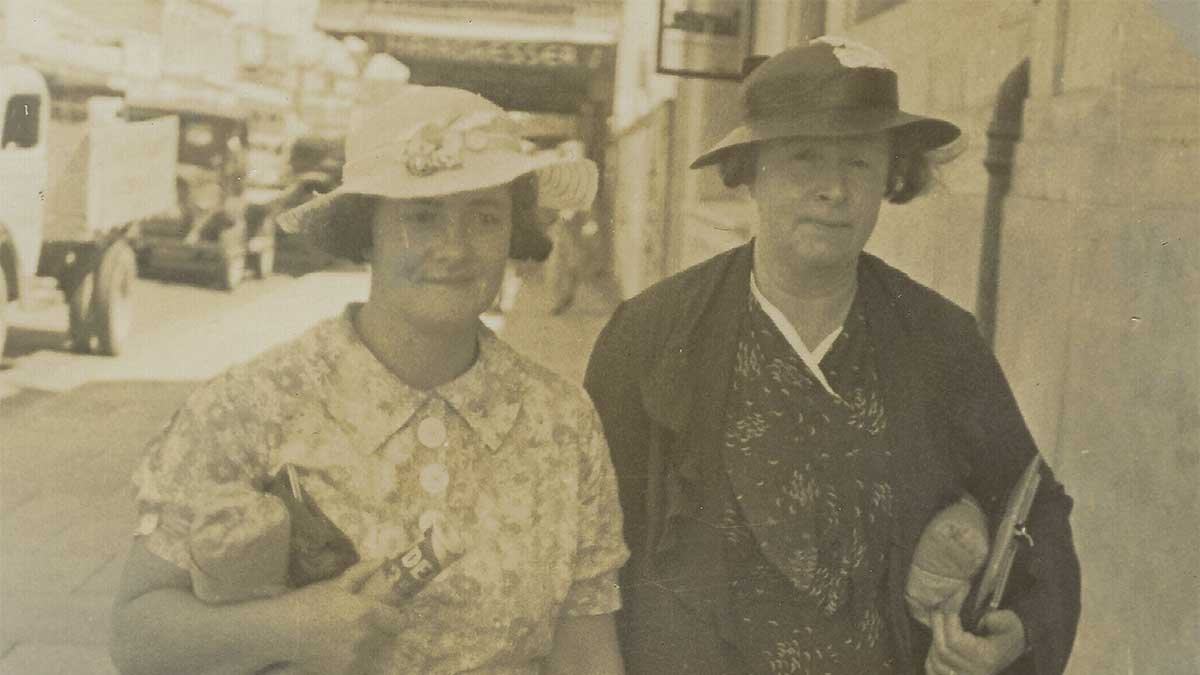
Tot (on the right) with her sister Fan.
In the early 1930's, the couple moved back to Napier.
Records make the exact timeline difficult to decipher, but this was probably before the 1931 Napier Earthquake.
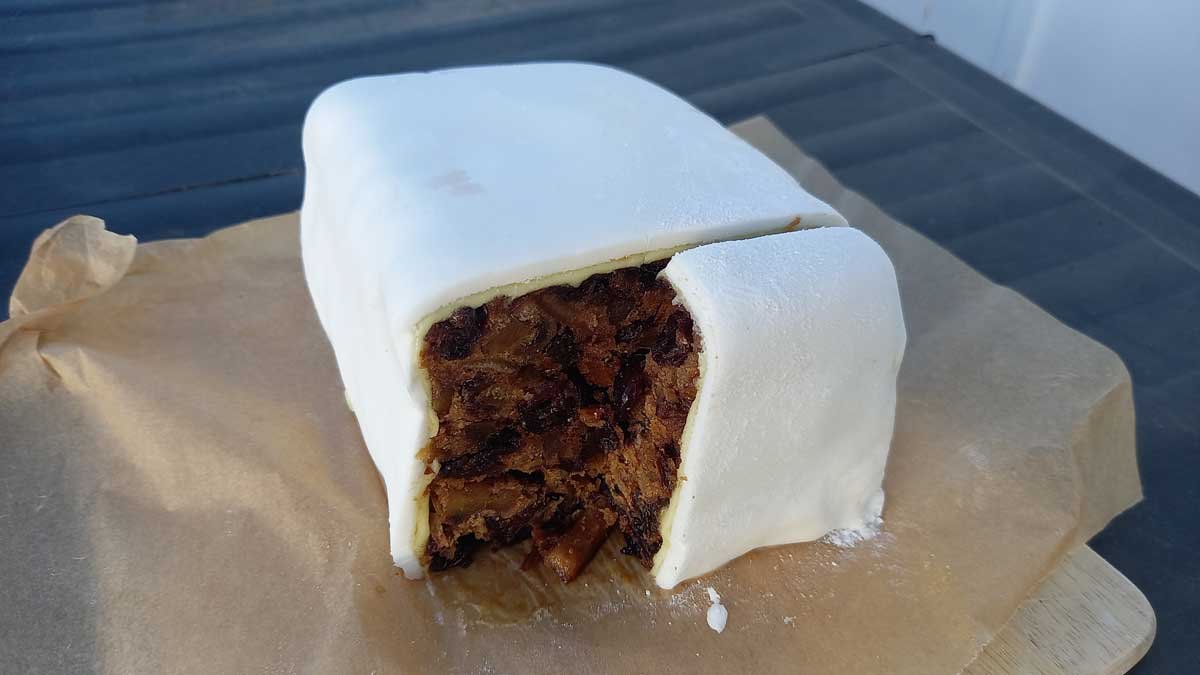
Making Nana Retter's Fruit Cake
A verified inter-generational recipe adds a new generation of cake-makers to its list.
In January 1934, during the Great Depression, Tot became a widow at 28 with three children under the age of 10. George died of surgical complications in Napier Hospital.
Three years later in 1937, she married John Chapman Retter (known as Jack), who worked at the Napier ports loading and unloading ships.
I don't have a lot of stories about the rest of Tot's life. Like Shirley, she's remembered most vividly for being an excellent baker with a magic tin that never ran out of goodies.
More recently I've learned that at least in some capacity, she was a farmer, playing some part in the running the family farm "Goat Hill" near Napier.
Jack and Tot were together until her death, aged 84 in September 1989. Jack followed soon after, passing in November of the same year.
They are buried together at Eskdale Cemetery in Napier.
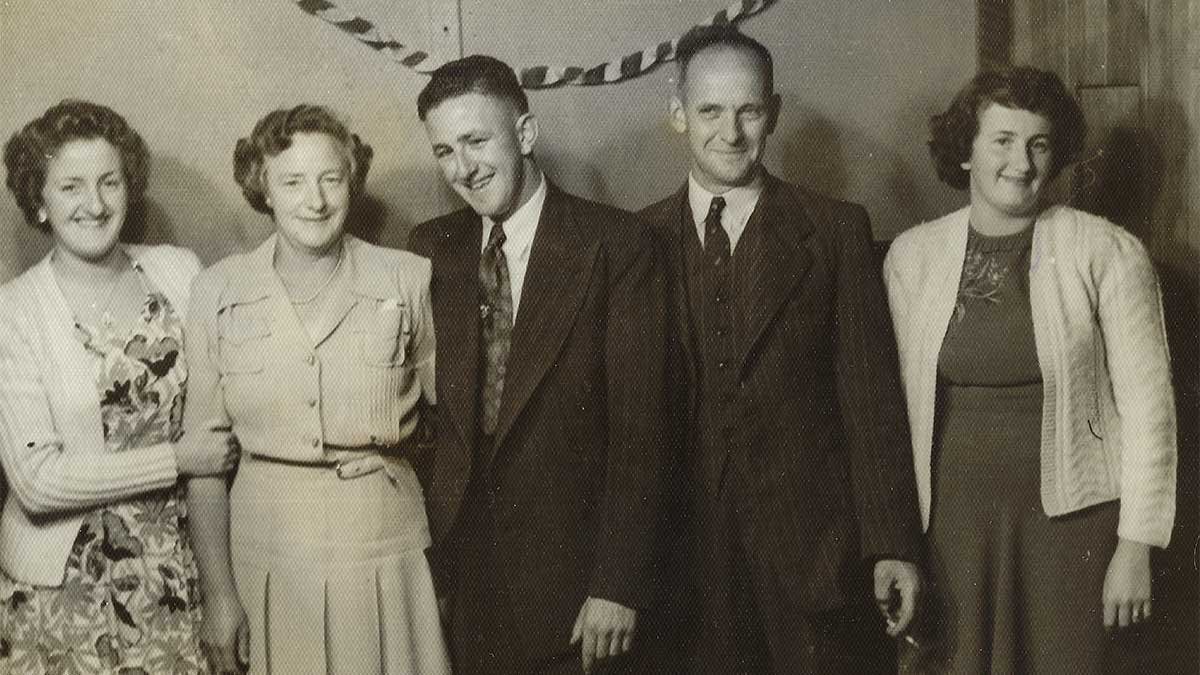
Jean Tait (nee Warman), Tot Retter (nee Schaeffer, Warman), John Warman, Jack Retter, and Shirley Fulton (nee Warman). Circa 1950s.
I was 6 years old when Nan Retter passed away. My memories are limited to a dark house and cakes.
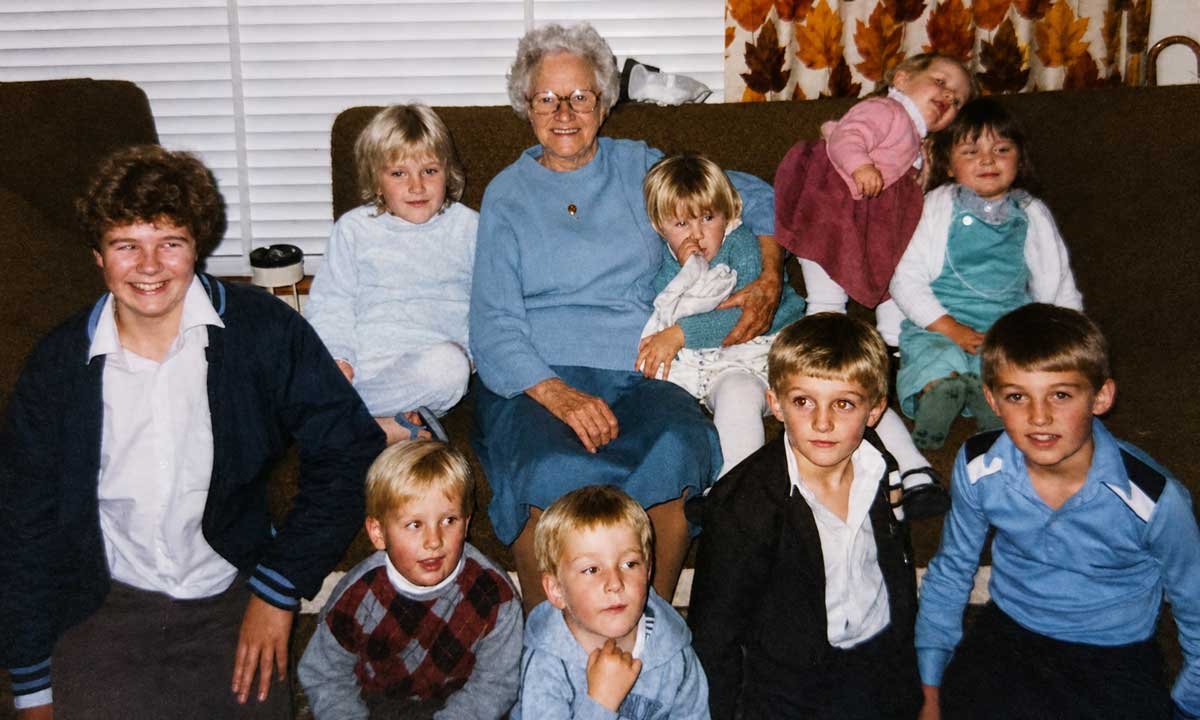
Clockwise from far left: Lesley, Karen, Tot Retter, me (Kat Jenkins), Belinda, Jo, Matt, Adam, Aaron, and David. 1985 at Tot's 80th birthday party. This photo has been AI-restored.
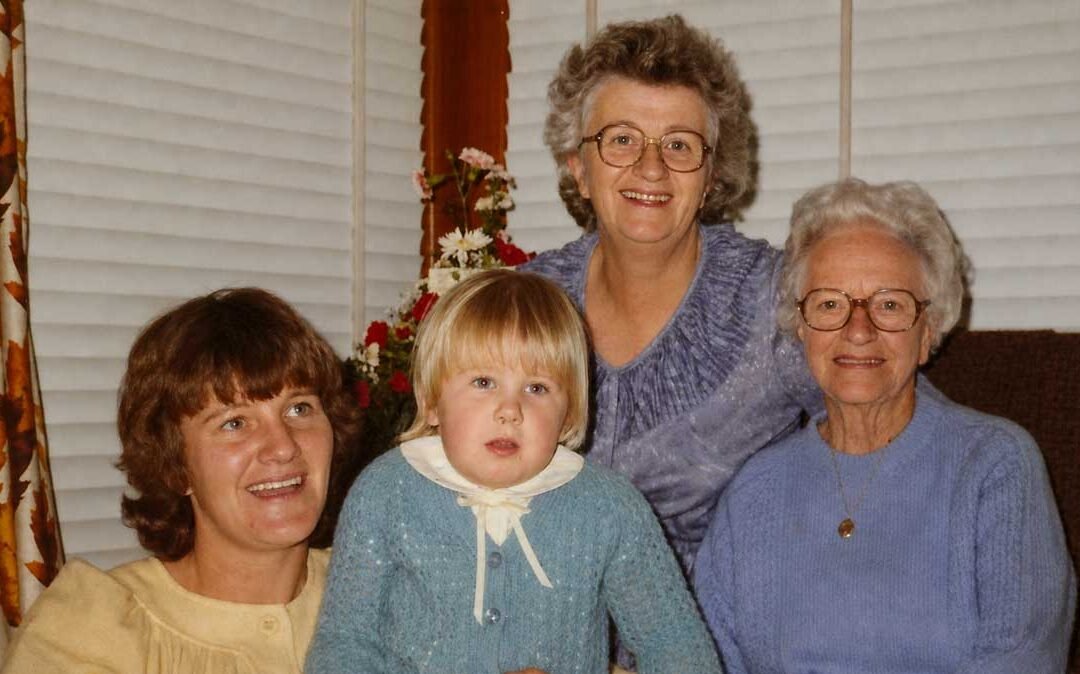
I still have a hot water bottle cosy that she made me when I was a young child. And that's us—Marilyn, Shirley, Tot, and Kat in the AI-restored photo at the very top of this page.
It's one of my favourite family photos, four generations of us together.
Tot's mother Ellen
Ellen is the woman in this chain I probably knew the least about when I started working on this post just a few weeks ago. Yet her story turns out to be incredibly close to my heart. Ellen Kate Barrett was born to English-immigrant parents in Napier on 11 August 1884.
In February 1905, she married another first-generation New Zealander, Henry Louis Schaeffer, the son of German and Scottish immigrants.
Ellen's first daughter Tot was born in May 1905, and over the next 7 years, Ellen had five more children. Three girls and three boys.
The family were farmers. I'm unsure when they first took possession of the land, but they farmed a piece of the Eskdale Valley near Napier called "Goat Hill".
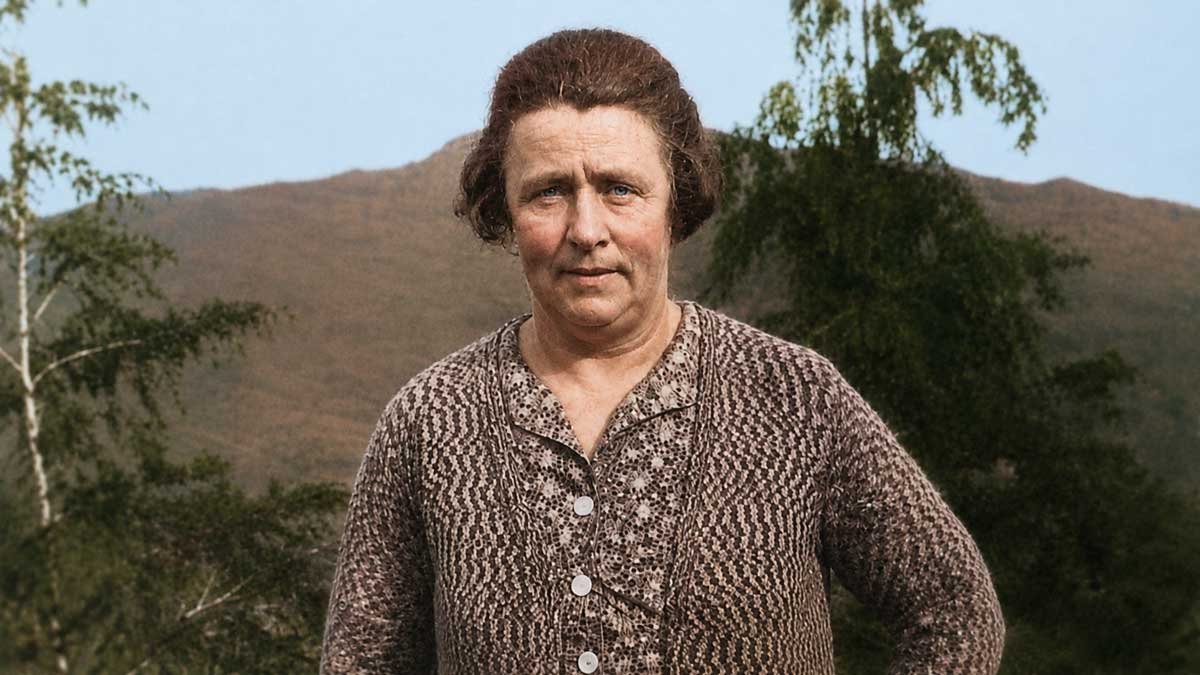
Ellen Kate Schaeffer. Probably late 1930's. This image has been AI-restored.
In 1936, right in the middle of the Great Depression, Ellen's husband Henry passed away.
Things get a bit murky here, but it seems that for however long the family had been on that farm prior to 1936, they had never legally owned it. They had purchased it on vendor finance from Charles Ruddenklau, a local sheep farmer.
I've found reference on Papers Past to Henry selling some lambs in 1925, so they'd probably been working the land for more than a decade by the time of his passing.
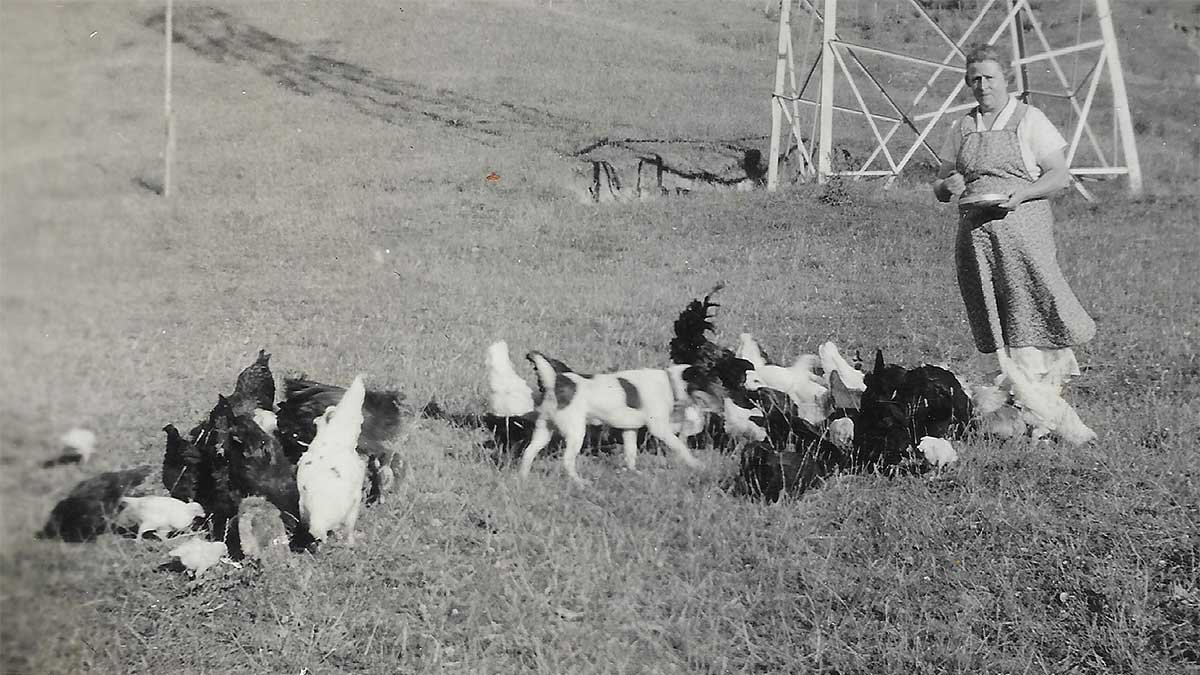
Ellen feeding chickens, somewhere between the late 1930's and mid-1940s.
When the Great Depression hit, commodity prices tanked. Meaning the wool and meat the farm produced was suddenly worth less than it cost to produce.
Before he died, Henry had applied for relief under the Rural Mortgages Final Adjustment Act 1934-35 to try and stem the losses. But he died intestate (without a will), leaving Ellen and her now-adult children to tidy up the mess.
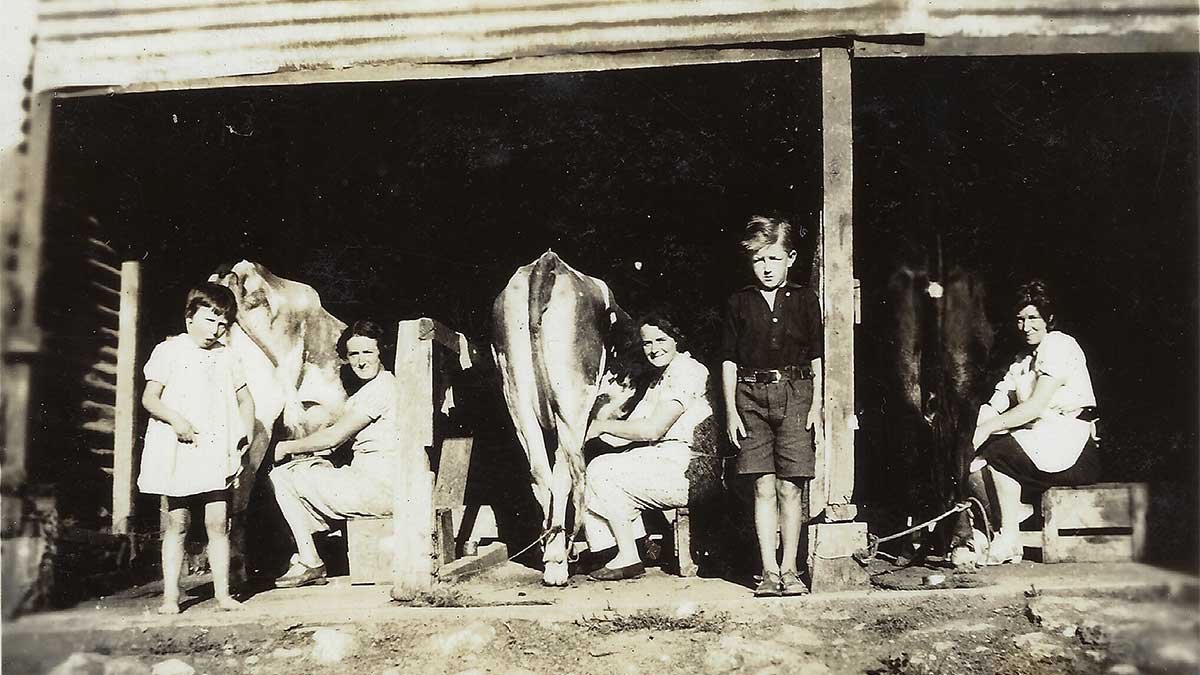
Probate documents show the farm had almost 3,500 sheep, more than 200 cows, and 14 horses. Land records describe it as 944 acres and 30.3 perches.
When Henry died, his estate was deemed insolvent as the liabilities (mostly that vendor finance, but also an overdraft and some unsecured finance) exceed the assets by approximately ₤1,200 ($175,000 today).
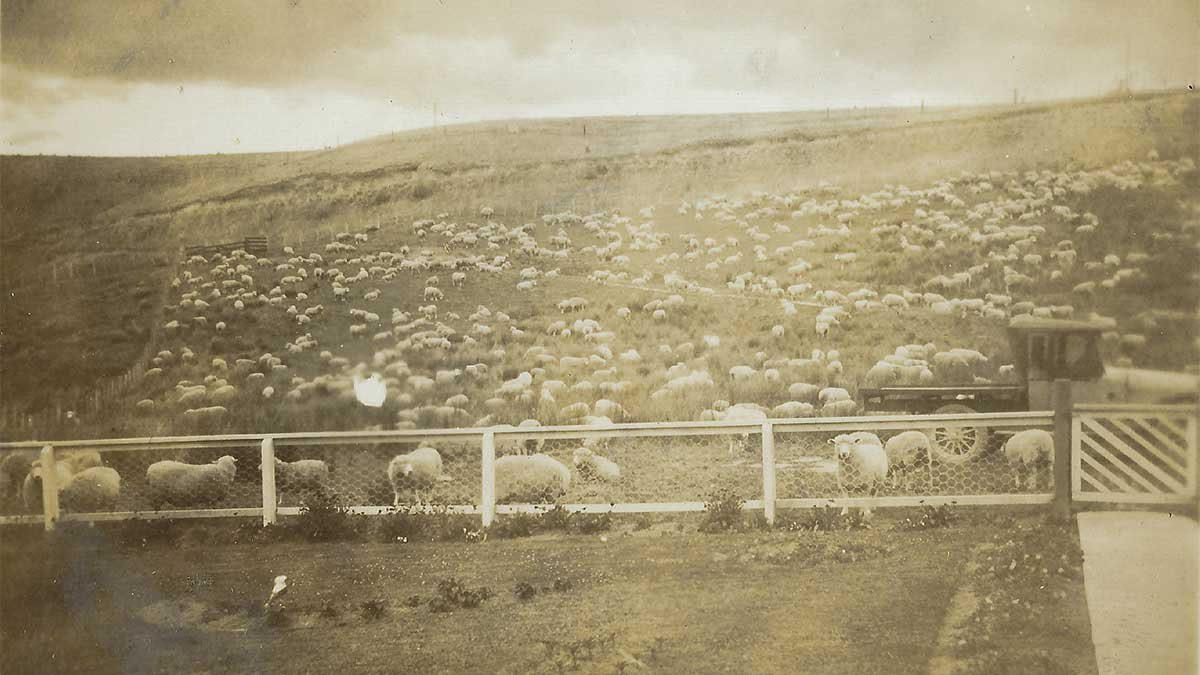
It took years to sort out. During that time, it's likely the farm was hit to some extent by the April 1938 Esk Valley floods. Property documents show the entire Western border of the Goat Hill being against the Esk River.
In July that same year, Ellen had to go through a Court of Review to mediate the agreement between Ruddenklau and her husband's estate. Once that happened, she could apply for Letters of Administration and re-finance the farm in November.
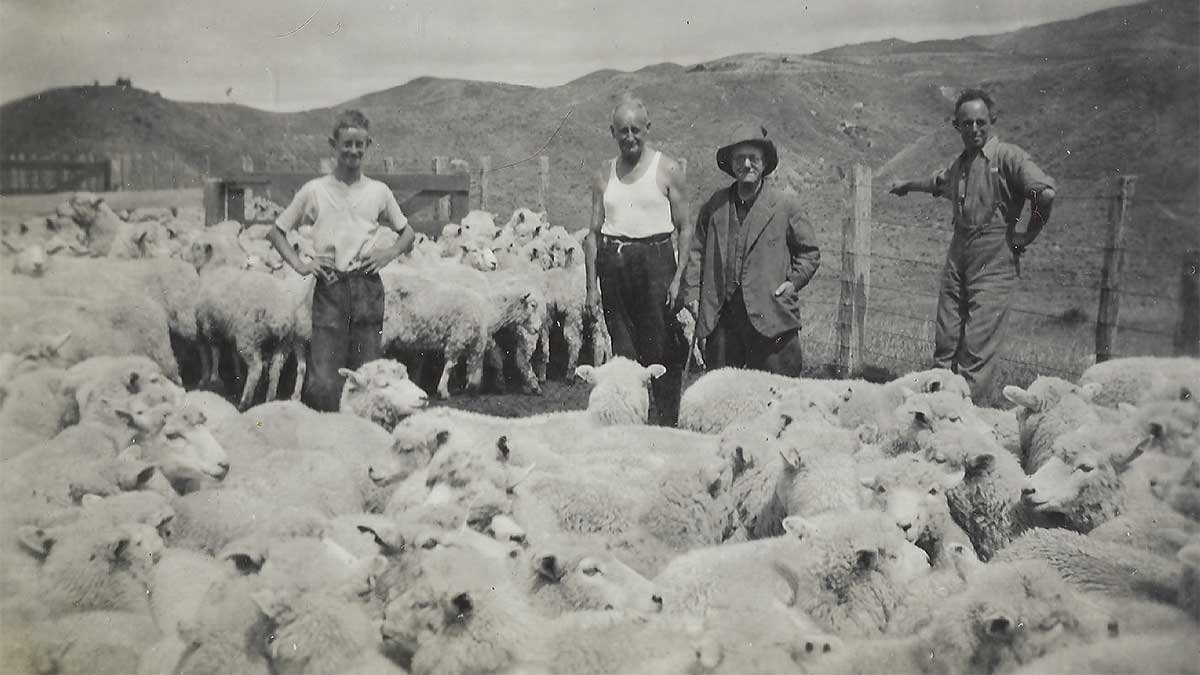
1938 is where the official land records begin, with the farm's title being issued for the first time to Ellen directly.
She secured two mortgages: one from Francis Cassidi Twigg and another from The National Bank of New Zealand.
Probate records show the estate having assets worth "less than ₤2,000" ($270,000 today) once that process had taken place, and the family officially owned the farm.
In 1942, an agreement was reached between the family that would allow two of her sons to walk away from the farm. The remaining four children extended mortgages to pay them out, and the farm was divided into 7ths.
Ellen owned 3/7, while each of the remaining beneficiary children took one-seventh each.
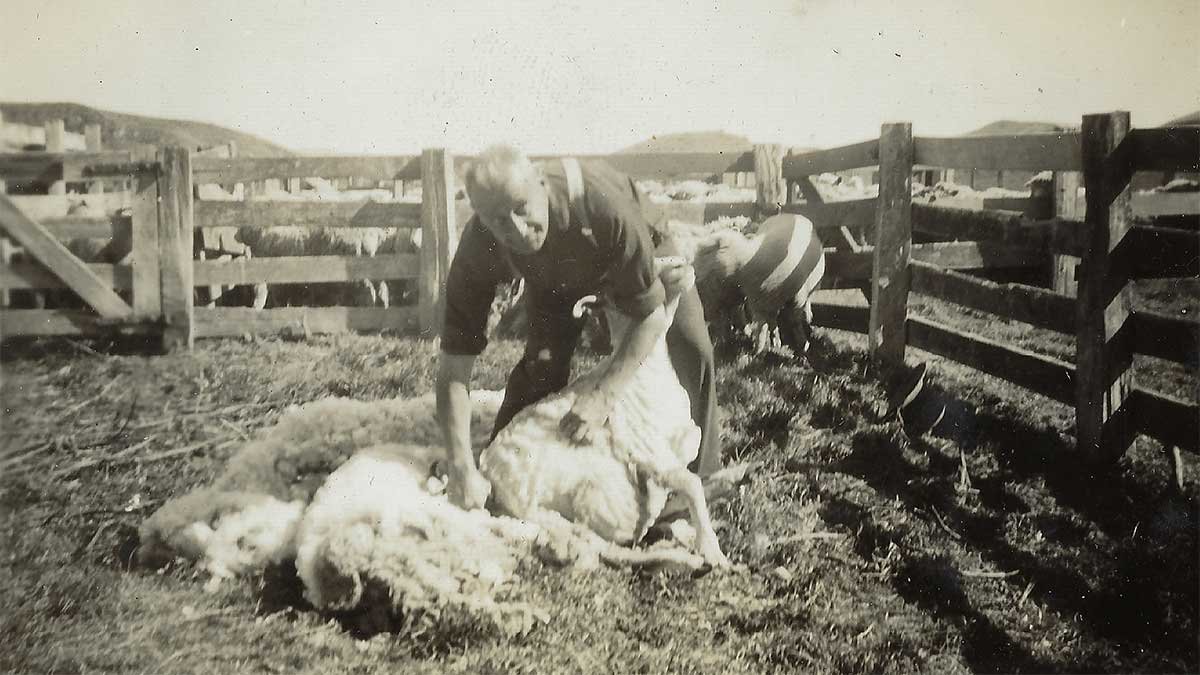
Ellen died in August 1947 aged 62, and is buried with her husband in Napier's Eskdale Cemetery.
Following her death, the farm was taken over by her son James, later being divided equally between him and Tot.
In 1953, the property transferred to Waimiro Farms Limited. That's when I think it left family hands, but it requires a trip to Archives in Wellington to confirm.
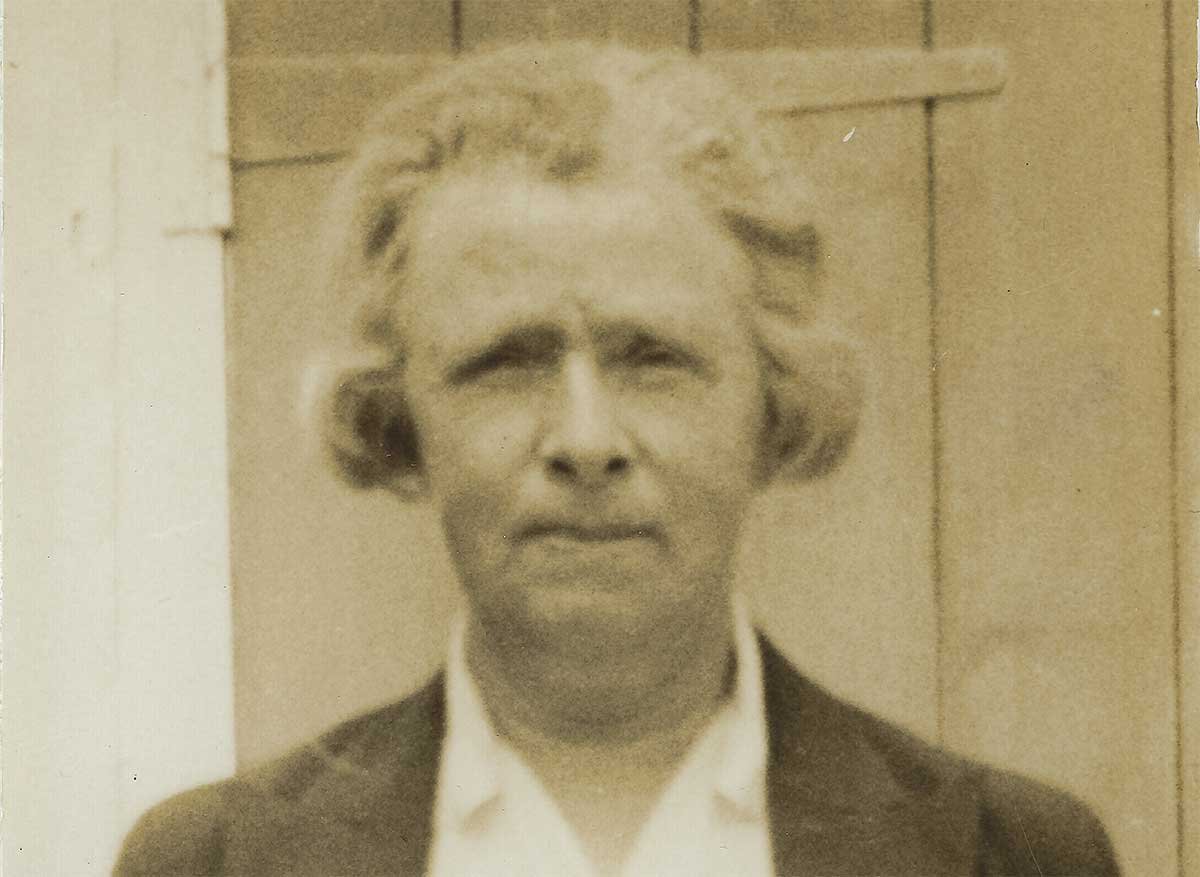
In researching Ellen's story, I have realised part of Goat Hill lives on today at The Outpost. We purchased this property with the inheritance received in part from Shirley and Les.
Ellen's hard work saving the family farm during the Great Depression would have passed through the line in some form of accumulated value to me, now.
It's worth taking the moment to appreciate her for that before we talk about another amazing woman, her mother.
Ellen's mother Fanny
Fanny is the woman who brought us here. Fanny Ann Fleet Atkinson was born in 1854 in London—Chelsea to be more exact.
In May of 1876 she married William Barrett at St Judes. Then soon found herself on the Waitara, immigrating to New Zealand with her new husband. They arrived in Napier in December 1876, meaning this year is also 150 years since they brought us here.
Fanny had nine children. Her first son died at 6 months old. Her third son at age 12. She lost her fourth son/sixth child aged 4. And in a final heartbreak, her sixth son/eighth child was lost in World War One, aged 22. The family were described as "respectable".
The most notable thing I can tell you about Fanny is that she signed New Zealand's Women's Suffrage Petition. I know this because the electoral rolls she was on for the rest of her life after women received the vote indicate she lived on Faraday Street.
That address corresponds to the one given by Mrs Barrett on the petition. So I've written a little bit more about her over at NZ History.
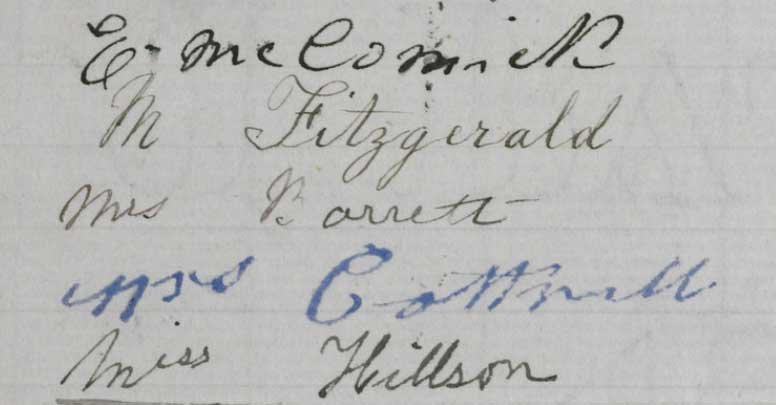
From page 441 of the New Zealand Women's Suffrage petition, 1893.
Fanny passed away on 17 December 1920 at the age of 66, and is buried in Old Napier Cemetery with her husband and sons.
I never met Fanny, or heard anything about her. I don't think I have any photos of her. Though I like to think the sponge-top pudding or fruit cake recipes might date back to her day, I don't have any firm evidence of that.
But she brought us here. A portion of my family still reside in the Napier-Hastings district 150 years later. She must have been strong to have immigrated to the other side of the planet and set up a life for us all.
And she believed that I—and all her other great-great-great granddaughters who might read this post—should have the right to vote.
I'm sure she would tell you to go check your electoral enrollment if you've made it this far, no matter who you are. There's an election this year too.
Make it your mother's day gift to all the mothers.
Acknowledgments
A big thank you to my Uncle Rob who first dug up the photos that allowed this post to become a real thing. A true treasure for the family history collection. I promise I'll return those albums soon!
Also thank you to my Aunt Joce who has been answering all my strange questions about my family for years now, and who also delivered a second treasure-trove of photos in the last week which I'm still working through.
More thanks to Tony Fulton who kindly shared his mother Pat Fulton (nee Joines)'s collection of photos. They have proved absolutely invaluable over the years and many feature in the Māhia and Marilyn sections of this post.
Another thank you to my brother, Michael Jenkins, who is holding on to a lot of our mother's files and found time to run some fact-checks for this post.
Thanks also to June Clifford for confirming Shirley was wearing the NGHS uniform.
Finally, thank you to Pamela Kerr whose memories of her father William Schaeffer unlocked Ellen's story.
READ NEXT
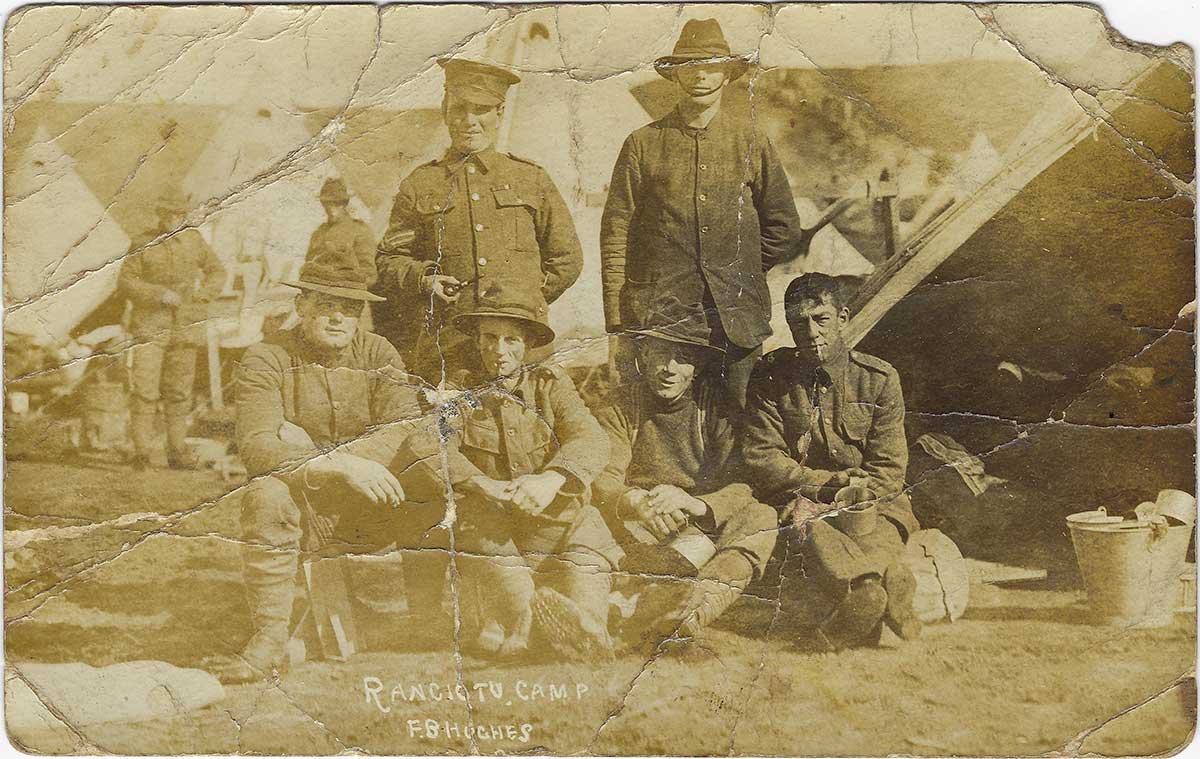
Albert 'Snowie' Charles Schaeffer
If you're related to any of the women in this post, there's a good chance you're related to Snowie too. The war vet with the longest misconduct sheet I've come across.
READ NEXT
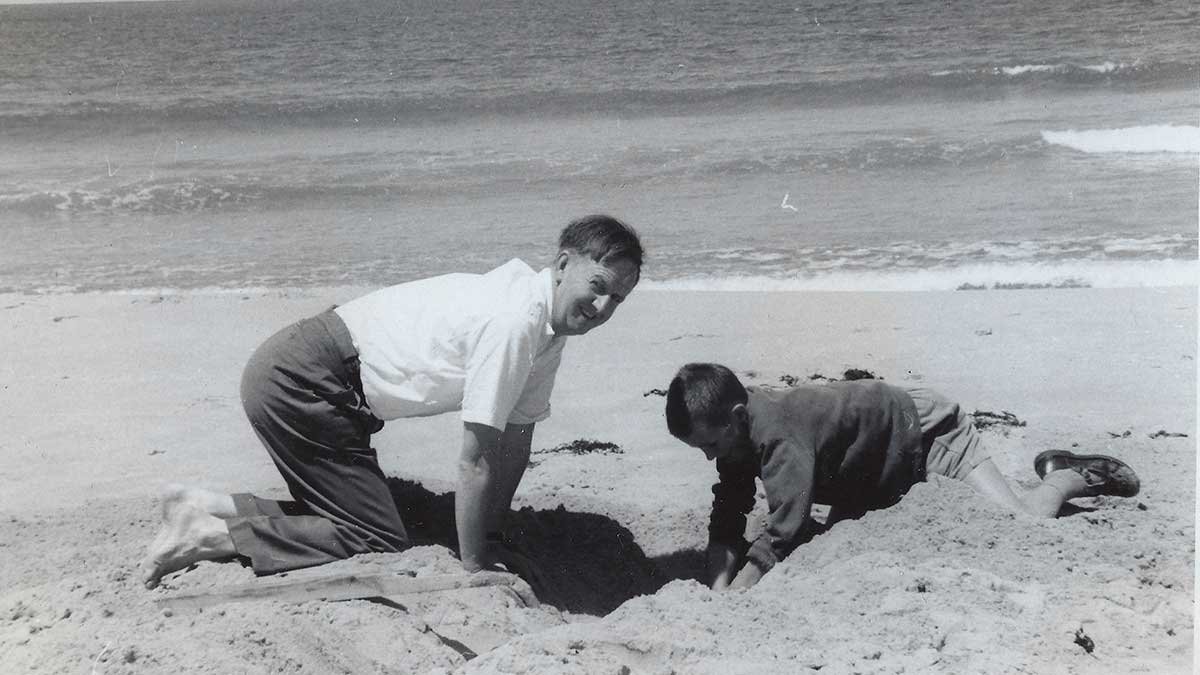
Three things my Dad taught me
On Father's Day I took a look at the things I learned from my father that shape The Outpost today.
READ NEXT
On grief
A poorly-timed traumatic accident brings back all the feelings of losing my mother suddenly in 2016.
READ NEXT
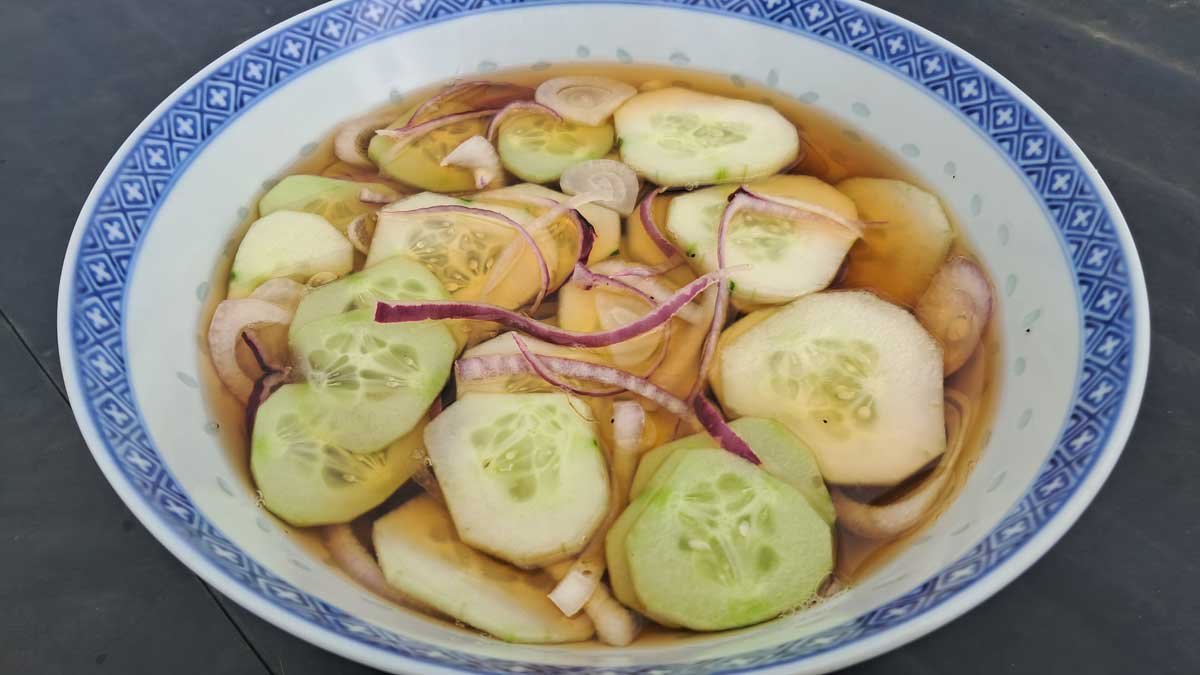
Gran Shirley's Quick Pickle
A simple and fast pickle to increase your veggie intake, care of Gran Shirley.
READ NEXT
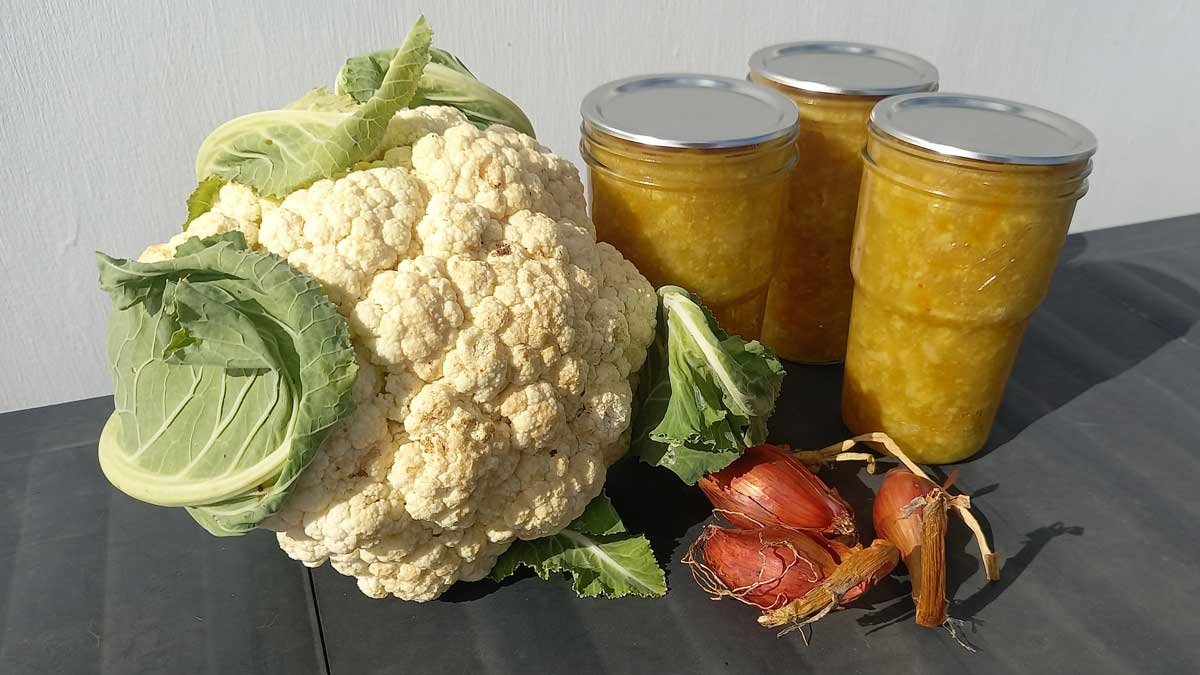
Gran Shirley's Cauliflower and Pineapple Pickle
Growing and making one of Gran Shirley's pickle recipes.

READ NEXT
Coconut Slice (new and improved)
I began playing with Gran Shirley's recipes to reduce carbohydrate and increase protein, and made this one even better!
Related content: Archives New Zealand · Atkinson · baking · Barrett · cooking · electoral roll · Ellen Barrett · Eskdale · family history · family recipes · Fanny Atkinson · Fulton · genealogy · Goat Hill · Gran Shirley · Great Depression · grief · Hastings · immigration · Les Fulton · Māhia · Marilyn · mother · Mother's Day · Napier · Palmerston North · Papers Past · probate · recipes · Retter · Rotorua · Schaeffer · Tot · Warman · Wellington · womens suffrage
Stay in touch?
The Kat's Garden newsletter gives readers an extra peek behind the scenes. It's the best way to know when new posts go live, and what's happened since.
If you like what you've seen, join us and see what we learn next.




Outstanding. You are my heritage hero.
I must start using some of mum and Nana’s recipes. Do you have the one for Chocolate Rough in that cook book of mums?
I reckon that one was an Edmonds, but try looking up ‘coconut rough’. I definitely would have tried that one already if it was in there.
Wow! What a record. Well done and thank you.
💚💚 thanks Dad
Kat, thank you for sharing your matrilineal taonga with us – it was a lovely treasure to end today reading back through time, getting to know a bit about these women!
Glad you enjoyed it. Thanks for being here Dee 💚
Only just found the time to read this, wow what a trip through history. Thank you so much for taking the time and care to find out so much about our family. These are the stories we all want to know but don’t know how to find, where to start and even how to document it. You have a beautiful way with words and speak so well of our family. Love love love xo
Totally fair! This one is a monster and it’s probably best to give it your attention when you have the time and space for it, which you definitely didn’t have on Mother’s Day!! I’m glad you enjoyed it. It’s always an honour to get to turn all the facts and dates and documents into something consumable so that this exists for the next generation 💚