Last week I documented how the dream to own this property came to be a reality. It was the culmination of a generational inheritance, a lifetime of experiences, and almost a decade of pure delusion.
So when I finally got my very own vegetable garden, I was very excited. I was terrifically impatient. And I was wildly optimistic about what I could grow from Day Dot.
I turned up with a shelf of books, a box of seeds, and a lot of enthusiasm. I literally picked up the keys after settlement, and came here immediately to plant my garlic. Then I set about growing all those seeds.
But I wasn't ready to actually grow, process, or store everything I wanted to plant. The garden wasn't ready to take it. I wasn't ready to look after it.
Most of my seedlings failed. Usually because they never actually made it into a garden. I felt like a failure.
There are things I grew that first year that I haven't gone back to because it still kinda stings.
Start growing where you feel confident
I went back to growing what I knew. Potatoes. Peas. Garlic. Broccoli. For a year or two, I put aside (most of) the side-quests. Instead, I focussed on mastering how to grow and store the basics in this new environment.
The side-quests were always gonna be there for Future Me to pursue.
Only once I was confident in my vegetable patch did I begin adding new (weirder) things, as I had the capacity.
"There's nothing like a big fat failure to stifle a person's motivation in the garden."
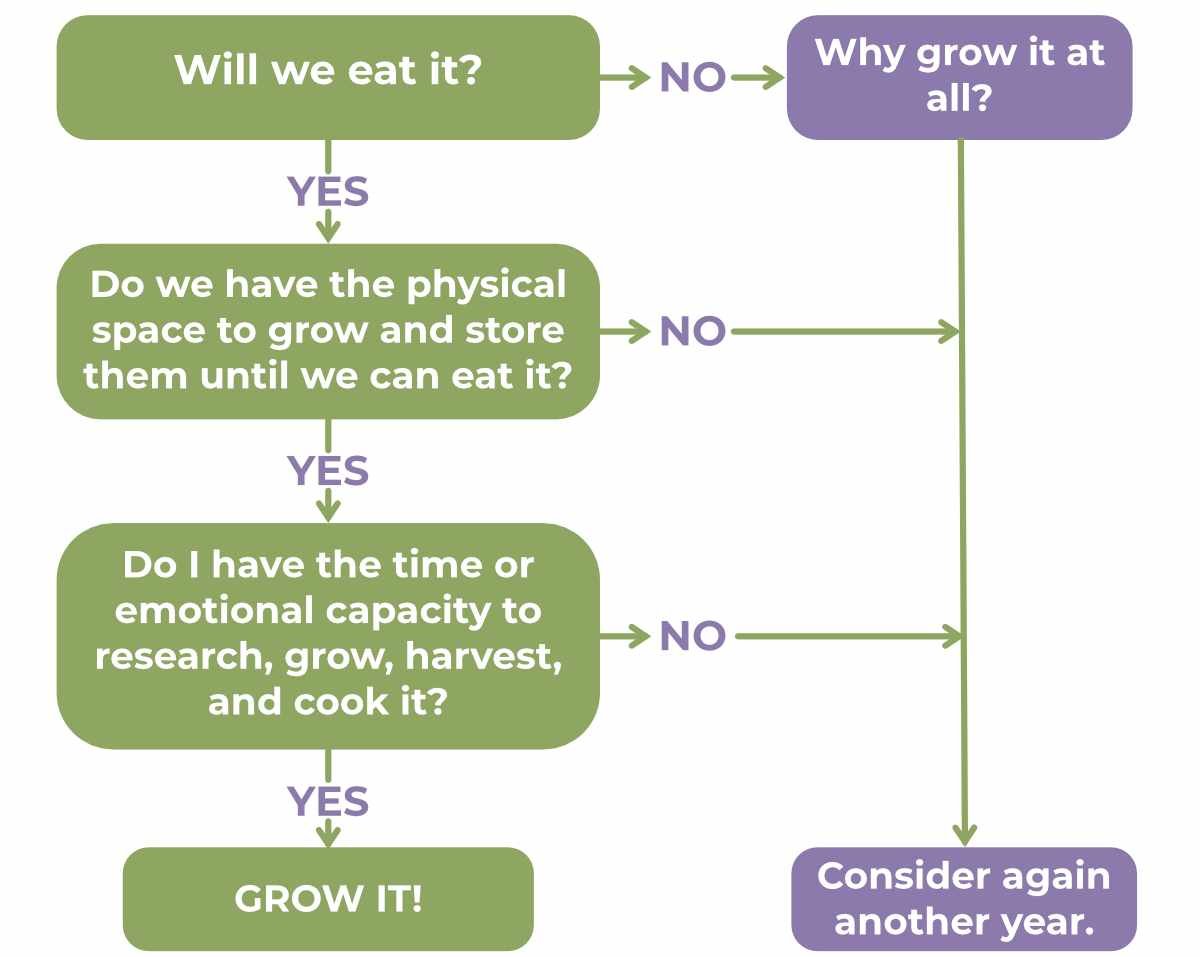
'Capacity' includes having the physical garden space. But also the time to do a bit of research, the physical storage space, and the knowledge we'll actually eat the results in the end.
If you're struggling to get started, planting the stuff you're confident you can grow, and which you will eat, is a good place to build some gardening momentum. There's nothing like a big fat failure to stifle a person's motivation in the garden.
Leave the weirder or more complicated things as an adventure for Future You. Start with some spuds and a pumpkin.
Is a vegetable garden even worth it?
A pumpkin can establish itself in the compost from kitchen scraps. It might return 3-7 pumpkins. They just need a dry, cool spot to sit until you can eat them. Low effort, decent return.
Potatoes usually work out at least cost-neutral, and they're so much fun to harvest that it doesn't even feel like work.
But peas are different. A kilogram of frozen peas costs $3.99-$6.99 (depending on brand, and whether a discount is applied).
The minimum wage in New Zealand is $23.95. Meaning a bag of peas is worth roughly 10 to 15 minutes' work.
Growing peas is fairly simple once you get the hang of it, but shelling takes forever. It'll take an hour, minimum, to shell a kilogram of peas and freeze them.
"The question of financial return is usually answered in the processing time."
Commercially frozen peas are harvested at their peak, then processed immediately. There's no real advantage to growing and storing your own.
Now, that's not to say your own home-grown peas aren't worth having for garden snacks or fresh dinners. You may have children willing to do the physical labour of shelling them.
But compared to a bag of frozen peas, it does invite the question of "is this what I should spend my time doing?"
The question of financial return is usually answered in the processing time. Growing is kinda the easy bit (I say 'kinda' because growing itself still requires a whole lot of skills and resources).
Planting 30 shallots is easy. But 300 shallots to harvest, sort, store, and eat between two people? I had to learn that the hard way, more than once. It turns out, too much is almost as bad as nothing at all.
Shallot-harvest also coincides with garlic and catnip harvest, when my drying space is full. Meaning I've begun pushing planting time by about a month so the juggle at the other end is manageable.
This year I timed it. Planting ten shallots takes about fifteen minutes. It's enough to displace our annual spend on onions. That's the kind of vegetable-math I like.
Make the gardening decisions simple
I began running a little mental decision tree each winter as I planned my garden. It looks a lot like this:
Every effort compounds
Of course, even when you're growing the crops it makes the most sense to grow, and you're gardening within your capacity, there's still overwhelm.
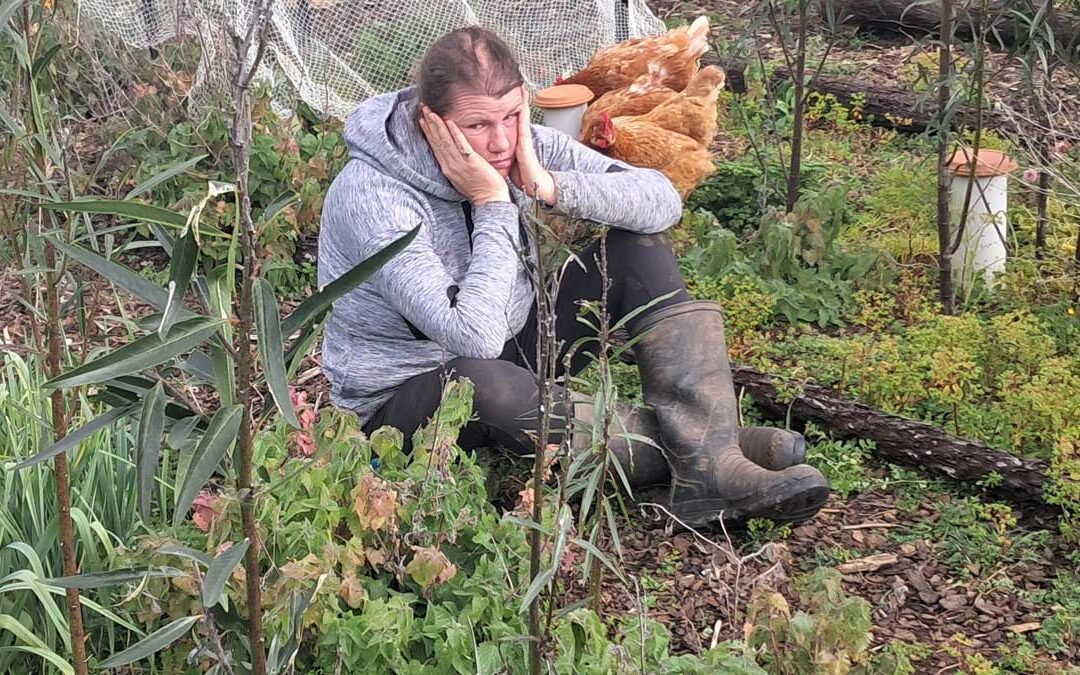
That's the thing that trips me up the most in my own garden now. It's a big garden. It's easy to look at it and get hung up on all the things that seem to need doing. To the point that I freeze, and end up doing nothing at all.
I know the seeds need planting, the compost needs spreading, the garden needs weeding… but there's much of it to do.
So instead, I end up stuck in bed watching other people do it in an endless scroll of dopamine-inducing short videos.
"While you're there, pull out a few weeds. Not all of them. Maybe three."
The only way I've ever found to get around that feeling is to recognise that in the garden, every effort compounds. It doesn't need to be one big project on three long weekends a year.
Ten minutes of weeding is better than no weeding. A six-pack of seedlings in the ground is better than watching my carefully considered heritage seed collection die, or become unviable waiting to go in.
If you feel even the slightest tug to get into the garden, you should go out there and at least look at it. While you're there, pull out a few weeds. Not all of them. Maybe three. And think about what you'd like to harvest from it.
That's it. That's all you need to do to get started.
If you do that twice a week, you'll be surprised at how far it gets you.
A handy tip:
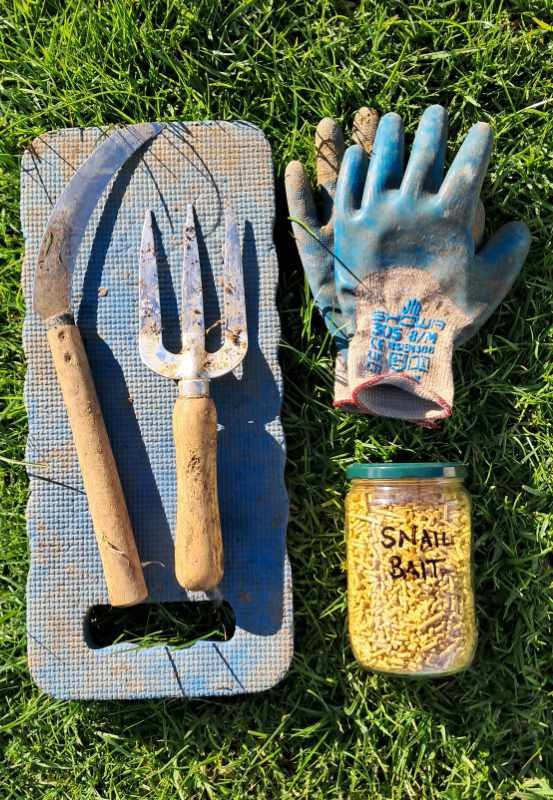
To get you started: get a bucket. Put the tools you use most in your garden inside that bucket.
Mine contains a kneeling pad, a Niwashi knife, a small hand fork, my favourite gardening gloves, and some snail bait.
Keep that bucket by the door of your garden shed so that whenever the gardening mood does strike you, getting started is easy. Simply grab your bucket and go.
The struggle to get started is real
Readers, friends, and family contact me regularly struggling with motivation to keep on top of everything in their vegetable gardens. If you look at your garden and have an inner meltdown, you're not alone.
When you do happen to have both the free time and motivation to get out into your garden, often the biggest challenge is just knowing where to start.
The average person isn't obsessively going about their life thinking about their garden all the time. There's work, children, parents, and all the various other commitments that we choose to take on.
I just don't think 'the right time to plant carrots' is taking up much real estate in most people's brains. Even I have to look that up!
And yet everyone apologises to me about the state of their garden when I take a sneaky-peek at what they're up to while I'm visiting. (There's absolutely no need to do that by the way. I'm the one being rude and nosey by seeing what you've got going on.)
"I just don't think 'the right time to plant carrots' is taking up much real estate in most people's brains."
I expect that between your children, work, and just being a human being in this God-awful timeline, you simply get stuck at the research phase of gardening.
You never get outside because just figuring out where to start is overwhelming in and of itself! Everyone has a conflicting opinion and/or a range of gardening products to sell you.
Well, my garden is usually at least 50% weeds too. And I can't take away all the problems.
But I do think I've figured out how to make getting started simpler when you do have the time, energy, and general motivation to put your fingers in the soil.
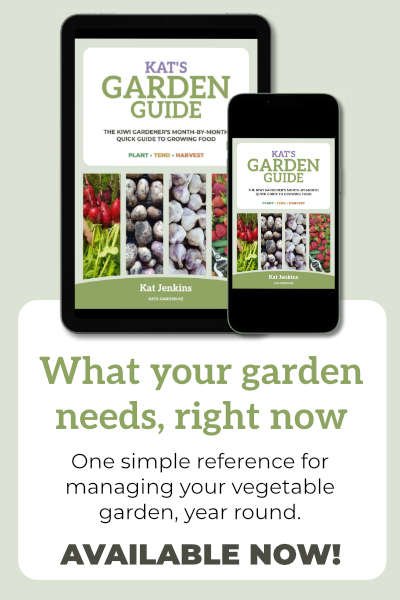
Introducing Kat's Garden Guide
Wouldn't it be nice to know what the overall priorities of the month and week should be? So that if you could choose one single thing to do in the 20 minutes you've got available for gardening, you can just get out there and do it? Without the research?
Have you ever been taken by the desire to overhaul your entire vegetable garden while on a trip to the hardware store to buy cleaning supplies and pet food?
Did you stare at those racks of seedlings and wonder "would seeds be a better idea?" or "is it even time to plant broccoli?"
Well, readers have been asking me for 'quick, simple, and easy' for a long time. And I've been pondering that for years.
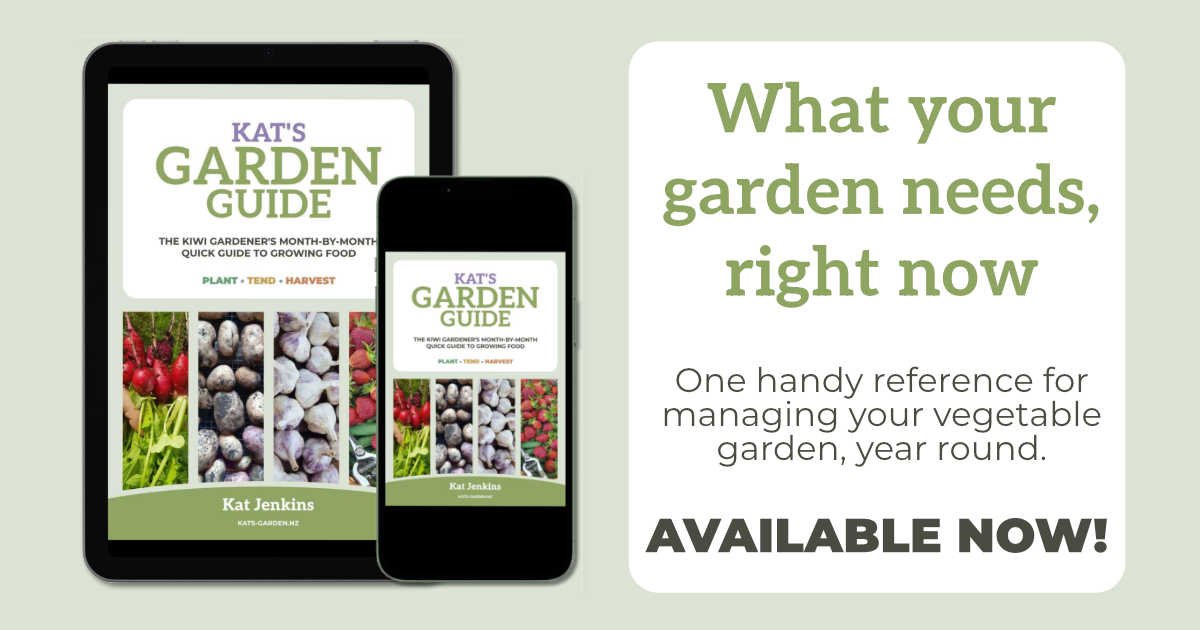
Gardening isn't quick, or simple, or easy. But if you have a vegetable garden, and you want to harvest more food from it, Kat's Garden Guide is your girl.
This guide is for you if you never quite get around to planting those seedlings, or somehow keep missing the window to harvest your broccoli.
If your gardening gloves are crusty and full of spider webs, or mice have eaten your blood and bone because you never used it, then I have absolutely been thinking about you as I wrote this guide.
The waitlist is open. You can download the August spread for free (no email required) and try it this month!
If you like it, and you think it might remove the research part of your problem, I'll be releasing the other 11 months on 16 August 2026. There's going to be a special launch price of $12—just $1 per month—for the first week. After that, the price goes up to $15. So the waitlist is there to send you a reminder on launch week if you need a nudge.
And that's the end of my sales-pitch. After you've put your email onto the waitlist, go stare at your garden. Pull out three weeds and just think about what you'd like to grow this year.
READ NEXT
Maybe she's born for it
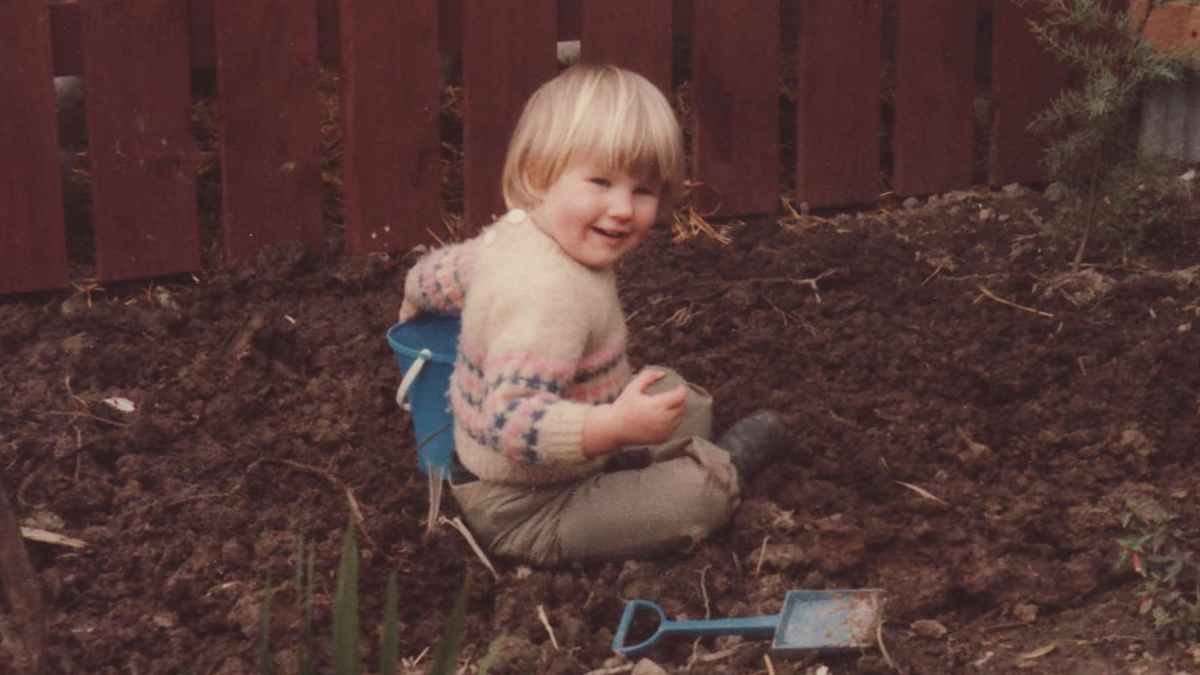
A reflection on the gardeners and gardens who made me the gardener I am today.
Related content: garden guide · garden planning · gardening advice · home-grown · overwhelm · peas · pumpkin · self-sufficiency · shallots · vegetable garden
Stay in touch?
The Kat's Garden newsletter gives readers an extra peek behind the scenes. It's the best way to know when new posts go live, and what's happened since.
If you like what you've seen, join us and see what we learn next.