A business idea popped into my head earlier this year. It's not a new concept, but I thought maybe I had a new spin on it worth exploring.
It was a grow kit. But more than that, it was an educational resource which truly led a person through the project of growing a plant from seed, to actually eating or using the plant they grew.
I began exploring my idea with some market research. Firstly by asking my email subscribers to tell me about their experience with grow kits.
Their comments made me realise that a project-based kit does have its uses, especially as a learning experience. But that the kits on the market all had some limitation which ultimately made the kits... well, a big ol' waste of money.
So the next stage of my market research was to look at the kits that were on the market. And that's where I discovered something interesting. Every kit I could find on a retail shelf was made by the same parent company.
Every kit on the shelf, even when the branding is different, is ultimately owned by Mr. Fothergills.
I had this idea in autumn, and while I was looking at them, a pile went on a clearance sale.
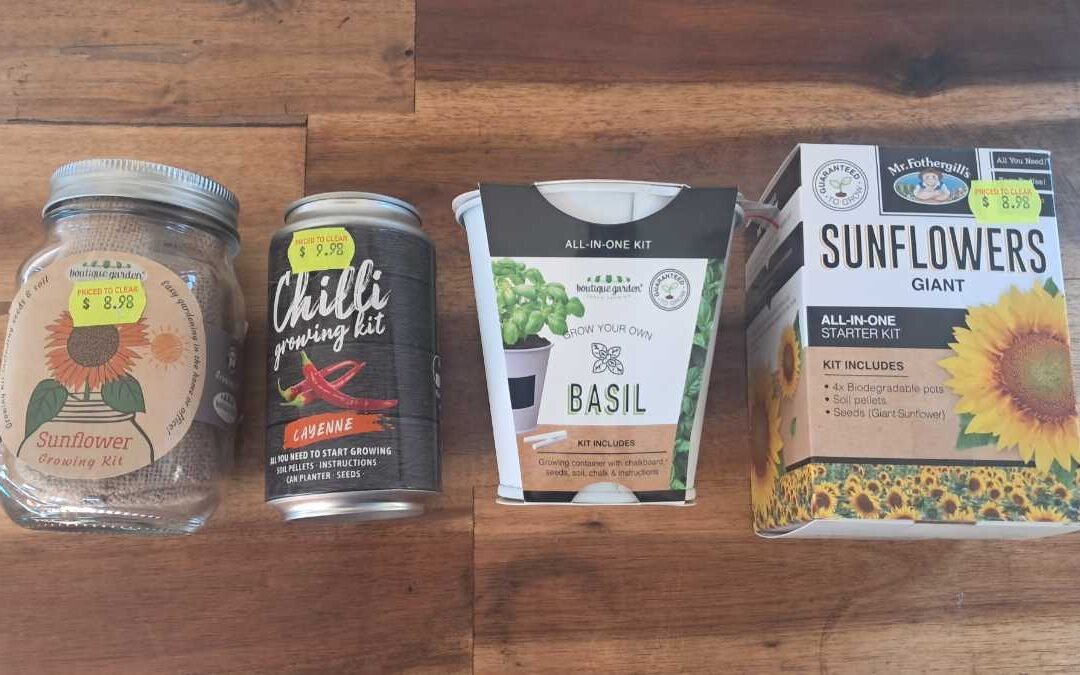
So I pulled together a collection of grow kits (including some unused New World Little Gardens I managed to acquire), and decided to try using them myself in spring.
On September 23 2026, I pulled out my bag of growing kits and spent some time planting them.
It's not an exhaustive selection, but I did feel like it was a fairly representative one.
Boutique Garden Sunflower Growing Kit
Look, I'm going to start with the one I hated the most. It's a cute kit, but my feeling is that attractiveness has been prioritised over the success of the gardener.
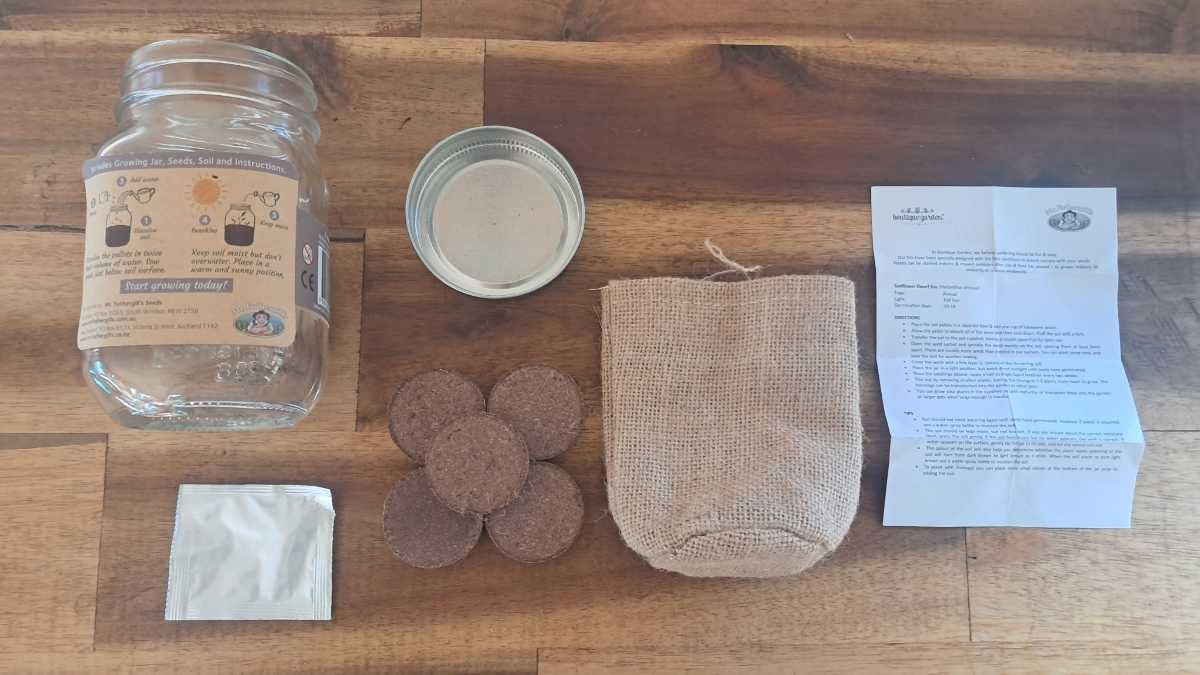
It comes with a little hessian sack that might be a pot, but the purpose of which is never truly clarified.
The instruction sheet was so small that I had to take a photo on my phone and zoom in to read it, but it only told me to put my 'soil' into the 'pot supplied'.
Now, I don't know for sure what that 'soil' actually was, but over all the Mr Fothergill's kits, we were definitely not working with the same growing material as the New World 'Little Garden' kits. I'll get to them, but New World's were verifiably coconut coir.
I suspect the five small 'soil' pellets in this kit to be peat. That's considered by most to be a non-renewable resource.
The pellets took forever to soak. I definitely spent more time on this day soaking peat than planting or learning. But once it had finally rehydrated, I had to make a decision. Do I plant my seeds into the little sack-pot, or the mason jar with no drainage?
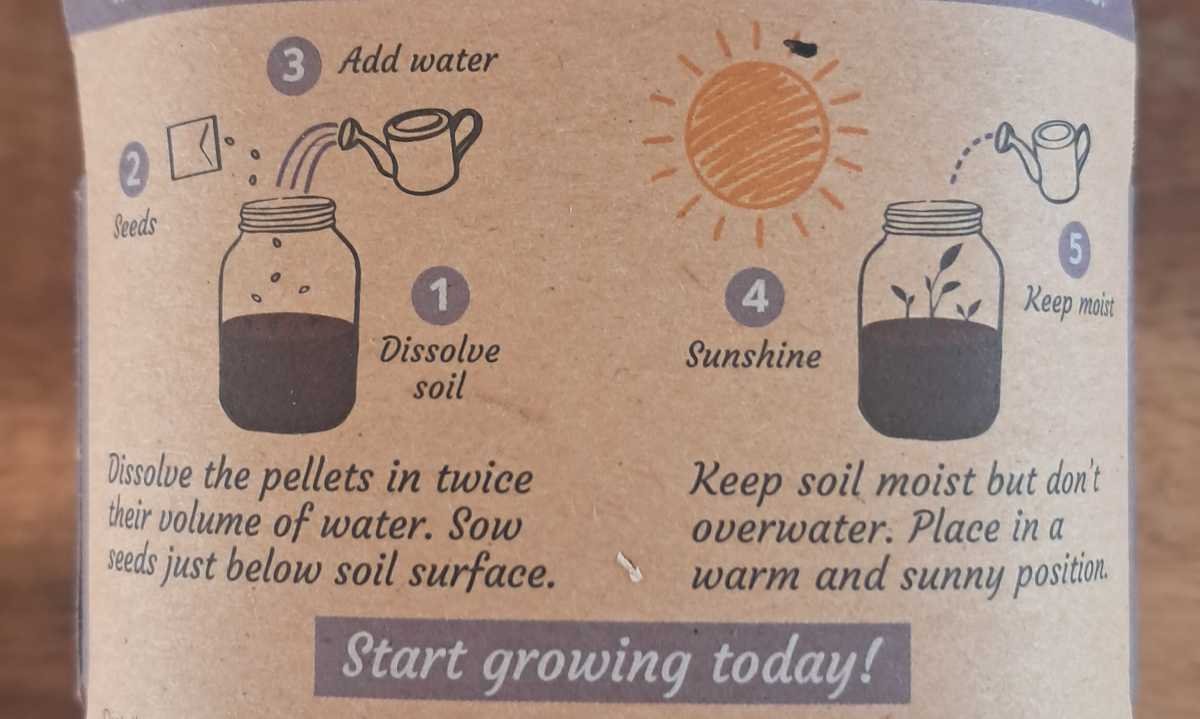
I decided the instructions very clearly indicated I should use the mason jar. The pot shown is the same shape and even shows the grooves for a lid to screw on.
Even though every fibre of my being thought that was the path to failure, I took the path I thought someone would take if they were following the instructions.
The soil filled the mason jar exactly, so I have no idea what the little sack is for. Though on looking back at the instructions, I may have over-filled my 'pot'.
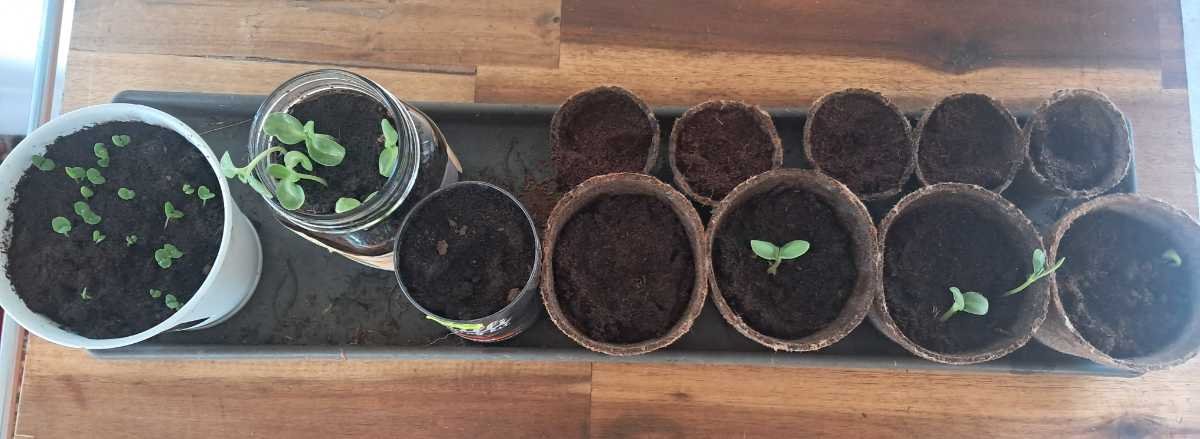
This kit contained five mini sunflower seeds and I planted them all in the same jar. They took 9 days to germinate with a 100% success rate.
In terms of germination, this one was great. But practically, I'm dreading digging them out to plant in the garden. I'm going to need more pots, more soil.
And the narrow-mouth shape of the jar isn't that conducive to pricking them out and eventually planting them.
The instructions indicate I can grow a sunflower in this mason jar. So I'll leave one there to see what it does.
Boutique Garden Cayenne Growing Kit
A grow kit! In a can! How delightful!
It's a gimmick, but I've gotta admit, this one caught my attention.
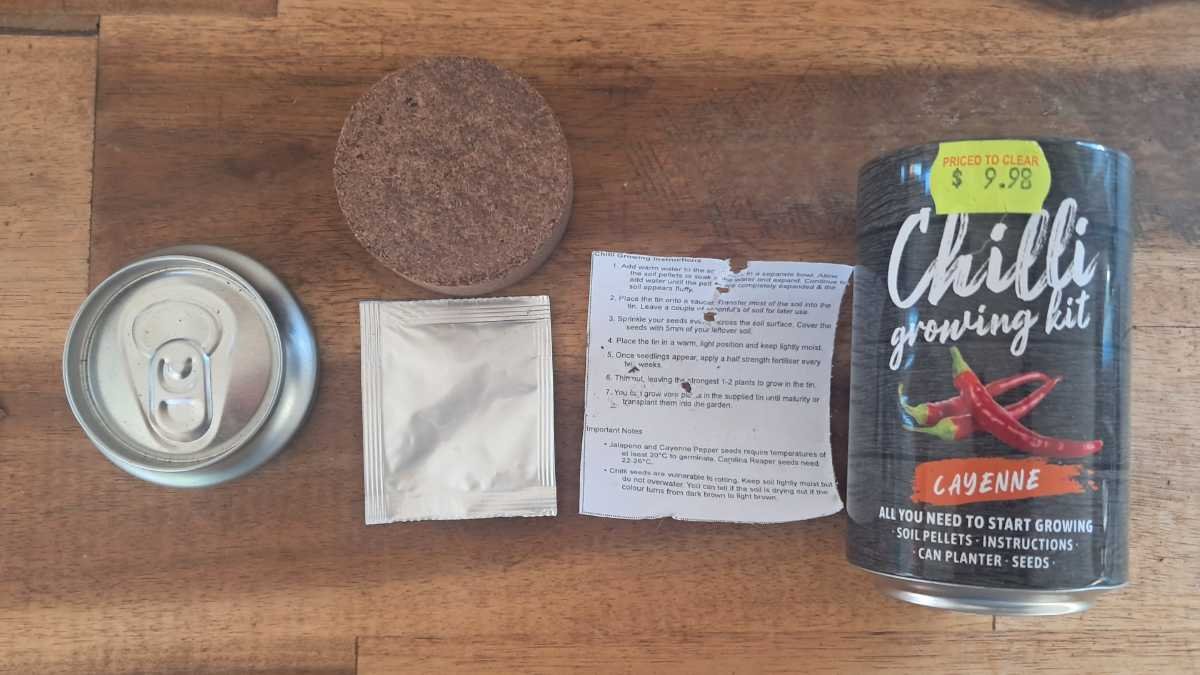
And to give the can credit, it has a drainage hole in the bottom.
It doesn't leave a lot of room for instructions, however, and it comes with another micro instruction sheet. Somewhere over the last few months, a slug had got inside the drainage hole and eaten some of the instructions.
This one also insisted on calling its peat pellet 'soil', but was generous. The large pellet left me with some extra growing media, and there was a 13 seeds included, which felt like a lot more than I might need.
I put most of the seeds into the can, but held a few back.
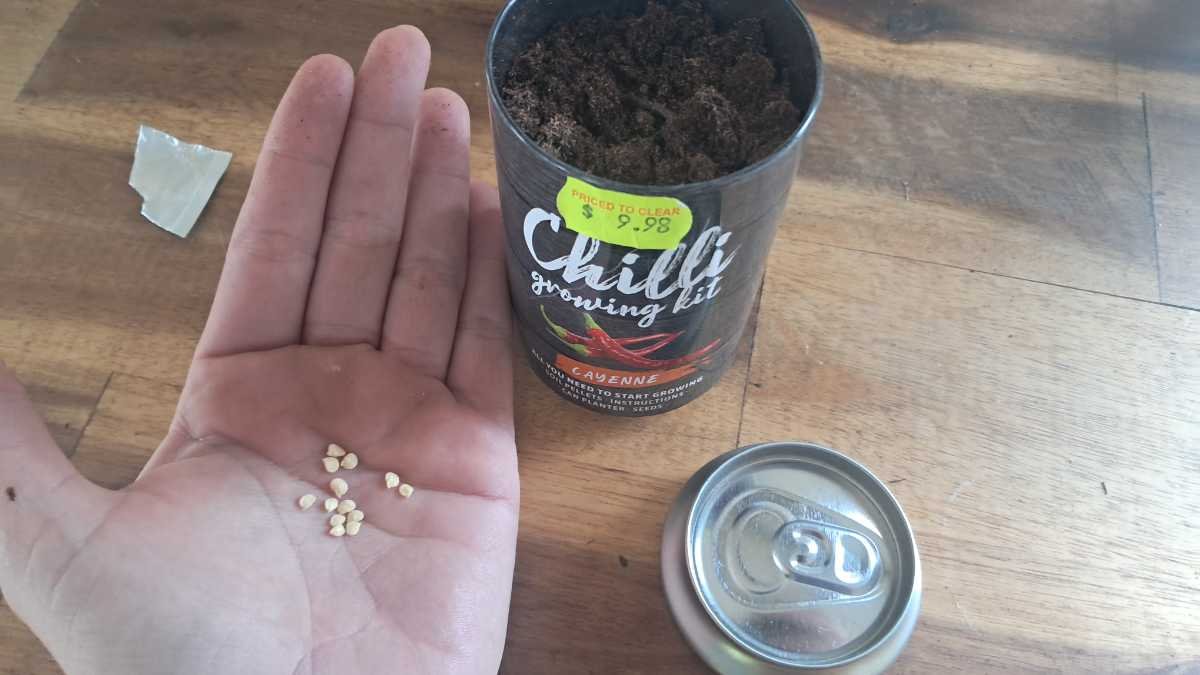
This one insists I can grow 'one or two' chilli plants in the tin. I foresee more than a few problems with it, but I plan to give it a try. If they grow.
As of publishing this morning, we haven't seen any germination in the cayenne.
Boutique Garden Grow Your Own Basil
Equally as cute as the mason jar sunflower is the basil-in-a-white-tin-with-chalk. Wouldn't it just look darling on a windowsill?
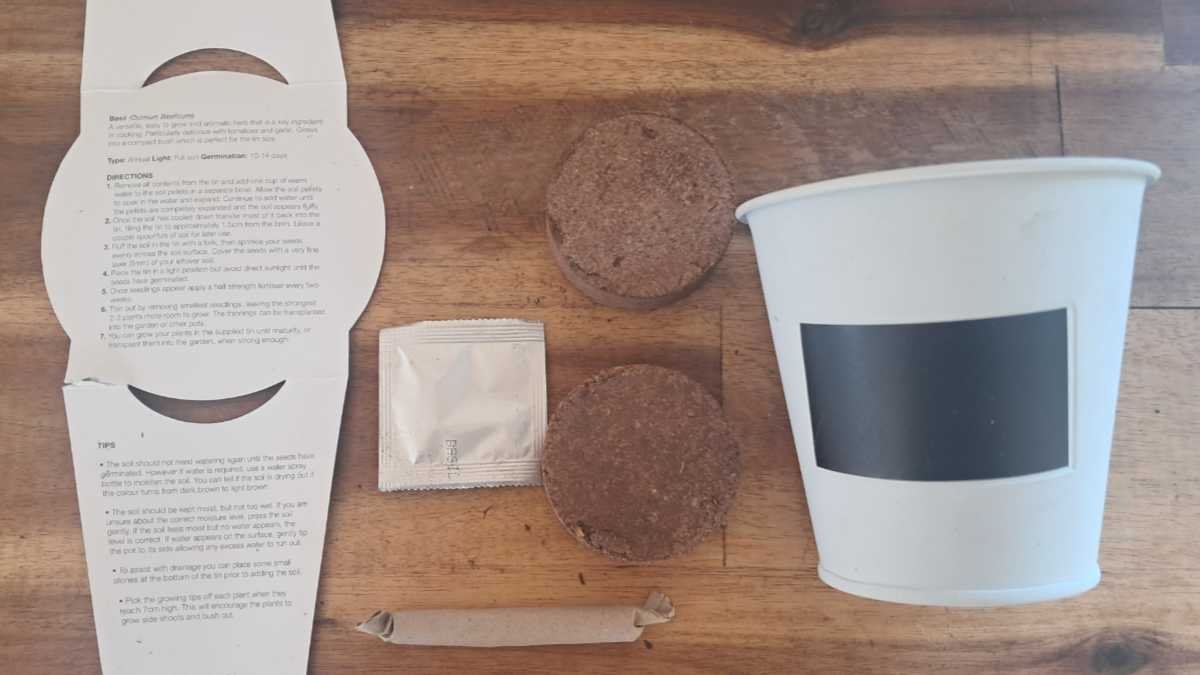
It's just a real shame that tin offers no way for the water to escape. This is another kit with zero drainage.
The kit comes with a stick of chalk (wrapped in paper to look like a cigar). It's an entirely unnecessary element purely there to make it cute. They could have just printed 'basil' on the tin, that certainly would be an improvement on my handwriting.
And again, it's calling the two large peat pellets 'soil'.
This kit was generous with a good number of seeds and more 'soil' than strictly required. It began germinating on 2 October.
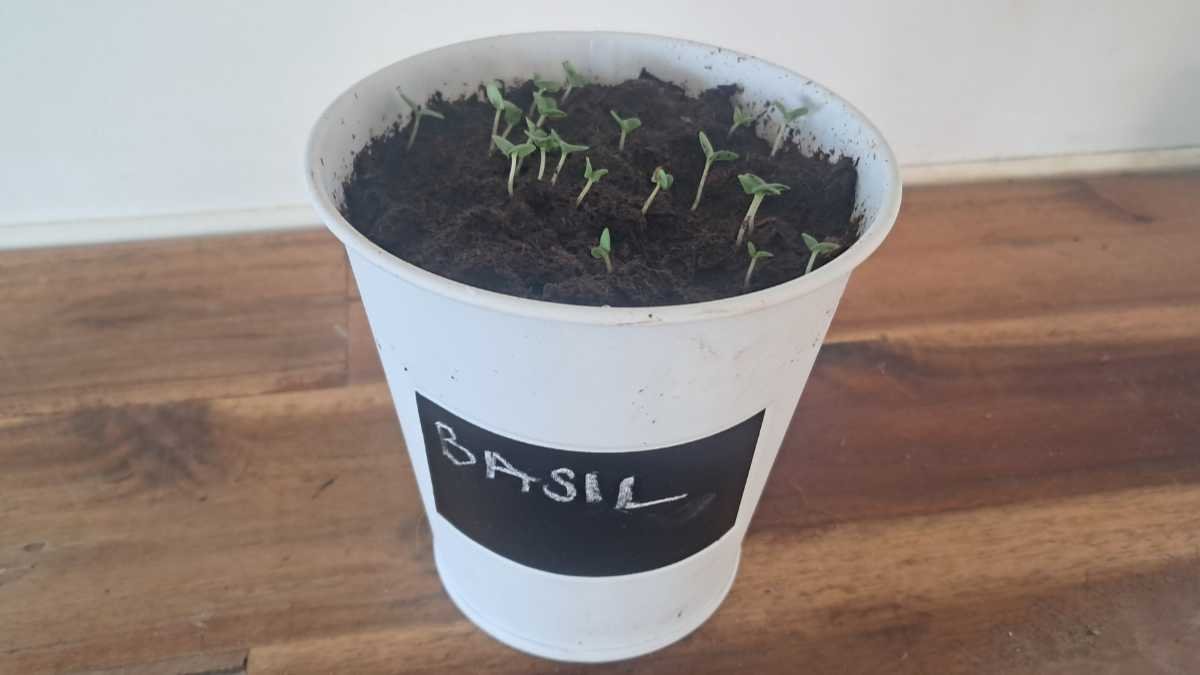
Some of these plants are likely to make it out into the garden because I think the expired basil seed I planted last month is a dud.
But this one might actually stand a chance of working as a stand-alone pot inside, so I'll keep growing inside the twee pot (just probably thinned out quite a lot).
Mr. Fothergill's Sunflower Giant All-in-One Starter Kit
In terms of kit design, I felt like this one set the gardener up for success the best.
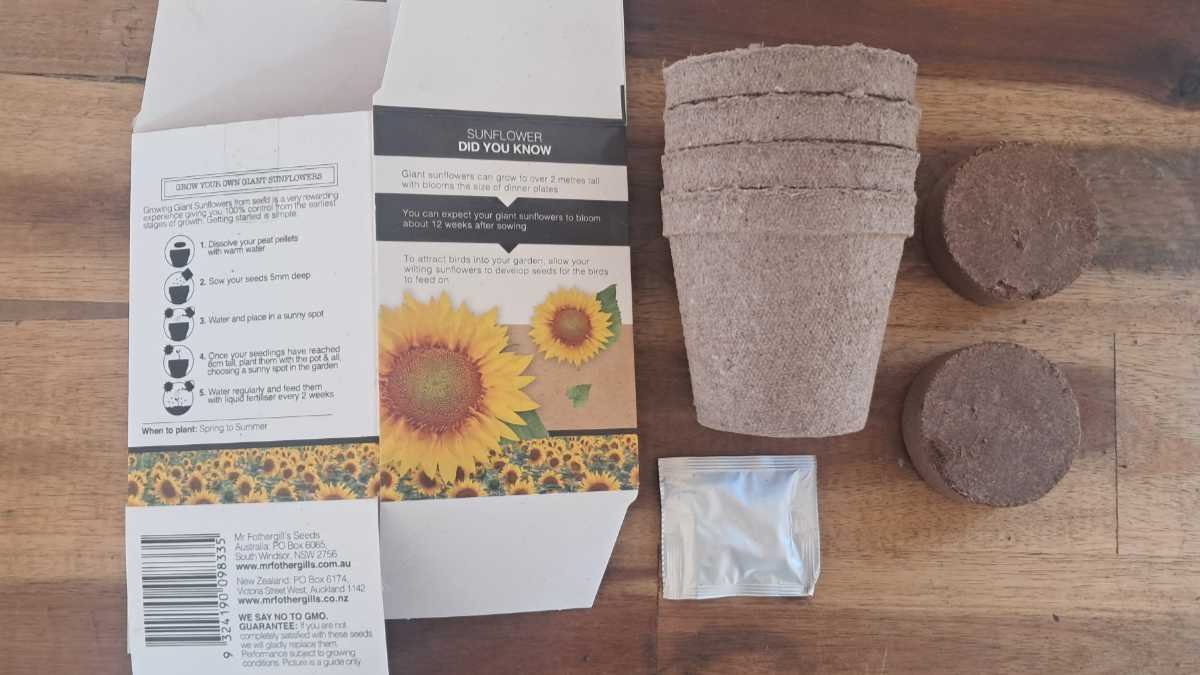
But all the instructions for this kit are on the box. There is no additional instruction sheet at all. And the box actually calls the growing media 'peat'.
The growing media was a different size to the other kits, but it behaved the same, and is why I suspect all of the kits do, in fact, contain peat.
This kit came with four biodegradable pots, two large peat pellets, and 19 sunflower seeds.
There wasn't quite enough peat provided to fit all four pots. I was lucky that I had extra left over from the other kits which I had been putting together.
I planted three or four seeds in each pot, and held five seeds back. They began germinating 4 October, but it's a low and patchy germination rate.
And that's disappointing. I'm visiting some children next weekend and I'd really like to give each of them one of these pots filled with sunflowers to grow themselves, but so far only four seeds over three pots have germinated.
Hopefully I'll get a little more success over the next week before I head off to see them.
New World Little Gardens
I wasn't sure if I was going to plant these. But given so many people have experienced gardening because of these kits, I did think it was worth getting my hands on some.
I wasn't a New World shopper at the time, so I found a person with some rattling around in a drawer who was willing to send me a pile for a koha.
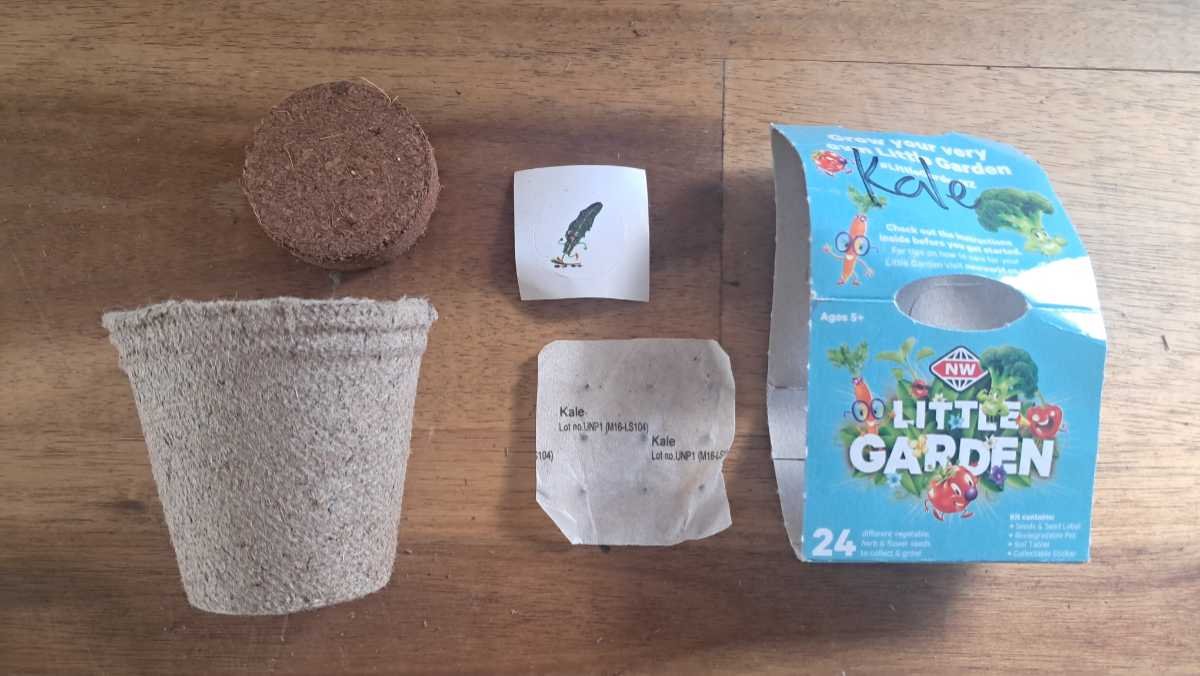
I didn't use the seeds provided in the kits because they're a bit old now. Instead I opted to use these kits as a comparison of growing media, using the left over seeds from the other kits.
The thing that immediately stood out about the New World kits was that the growing media was definitely different to the other kits I'd just set up. Soaking the pellets took the blink of an eye in comparison to the peat.
New World had an intensive focus on the sustainability of this promotion, and they published at the time that they were using coir rather than peat. Coconuts are a lot more sustainable than swamp products which take thousands of years to regenerate.
For comparison, I filled one Little Garden pot with leftover peat, and the rest with the supplied coco coir.
I was pretty over the whole task by the point so I don't even know what seeds I put in each of the pots, but some got cayenne and some got giant sunflowers. As it happens, those are the two kits with germination issues, and there's been no movement here either.
One complaint I saw a lot about these kits is that they're very small and dry out fast. The coir definitely retains moisture at this pot size better than the peat does.
The instructions, again, are made for better eyes than mine. But one major difference between these kits and the others is that these kits were free and collectable with purchase at the supermarket.
You don't specifically buy these ones to have a growing activity. They are a spare growing activity you get with the groceries.
The intent of the acquisition is important, and there's a lot of good will towards these kits in part because they were free and fun.
My conclusions
They all have flaws, and as someone who enjoys gardening, they're actually not even that fun.
The best of the lot was the Little Gardens because they were free, didn't use peat, and so I didn't have to stand around for ages waiting for my unsustainable growing media to rehydrate.
Over the course of this experiment, I thought about my own business idea. I decided that the supply chains required to make a product like this is just not even worth getting into.
Designing a kit that works for most, and which is attractive would take a fairly intensive investment and distribution network. Pots, growing media, seeds, fertilisers, tools, and instructional design is a whole lot of moving pieces, you know?
And I could see from afar that the business' 'exit plan' would be to get acquired by Mr. Fothergills, where all the work I put into my kits would inevitably be stripped, sold, or deleted. Because I think our goals are different.
Most of the kits on the market are designed for people who like the idea of growing things. They prioritise attractiveness or a gimmick over more important concepts like soil health, or supporting the knowledge of the gardener.
They all offer a sterile growing medium, a pot that isn't designed to support the plant to maturity, and no nutrients to support the plant.
Many of them do recommend I use a fertiliser. Two of the kits call themselves 'all-in-one'. None of the kits actually contain a fertiliser.
The biggest problem
Every single one of these products suffers from a brief and often physically tiny instruction sheet. All of those instruction sheets boiled down to:
- Soak your 'soil'—an activity very few people actually do in a real garden, using a media that gives no support to the plant itself.
- Put your 'soil' in this either totally impermeable pot, or this pot that is designed to disintegrate and will be awkward to use and handle.
- Put a seed into the 'soil', and cover.
- Water.
- Put in a garden some time? Isn't it cute?
And maybe I'm just tilting at windmills here, but I think people might want to learn about growing things when they buy a growing kit? They might want an instruction sheet in a font big enough to actually read?
Is it unreasonable to assume any kit you're picking up off the shelf should be designed to help the person using it succeed in growing?
There's no support for the grower beyond the initial sowing. Once you've put the seeds in the 'soil' and got them to germinate, then what?
All the kits get a little vague at that point. Not even a pesto recipe on the basil kit.
Is this going anywhere?
Yes and no. Growing kits for gardeners aren't realistic because gardeners know much better than I do what works in their specific circumstances. Seed + soil + water = plant isn't new to someone who regularly grows stuff.
In my reader feedback, a few people also indicated that grow kits didn't work with their existing gardens in some way. Every garden is different. The garden I have right now doesn't compare to the ones I've had in the past.
Gardeners of all stages land on this website all the time searching for tips on how to plant potatoes, garlic, or strawberries. Explaining things is kind of my thing. And growing things has been a life-long special interest.
The truth is, part of my own learning process is explaining. I suppose along the way I picked up on the idea that people find that annoying in real life.
So this website is a place where people can read it when it's helpful, and ignore it when it's not. And what I do here is exactly the piece of the puzzle each of these kits is weak on. The explaining.
I genuinely want people to have good information. And to succeed when they make the decision to start growing food.
So I'm working on a couple of things now. I don't totally know when I'll be unveiling them, but I do know it won't be your average growing kit experience.

READ NEXT
Sowing seeds for transplant
If you're just getting going with your growing journey and want some help growing your own seeds, start here.
READ NEXT
Transplanting seedlings
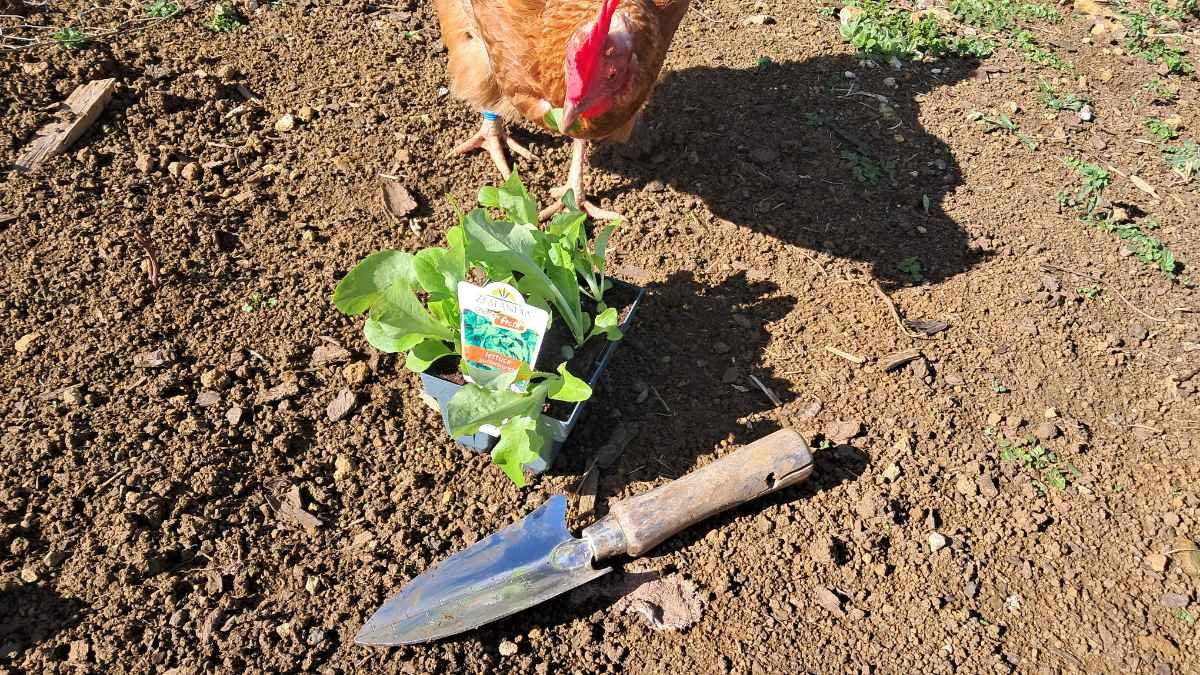
The step the growing kits don't seem to have much to say about. Planting your seedlings into the garden.
Related content: basil · chili · experiments · grow kits · Little Gardens · seed sowing · sunflowers
Stay in touch?
The Kat's Garden newsletter gives readers an extra peek behind the scenes. It's the best way to know when new posts go live, and what's happened since.
If you like what you've seen, join us and see what we learn next.