Every year at about this time, I outline my plan for this year's vegetable garden.
This year I did something exciting when doing my planning. I used the first draft of my own Garden Guide to help do it.
You see, most years I use three or four books, plus a whole pile of internet references. It's a whole research-heavy thing. And I'm a bit over it. I mean, I remember when the "big crops" go in, but for the crops I grow less often—or less reliably—I need reminders too.
So I wrote the book that I needed for planning my garden. The one that just got straight to the point and reliably told me when to plant and harvest the crops I planned to grow.
And once I had the first draft of that book, I raided my seed collection and got planning.
A big pile of seeds
When we arrived at The Outpost, I came with a big bag of seeds and a whole production plan.
And cue my surprise when I opened the door and found a second, even larger collection of seeds left by the former owners.
What I didn't count on was the condition of my new garden. Or a global pandemic. Between that and our own personal ups and downs, most of those seeds never got planted.
It became kind of problematic, so I ended up sorting through them and donating a hefty pile to a local community garden.
And I was still left with a generous collection of seeds that had expired. What could I do? I could throw them away, but what a waste that would be.
Or, I could plant them and accept growth might be a little uneven or even non-existent. I decided to go this route.
It carries the risk of failure, but at least they won't go to waste or sit around getting even older. This year, we're using them.
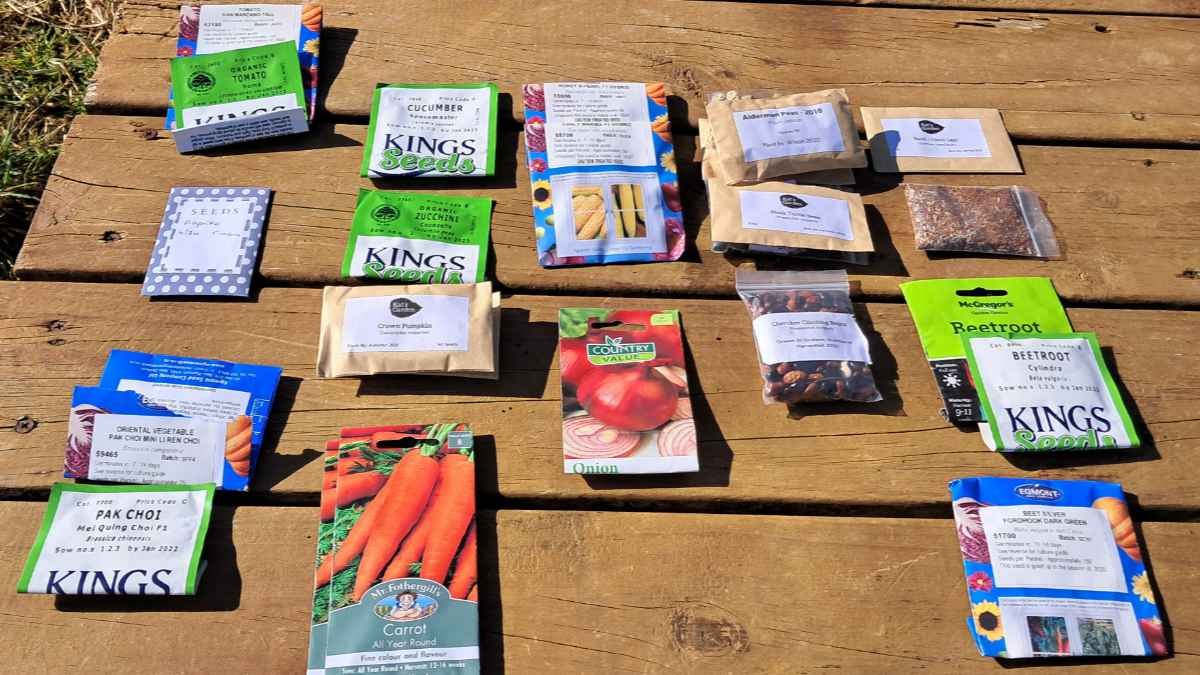
So I went through my collection and put everything I wanted to plant into one bag of expired (and some not-expired, but mostly expired) seeds.
The list includes basil (expired 2021), beetroot (expired 2022), bush beans (expired 2022), carrot (new, so good until 2030), climbing beans (expired 2020), courgette (expired 2023), cucumber (expired 2023), pak choi (expired 2021 and 2022), paprika (new variety via a reader so should be good), peas (expired 2020), peppermint (expired 2021), pumpkin (expired 2021), red onion (expire 2027, but open), silverbeet (expired 2020), sweetcorn (two, expire 2026 and 2027, but open), tomato (two, expired 2020 and 2023), and a mixed random packet of rocket and lettuce seed I saved many years ago.
All that, plus the peanuts I harvested last year (plus a new variety of peanut sent by an Instagram follower this year too), the sunflower seed I save every year, and the bag of green potatoes waiting for things to warm up a lot more before being next year's crop.
A garden full of weeds
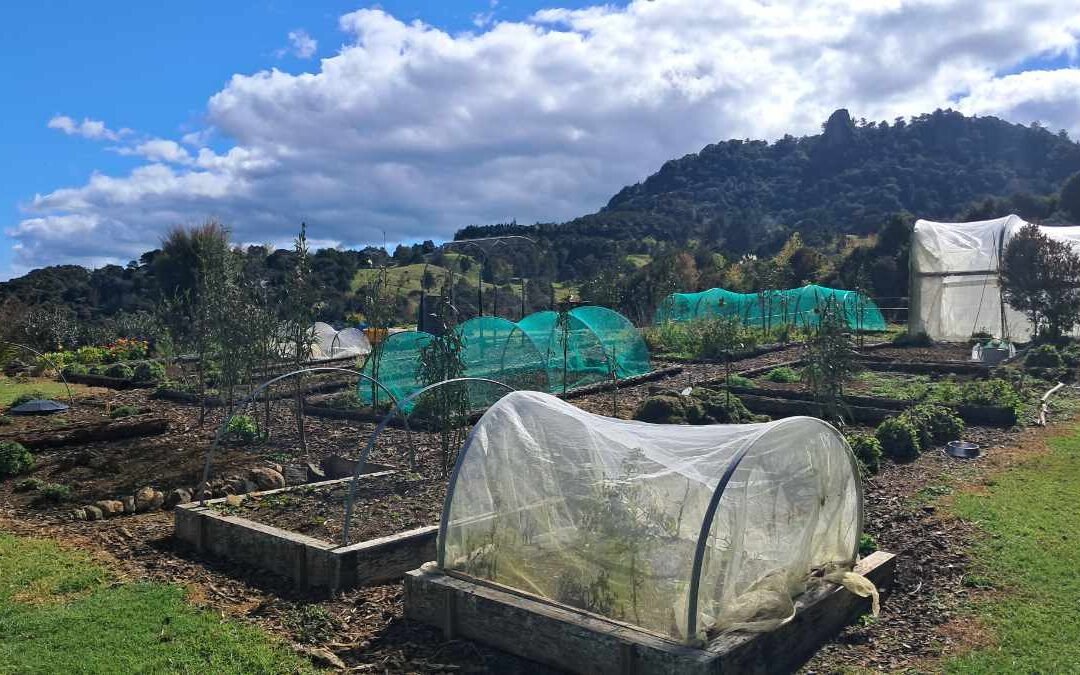
All winter I have been slowly but surely weeding and tidying up my garden. There's still a little bit up the back to go, but it's a vast improvement on what it looked like at the end of last summer.
I have capped the number of catnip plants I am allowed to keep (marked in green below), and have been lifting and biffing all the extras. I have been making space for what I am hoping is a fun, and even more productive growing season than usual.
I drew up a plan of my garden, and began placing all the crops in. Some beds are already full with garlic, strawberries, and over-wintering paprika, marked with pink. But in all the empty spaces I played about with my options until I landed on something I was happy with.
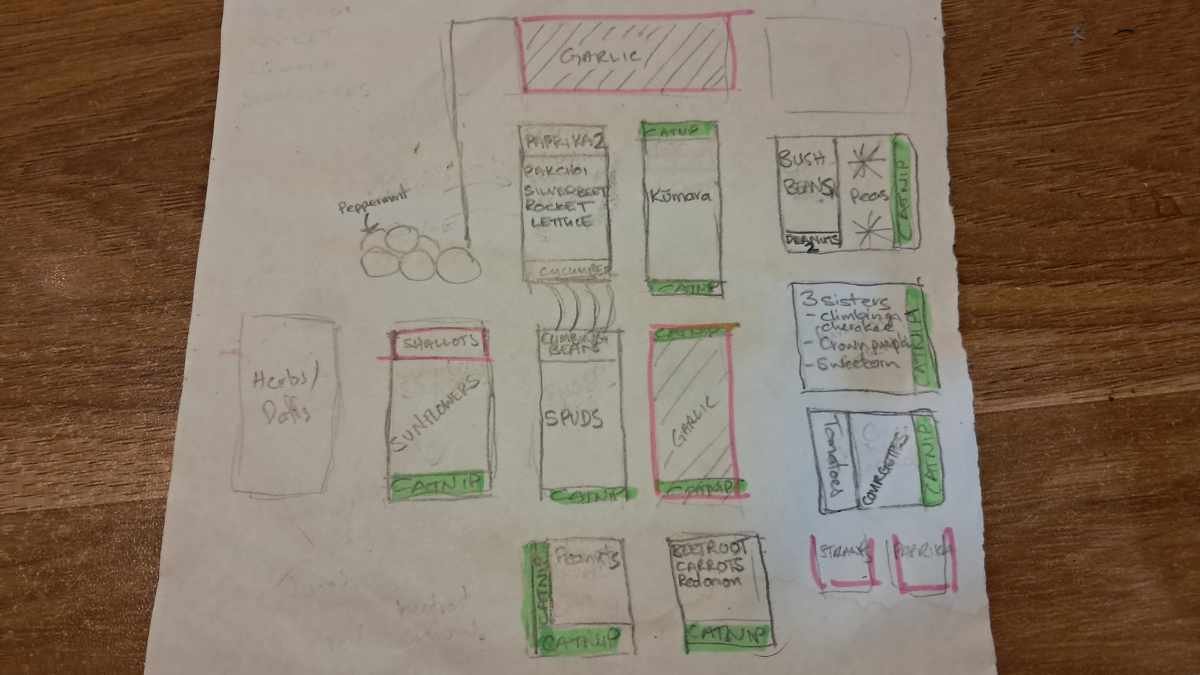
Pencil-on-paper works for me. Last year I tried a 3D computer version, but given I was already learning Affinity to design a book at the time, I decided to go the route that had the least resistance for my brain.
The book my brain needs
I like gardening. I think it's good for my brain. The only time I really experience mindfulness is when I'm weeding.
And I've spent quite a lot of the last decade growing stuff, learning about growing stuff, selling things to other people so they can grow stuff, and being paid to grow things for others.
But if I can find a shortcut to spend less time outside and more time inside working on some weird side project, I will probably do that. If I can grow more by doing less, that's a yes from me.
And every book on my shelf just seemed to make it so complicated. The best books I own are outdated and a bit problematic.
I didn't want to wade through a wall of text to figure out when I should plant the carrots. I just wanted to reference something quickly so I could put the carrots into my garden plan, and move on to the next thing.
Which is what Kat's Garden Guide is. It's a record of my favourite tips, shortcuts, and a reminder of what needs doing each month. What must happen, and what can happen.
Now that I knew what I was planting, and where it was going, I just needed to figure out when to plant each of my crops.
Planning a garden that feeds
So I sat down with a new page divided up by the next six months.
Then I opened the first complete draft of my own Garden Guide on my phone and used it to plan what I needed to do to get all these seeds into the ground.
It took about 20 minutes. It was a revelation, honestly.
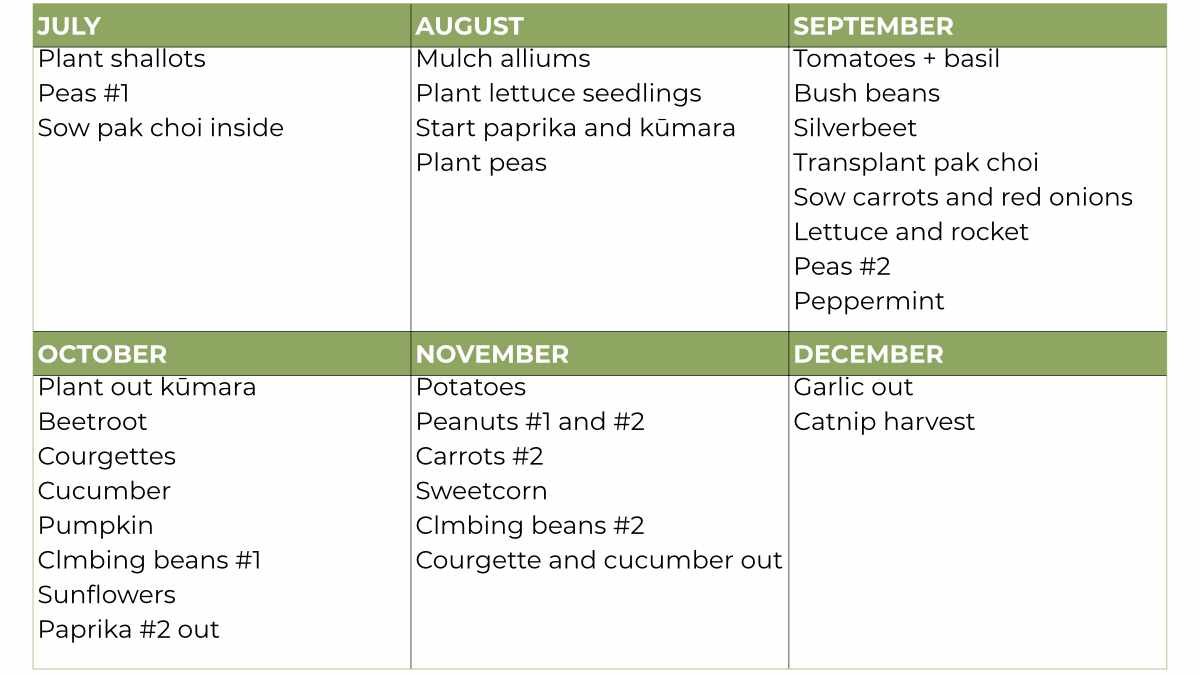
Sure, there were a couple of design tweaks I could see I needed to make to the guide itself. This trial run as an actual user caused a couple of frustrations I fixed before publishing, but the process really was as simple as:
"What do I want to eat?" > "Where shall I plant it?" > "When should I plant it?"
That's it. Whole plan done.
But will it succeed?
That's the real question every year, huh? I'm taking a risk with using so many expired seeds. There's a real risk of failure just in that.
But my growing plan started in July. And while some of the seeds I've planted have failed, the plan is well underway in other respects.
And if I truly manage to keep my garden looking weed-free, properly mulched, and thriving, then it will be the first year I've actually managed that.
But you never achieve what you don't attempt. And sometimes it's our failures that make our successes even sweeter.
READ NEXT
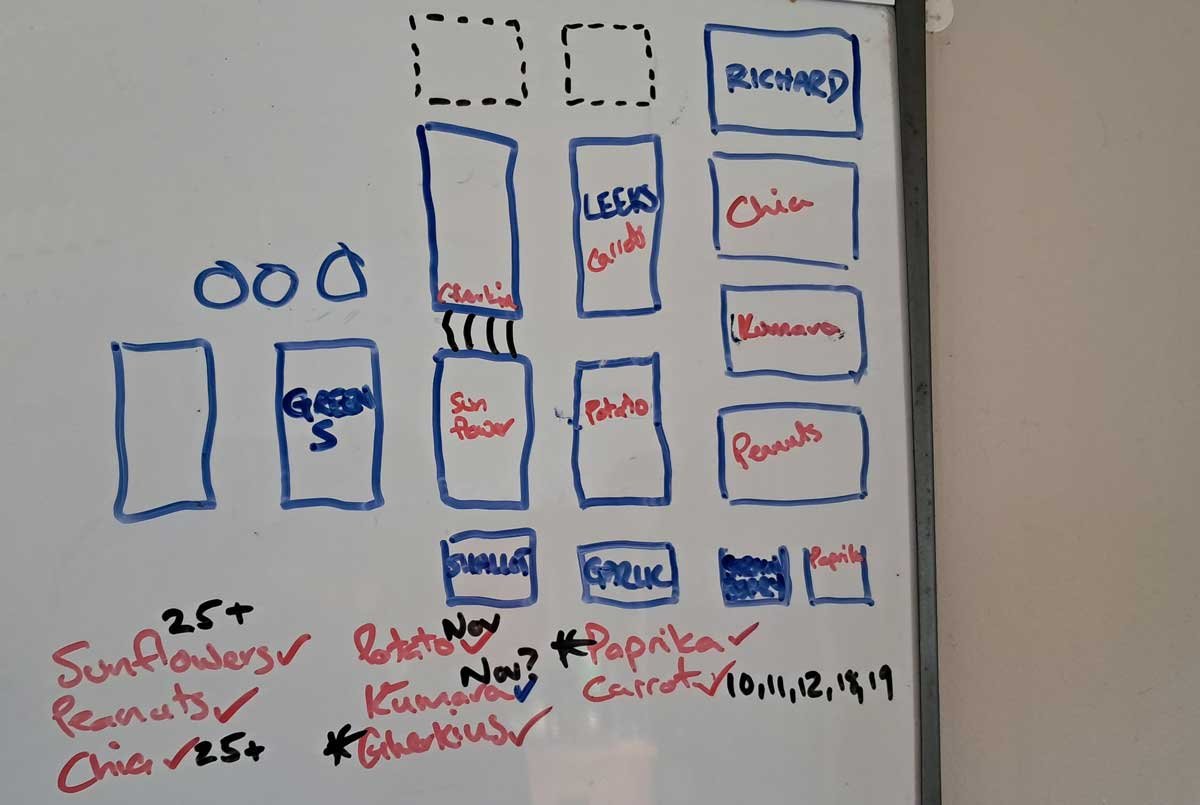
Summer garden plans
The plan for summer 2025.
READ NEXT
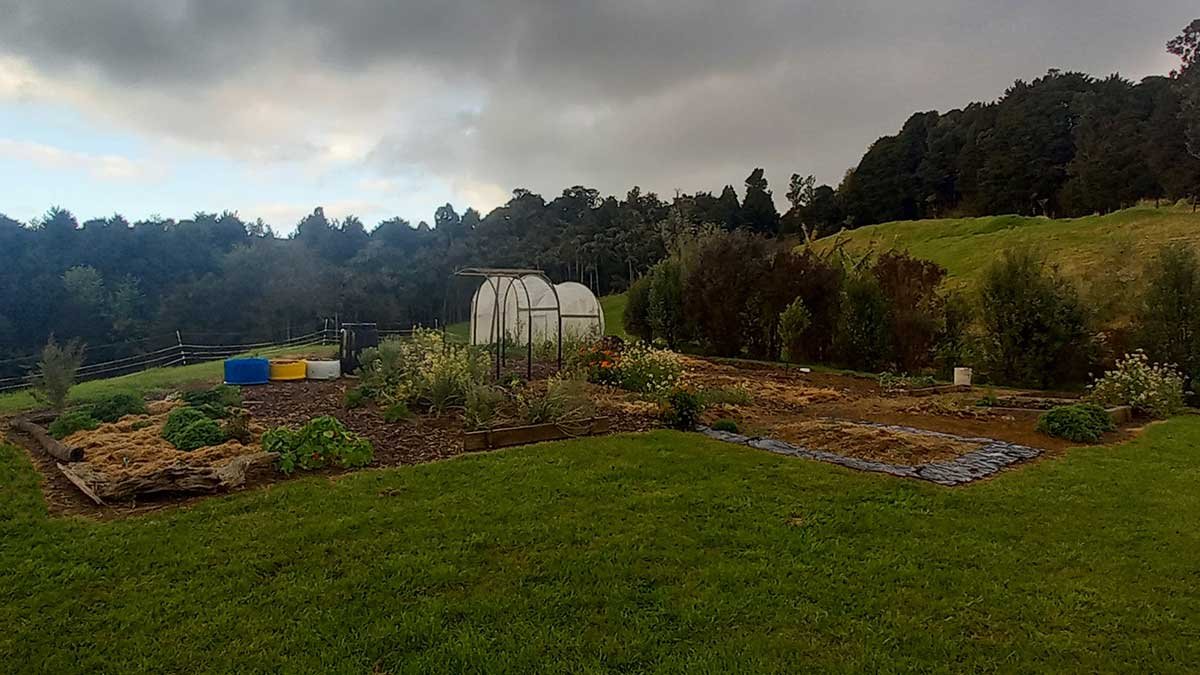
The best-laid plans
Yes, I do seem to do this every year. Here's the garden plan for 2024 too.
Related content: expired seeds · garden guide · garden planning · gardening · seeds · The Outpost · vegetable garden · weeding
Stay in touch?
The Kat's Garden newsletter gives readers an extra peek behind the scenes. It's the best way to know when new posts go live, and what's happened since.
If you like what you've seen, join us and see what we learn next.