This post was originally published April 2021. Edited and re-published June 2026.
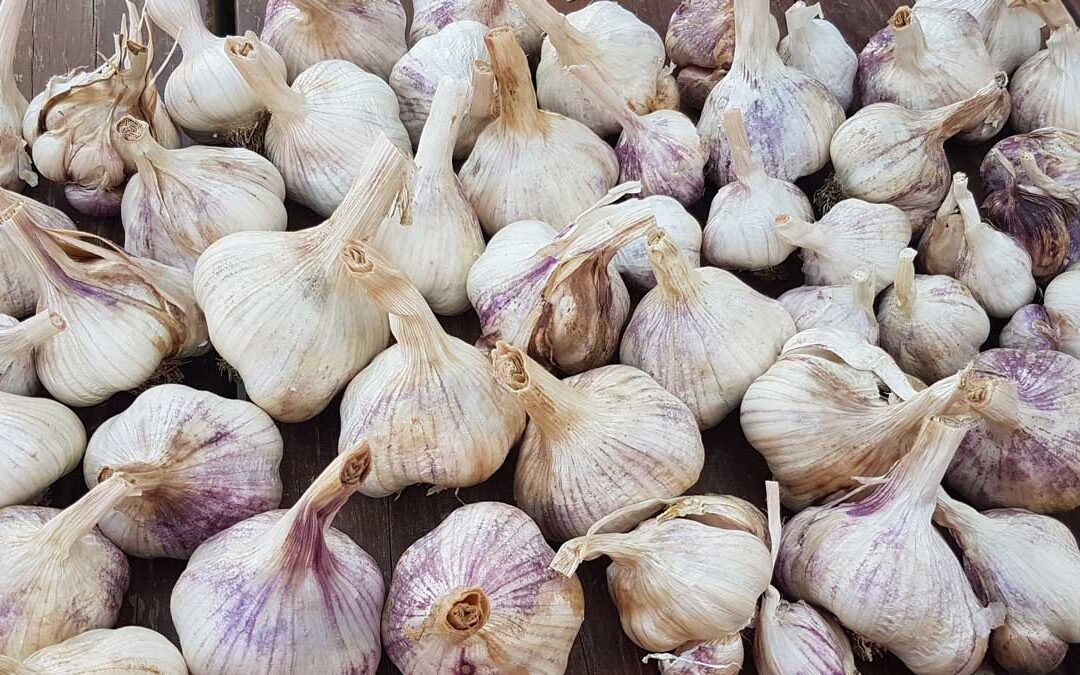
Garlic planting season in New Zealand runs from April to the end of July. It's an exciting time if you're a garlic nerd like me.
I originally wrote this post heading into a big grow. I wanted to collate everything I had learned about growing garlic to that point. But that season turned out to be a fairly traumatic one. Over 1,000 cloves got hit terribly with rust

It broke my dreams, I’ve barely been able to look at this post filled with well-meaning advice since.
It’s taken a few years to recover. But garlic season is beginning to become something to get excited about again. My methods and goals are different now. I learned from my failure.
Sometimes I get contacted about garlic. In 2026, one of those emails made me realise I no longer believe a bunch of the stuff I said in this post. I actually strongly disagree with the advice. And this post gets a few eyeballs. So it's time to correct the record.
You see, the most-true thing I’ve learned about garlic is that I know nothing. It has surprised me in every possible way, in every season I’ve grown it.
The only consistent garlic-growing tip I have is to stop caring. Set it up as best you can, and have the season you're going to have. But don't attach expectations.
The way garlic grows depends on your climate, the variety you're growing, and the soil you’re growing in. There are so many variables that we all seem to have different experiences.
Advice for cool climates that get frosts and snow doesn’t necessarily translate to the “Winterless North” where my garden grows my garlic.
But I’ve been planting, growing, and getting surprised by garlic for nearly a decade now. And along the way I’ve learned things that might help you in your garlic growing adventures.
So here’s what I know now.
Jump to section
1. Prepping your garlic bed
2. Sourcing and selecting garlic varieties
3. When to plant your garlic
4. Selecting cloves to plant
5. Spacing garlic plants
6. Weeding your garlic
Prepping your bed
I usually start prepping my bed in April and May, so that it’s ready for planting in June.
Starting early means the nutrients I’m adding are actually available to the garlic when it needs them.
Add lime
Calcium is the thing that helps plants form healthy, strong cells. It's critical to a strong plant.
Strong cells help prevent rust later in the season. Garlic with good calcium levels is better able to resist passing rust spores. One of the easiest ways to add calcium to your soil is through the application of lime.
Follow application guidelines. If you're super-serious about it, get a soil test done.
Knowing your calcium content and pH via a soil test will help you select what kind of lime to use, and how much of it to apply.
- Dolomite lime—calcium magnesium carbonate. Adding it will increase the soil pH. It also includes magnesium, which is important for producing chlorophyll. A lack of magnesium will stunt plant growth, but too much can actually prevent calcium uptake. Use only if you specifically know your pH is too low, and your soil is low in magnesium.
- Garden lime—pure calcium carbonate. Adding it will increase the soil pH.
- Gypsum—calcium sulphate. Also increases sulphur (a micronutrient that garlic also benefits from), and can be helpful for conditioning clay soils. It does not increase the pH.
Add organic matter
Compost, animal manure, blood and bone, sheep/chicken pellets, seaweed, fish guts, possum carcass, worm castings, green manure, lawn clippings: they all work to improve your organic matter content.
This will improve the overall nutrient content of the soil: important because garlic is a heavy feeder. Organic matter also helps improve your soils and retain moisture.
Whatever you have on hand will be good. If you're buying it in, pick two or three things off the list above—compost and blood and bone are available pretty cheaply at most garden centres. Just rake them into the soil with your lime.
We tend to use whatever is handy. In the past it’s been rotted horse manure, fresh cow manure, or home-made compost. In 2026, it was blood and bone and worm castings from the worm farm.
Sourcing and selecting garlic varieties
One place the market has really improved since I originally wrote this post is in the range of seed garlic now available.
Bulbs Direct offer both hard and soft-necked varieties, but you do need to be quick about it. Kōanga Institute, Setha’s Seeds, and Te Mata Garlic also have a range of garlic varieties for sale each year. Speed is of the essence.
But even big retailers are stepping up! I’ve seen ‘Fire’ and ‘Red’ at Mitre 10. Though again, those seem to move fast.
I’ve had significantly better results from the harder-to-find varieties in my Far North garden. Hard necks like ‘Creole’, ‘Red’, and the Rocamboles grow something even in an absolutely terrible year. ‘Fire’ and ‘Takahue’ also perform pretty well for me.
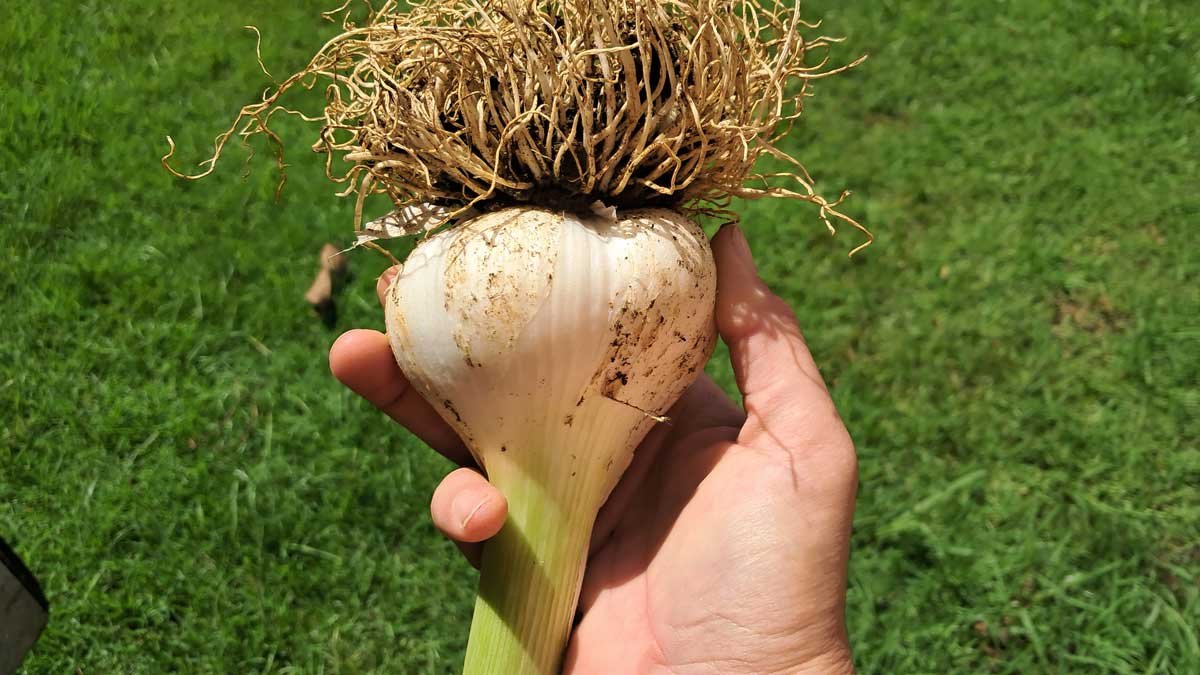
The varieties which are easiest to find are 'Printanor' and 'Elephant garlic'.
'Elephant garlic' is technically a leek, and will grow massive cloves with a milder taste.
You know how us millennials laugh at recipes calling for 'one clove of garlic'? You actually only want one clove of garlic 'cos it's as big as a shallot.
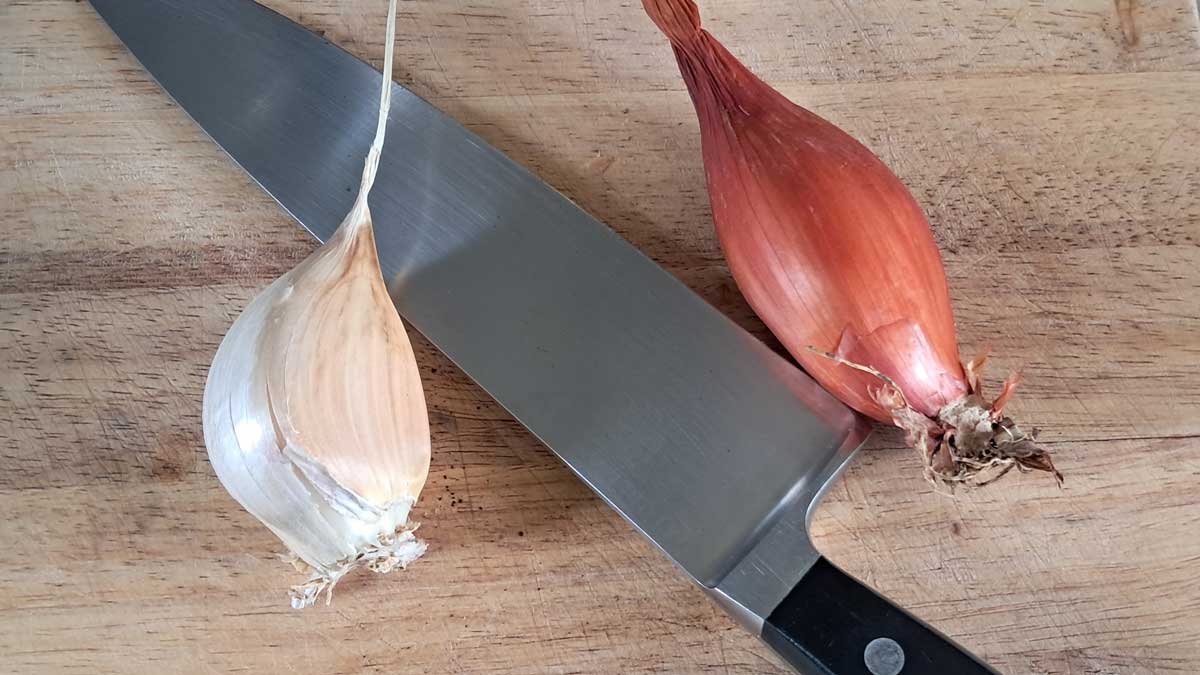
Elephant garlic, a chef’s knife, and a regular-sized shallot.
'Printanor' is a French soft-necked spring garlic. I have never had much success with it, and my disregard for it is why I am now a weird garlic person carrying garlic trauma.
There is a good chance you don't have a choice, and that’s fine if you live south of Auckland. If it's all you can get, read on for some handy tips.
When to plant your garlic
Here's the thing about garlic timing advice: it depends on both how cold your garden’s winter is, and what latitude you garden at. Most advice—and especially the advice that tells you to plant early—is written for a place that experiences winter.
That’s not something my garden in the “Winterless North” really experiences. And my failures have meant I’ve had to go deep on my observation and research.
What I learned is both the complete opposite of what the previous version of this post said (I’m sorry, this is the main reason it needed the edit); and might make the difference if you’re trying to grow garlic in the Far North (or south, if you live in the Northern Hemisphere and not New Zealand).
The science says
Garlic bulb development is triggered by two things, working together: vernalisation (a period of cold) and photoperiod (rising daylight hours).
Once the garlic has had enough cold (it varies by variety), lengthening daylight hours signal the plant to stop making leaves, and start building a bulb.
Bulbing generally kicks off once daylight hours exceed 12–14 (after the equinox in September). But the more cold it gets in your specific garden, the earlier it starts.
In warmer climates like mine, there’s less winter. Less vernalisation. The garlic is more reliant on the photoperiod signal to trigger bulbing.
While we all cross the equinox (12 hours of daylight) around 22 September; our latitudes mean a garden in Invercargill reaches 14 hours of daylight around 28 October. My garden doesn't get there until around 17 November.
For me, that signal arrives at roughly the same time regardless of when I plant it.
Which goes a long way toward explaining why they always seem to be ready in December, no matter when I put them in.
For us, winter is wet, more than it is cold. And I don’t really want my garlic at peak maturity at the wettest time of the year.
The last time I did that, it got hit terribly by rust and took 8 months to mature.
Growing garlic in a winterless garden
Our garden is lucky if it gets a cheeky wave from a frost. And if I plant them early, they’re just in there longer. More opportunity for things to go wrong.
So I'm a solstice girlie. My sweet spot is to plant in mid-June to mid-July. Planting later means the garlic is still small while rainfall is good-to-torrential, with plenty of airflow between the plants. It’s about as cold as it gets, for as long as it gets cold.
Then as they size up, the rains ease off and the rising day length seems to do exactly what the science says it should: trigger bulb development.
It works for me consistently.
If you live in the Far North and struggle to grow garlic in a winterless garden, try an experiment on the later end of the window, rather than rushing to get them in.
Growing garlic where it’s cold
To caveat that advice, I have a local friend who lives nearby, but more inland from us. She gets more frost in her garden, and she also pulls up great early-planted garlic.
It’s not just ‘which part of the country’ you’re in, it’s your specific garden. If your garden has a cooler climate than mine, planting earlier (March, April) might work in your favour.
The longer exposure to cooler temperatures triggers bulb development sooner. Meaning you won’t have the same problems as I do.
Timing Printanor
In 2020 I went down a rabbit-hole trying to work out why Printanor is so freaking disappointing. I stumbled on an article from 2010 that explains it.
I quote the important bit here just in case it gets pulled from the internet sometime, but the full article is worth a read.
New garlic strains buck tradition
"He says that generally these days, planting garlic in June is too early.
This, he says, is because the tradition of planting on the shortest day and harvesting on the longest day related to the old American garlic varieties that "needed a big chill". A lot of those old Californian varieties have died out and it's now almost impossible to import that seed into New Zealand, Mr Murphy says.
Nowadays, most of the seed garlic available is of French origin, he explains, and one of the most common varieties is printanor, which comes from the French word printemps, meaning springtime.
These newer varieties are vigorous growers that only need about five months of growth. They should be planted in late winter – from late July, although Phoenix Garlic plants all its garlic in August."
THIS is why when you plant it in June to pull it out in December, it's disappointing.
It didn't get a chance to do its thing in the best (warm, dry) conditions. It doesn't like the cold of winter so of course it doesn't grow well!
"If you plant early, they will put down a lot of roots. You will have a bulb that's not uniform in shape, and bursting at the edges."
I don't know about you, but that describes my attempts at growing Printanor perfectly.
Still, even with this advice I didn’t do a whole lot better the year I ran an experiment.
But if you are someone stuck growing what your garden centre stocks, try planting it later like the commercial guys. They harvest later, but they can grow it.
Selecting cloves to plant
The fat outside cloves from your garlic bulb are for planting. They have lots of energy reserved for growing a strong fat bulb.
Eat the little inside cloves, they're not going to grow into much. At best you’ll get ‘rounds’—plump, round, single-clove garlics which require another season’s growth to produce a proper bulb.
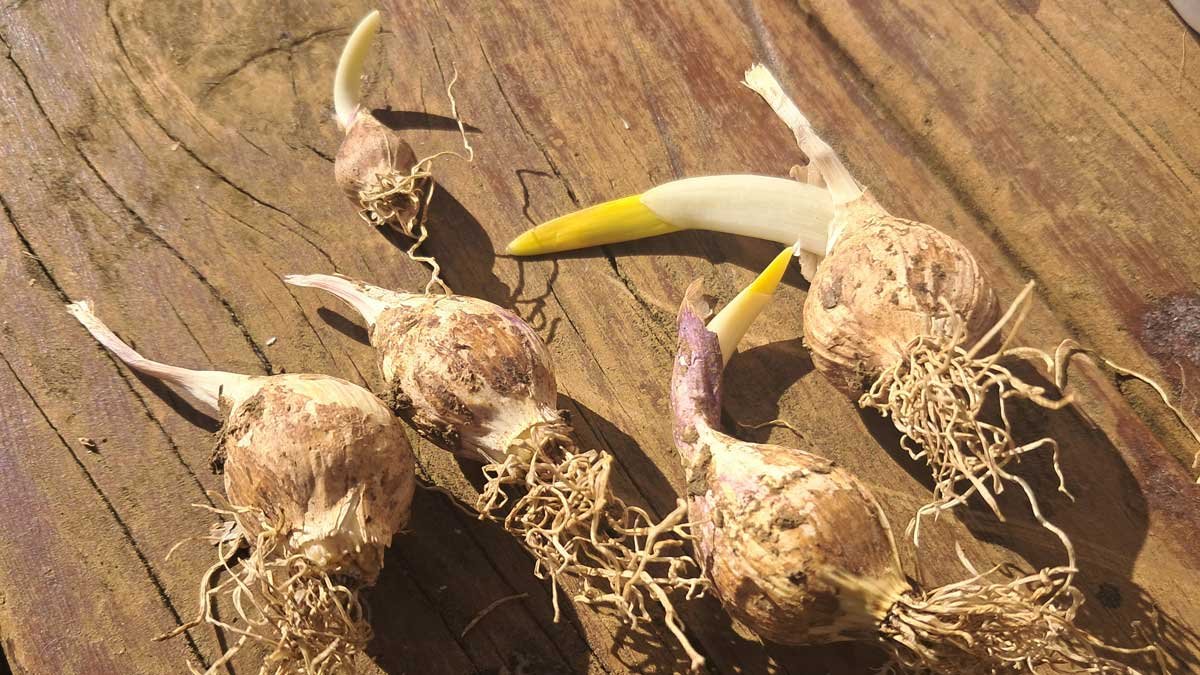
Try not to break the bulb apart until you're ready to plant it, as it might weaken the energy the clove has stored for growing.
Sort your cloves before you go out to plant them. I do it the night before. Select the large cloves from the outside of the bulbs (keeping the skin on as much as possible) and hold them in a container.
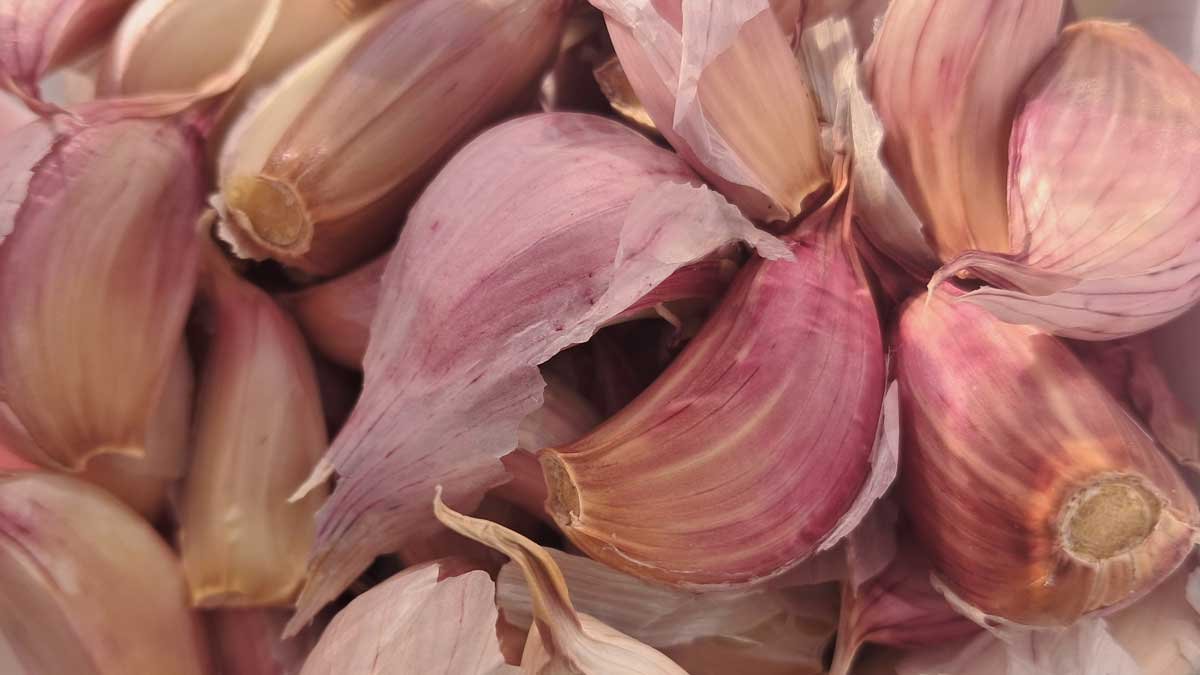
Doing this in the garden while you’re planting sucks, especially if you're planting a lot of garlic. Making it a separate step means you make better judgement calls about what's worth planting.
You can soak your garlic for 20 minutes in water (or, add a dash of fish/seaweed fertiliser for an extra boost) before planting to aid germination, though it’s not strictly necessary.
Spacing garlic plants
I have a huge garden and a lot of trauma with growing this crop. I grow at 30cm spacing and I’ve had considerably less trouble with rust since I increased it.
But most growers seem to recommend 10-20cm spacing. That's probably more realistic for those with smaller gardens, who might think 30cm is an awful lot of space for a crop that takes 6 months to grow.
Just be aware that the closer-together it is, the more humid it gets between the plants. A healthy garlic plant takes up a lot more than 10cm of space, and cramming them together reduces airflow, encouraging rust to take hold.
You are going to do what you've got to do, but try to give them as much space as you can.
I've experimented with techniques, but the easiest I've found is to run a string along the rows, and use a measuring tape to get the distancing along the row right.
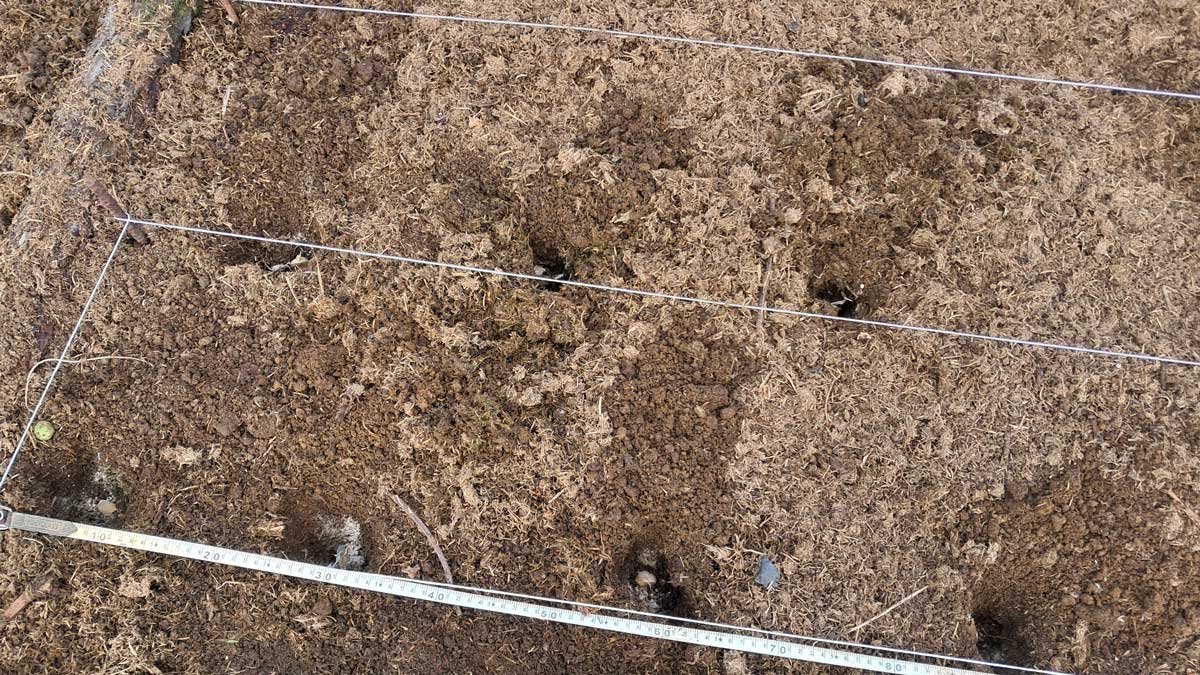
I leave the strings in place until the garlic pops up to help us see the germination rate, which most years is 98-100%.
Planting depth
I don't think this matters a whole lot. The general advice is to plant twice as deep as it is high. So if your clove was 25mm tall, your hole would be 50mm.
Going higher than this means your bulb grows closer to the surface. This can actually be pretty exciting because you can see them fattening up.
But it also means the stalks are more likely to fall over in high winds, potentially stunting the plant. Planting lower helps to firmly anchor the plant.
Again, we've experimented with techniques. Digging a long trench gave us wonky rows with varying depths.
Creating small individual holes with an appropriate tool, dropping the clove inside, and letting the soil cave back in is more efficient, and more precise.

Hoe for weeding (top) and the tool I use to plant each clove individually (below).
Garlic cloves do have a top and a bottom. The top is the pointy bit where the leaves begin erupting. The bottom usually has a rough flat bit.
Stand them up in the holes with the top at the top, and the bottom at the bottom.
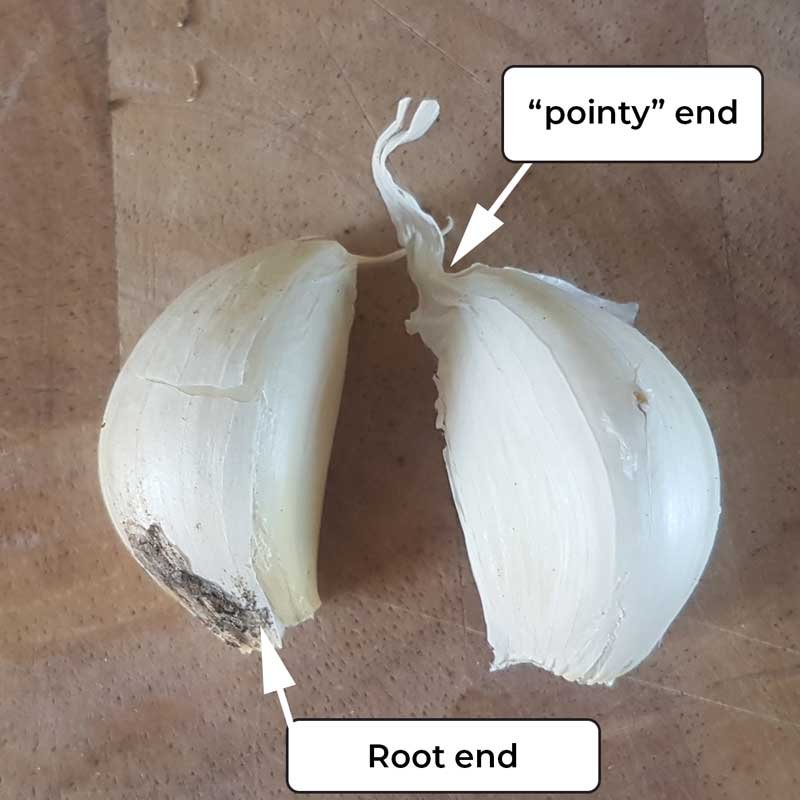
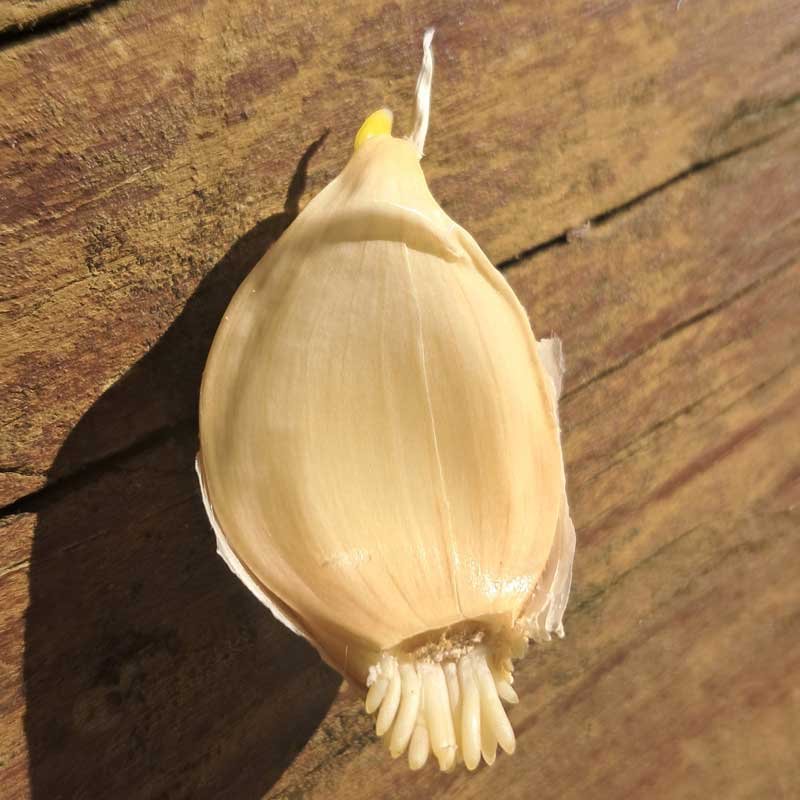
Weirdly, they can flip themselves over if you mess this up, but it takes some extra energy to do so.
Weeding your garlic
And that's it for a while. Your garlic will take anything from 5 days to a month to germinate. It depends on your variety, the weather, and when you planted it.
Your only job for the first 6-8 weeks is keeping the weeds at bay. I use a hoe (shown above) for this job. It doesn’t take too much work to maintain a clear bed for a few weeks.
Just find 10 minutes once a week to rub the weeds with the hoe when they're young, and they won't get a chance to grow.
It’s not a crop you can just ‘set and forget’ if you want to see progress, however. So I also wrote a post on caring for your garlic. Worth a read if you made it this far.

READ NEXT
The dreaded garlic rust
My garlic crops got infected by rust. In this post, I figure out what I should do about it.

READ NEXT
Caring for garlic
You've planted garlic! Now it's time to make sure it has the best-possible chances of success.
Related content: blood and bone · calcium · compost · elephant garlic · Far North · garden amendments · garden lime · gardening advice · garlic · garlic rust · grow guide · Koanga Institute · organic matter · planting · Printanor · seed garlic · soil test · Takahue · weeding · worm juice
Stay in touch?
The Kat's Garden newsletter gives readers an extra peek behind the scenes. It's the best way to know when new posts go live, and what's happened since.
If you like what you've seen, join us and see what we learn next.