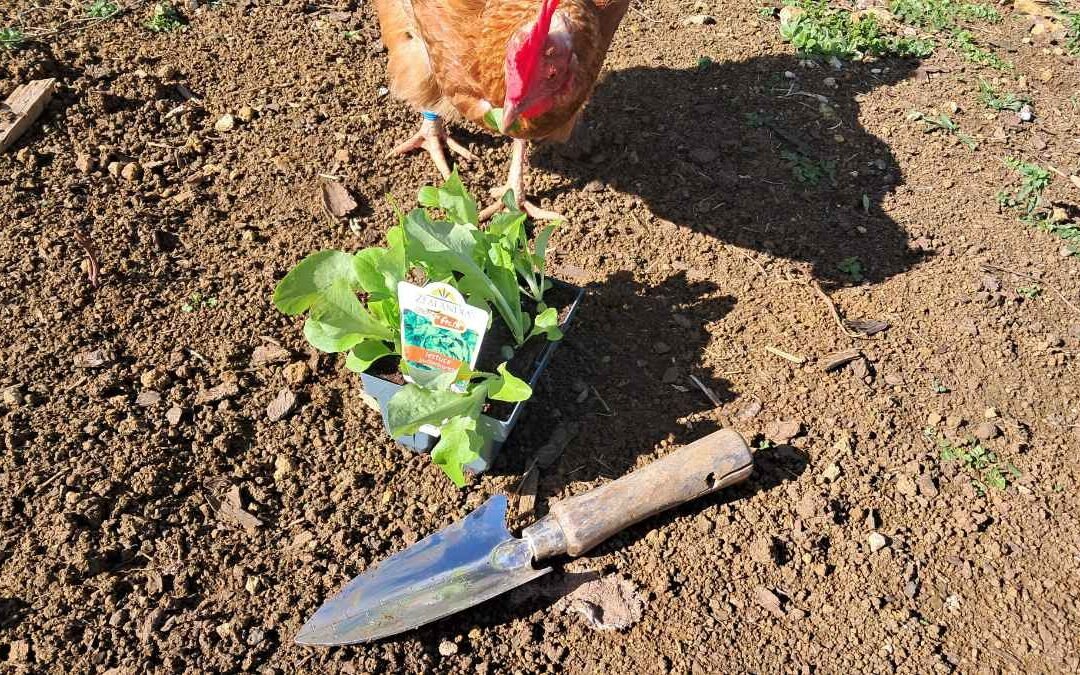
You have seedlings. Either you raised them carefully from seed, brought them home from the garden centre, or found something growing in the wrong place and want to move it
But you have a baby plant, and you need to put it into your garden.
‘Transplant’ means to move or transfer a plant from one place to another.
While digging a hole and bunging it in has a pretty solid chance of working (plants are adaptable), there are some tricks which you might benefit from knowing.
Best vegetables and herbs for transplant
Not every seedling in the seedling rack is going to perform at its best when you transplant it into your garden. Some plants generally prefer to grow directly from seed.
Home vegetable garden plants which can be transplanted include: basil, all brassicas (including broccoli, cauliflower, pak choi etc), capsicum, celery, chilli, courgette, cucumber, eggplant, kūmara, leeks, melons, mint and other herbs in the mint family, pumpkin, rosemary, squash, strawberries, and tomatoes.
There are a few plants that can go either way, including beetroot, lettuce, parsley, silverbeet, spinach. Usually better if you grow directly from seed in the garden, but will respond pretty well to transplant.
Home vegetable garden plants which prefer to be directly sown into the garden include: beans, carrots, coriander, garlic, mesclun mixes, onions, parsnip, peas, potatoes, radish, rocket, shallots, snow peas, sunflowers, sweetcorn, and turnip.
Soil preparation
Generally, you don't need to do any special soil preparation before you transplant a seedling into your vegetable garden.
Your bed should be weed-free, but there’s no need to ‘fluff it up’ before planting. If you are adding compost to improve your soil, adding it as a top layer before planting is a good way to go. The worms will mix it in for you.
You should dig the hole the plant will go into before you remove the plant from the pot. It should be a little larger than the pot or cell your seedling is in.
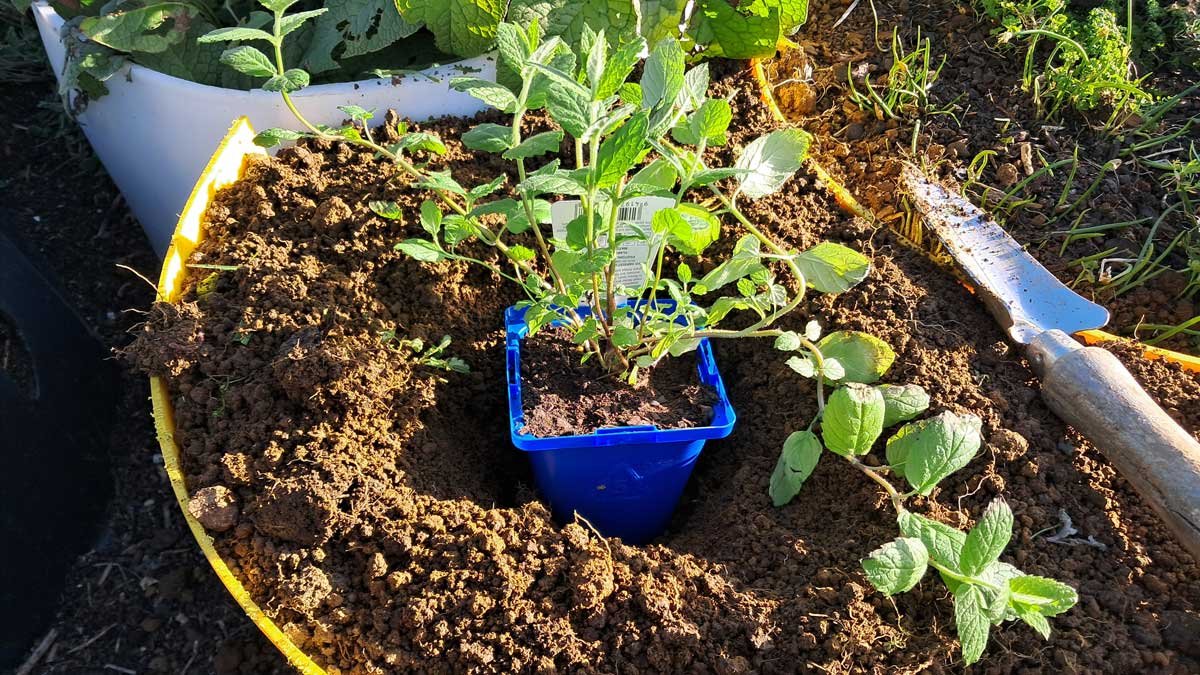
If you want, you can add some nutrients to your soil while planting. I usually add a small (about quarter of a teaspoon) amount of lime and blood and bone to each planting hole before placing my plant.
If your soil is dry and crumbly, you might struggle to dig a hole as the soil keeps falling back in. Wet the area with water. The moisture will help the hole keep its shape.
Meristems (how plants grow)
The key botanic principle it pays to understand when deciding how deep to dig the hole for your plant is meristems. If you’re taking advantage of them, then the hole you dig will need to be deeper than your pot.
Meristems are a type of plant tissue found in ‘nodes’. They are able to respond to respond to conditions to produce the type of growth suitable for the immediate environment around them. Nodes are the points on a stem where new growth happens.
When a node is above ground, the meristemic tissue will grow leaves, stems, and flowers. But when a node is placed below the soil, it will grow roots.
You'll find meristems in all plants, and you can use this knowledge to grow bigger, more secure root systems.
When you pick up your broccoli or tomato seedling from the store, you will have a stem covered in leaves.
But if you strip the lower leaves from the stem and bury it lower in your garden, the meristems in the nodes which the leaves originally grew from will sense the soil around them, and grow roots instead.
That's meristems working.
Transplanting tomatoes
In my garden this year, a self-sown tomato seedling had popped up in an inconvenient place.
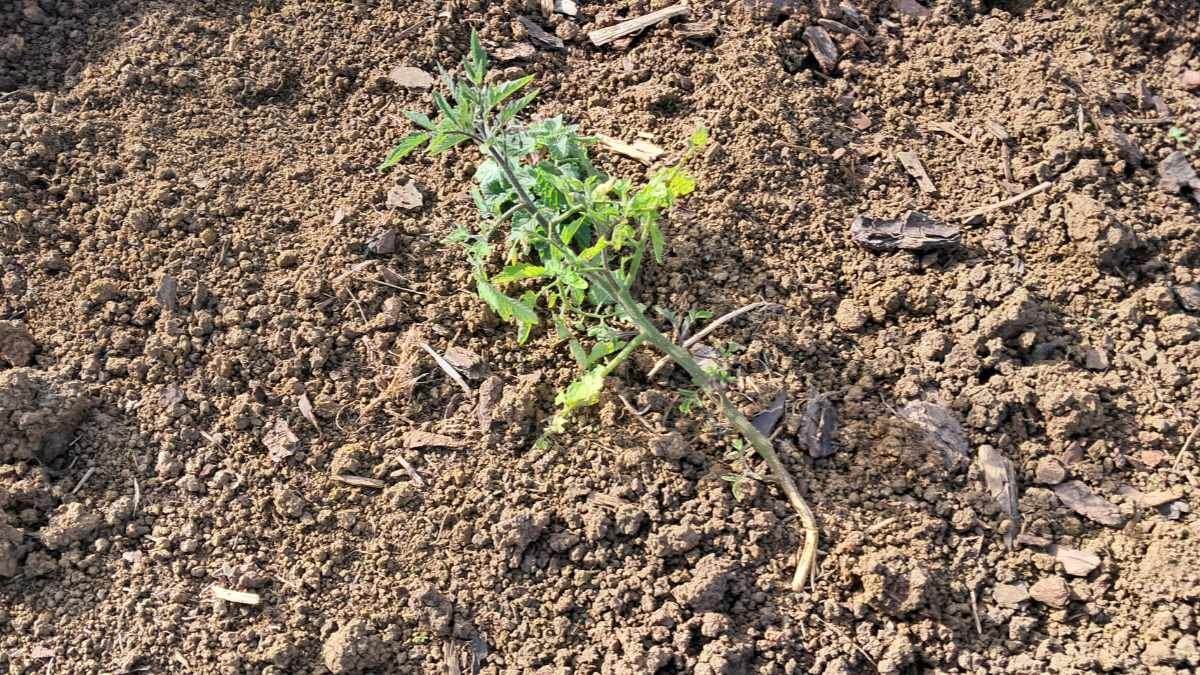
But it's a pretty solid seedling, and getting my first tomato plant going in August sounded like a good plan.
So I transplanted it from where it had begun growing, to where I wanted to grow tomatoes.
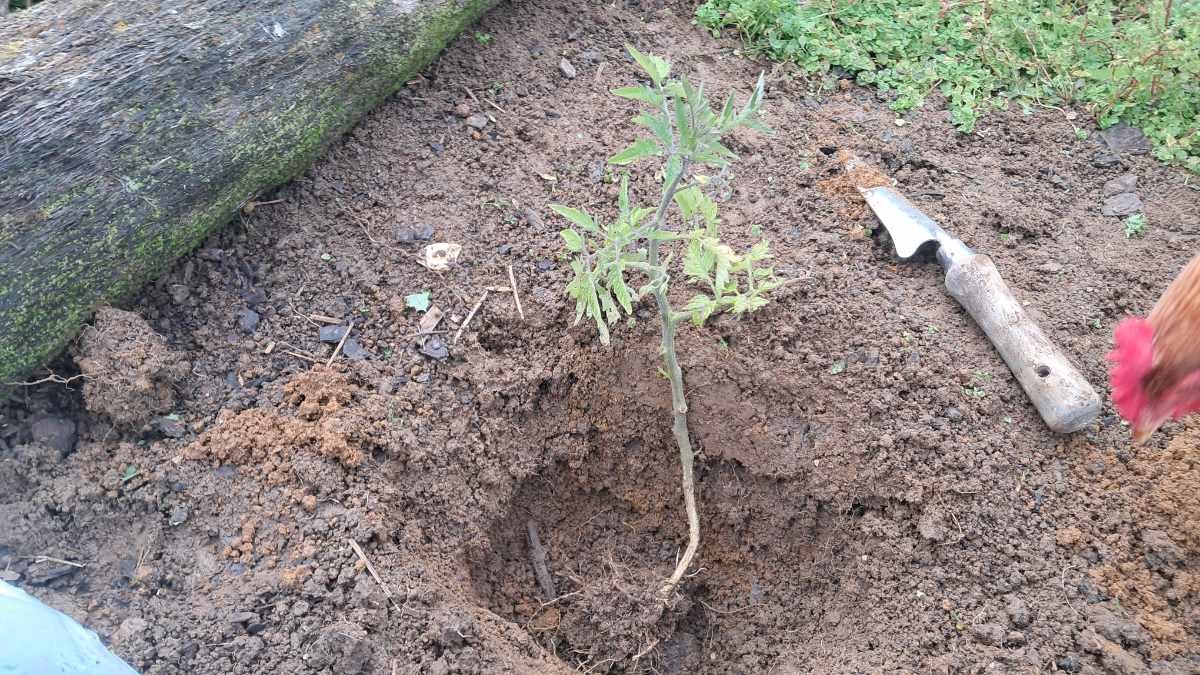
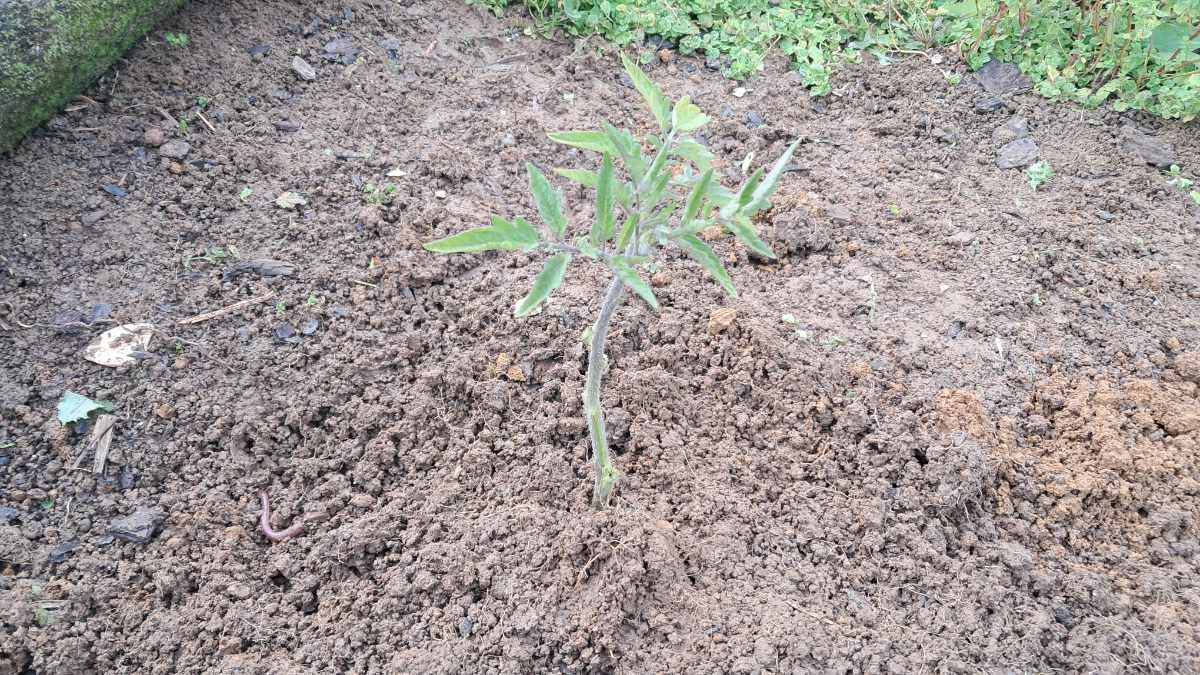
This involved digging a very deep hole, because I wanted to bury most of the stem. I stripped all the leaves off the stem, leaving just the top of the plant poking out above the hole.
This helped make a fairly large plant much smaller. Perfect for my mini-greenhouse, which will protect it from the cold weather for a couple of weeks.
This technique applies to nightshades like tomatoes; large brassica like broccoli and cauliflower; and cucurbits like cucumber, courgette, and pumpkin (though be careful not to overwater the cucurbits, they can be a bit delicate).
Make sure at least one third of the plant is above the ground. And do not attempt this with grafted tomatoes if you want to keep the benefits of the graft.
Plants with crowns
Plants which grow from one single point of growth without growing a stem need a slightly different technique.
This covers things like strawberries, lettuce, silverbeet, and parsley.
In these plants, the crown is like a compressed stem, and all the meristematic tissue lives at the crown.
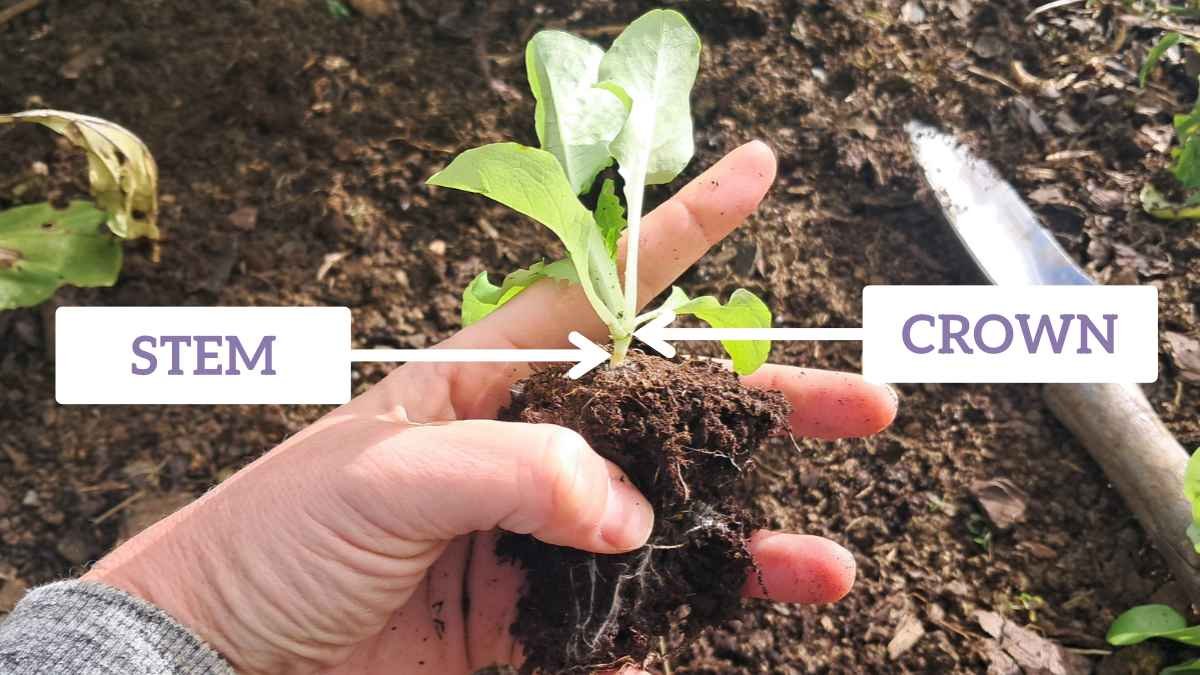
In these cases, you do not want to bury the crown. It will smother the growing point of your plant.
Instead, plant them so the base of the crown is level with the soil.
Most of them (except strawberries) are growing from a tap-root. This thick, carrot-like root wants to grow straight down.
The more freedom you give it to do that, the better your plant will grow, and can be the reason some of these plants struggle to grow in pots.
Tricks for getting seedlings out of pots
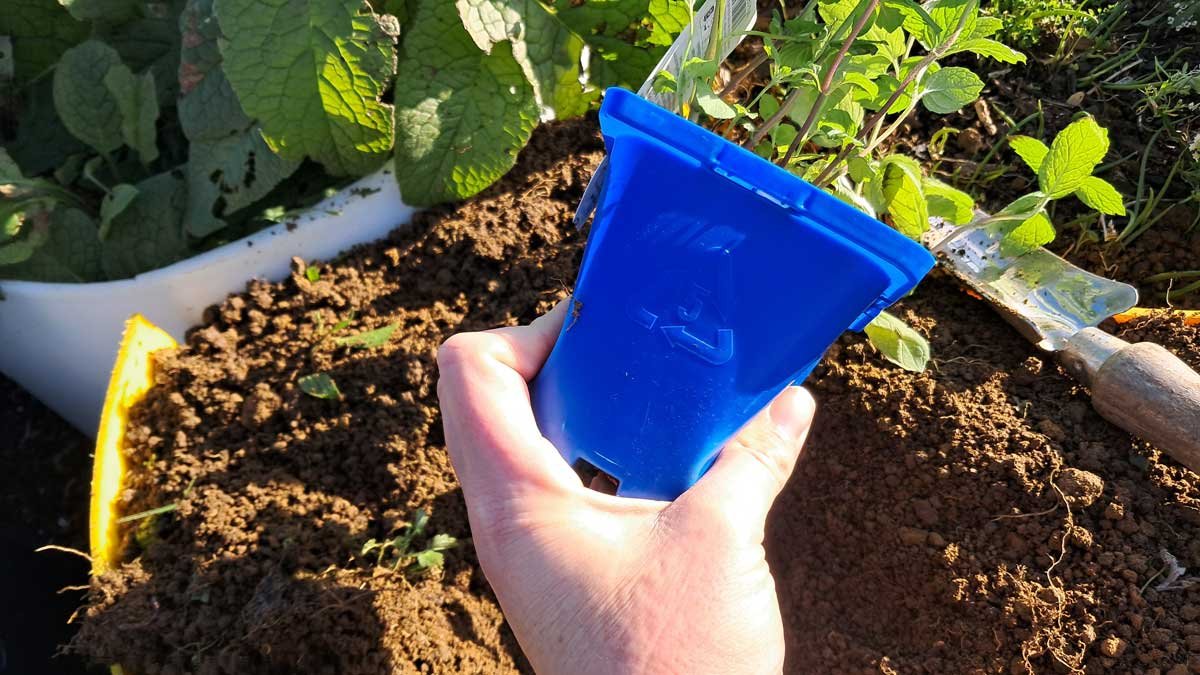
Squeeze the sides of the pot first to help loosen the roots.
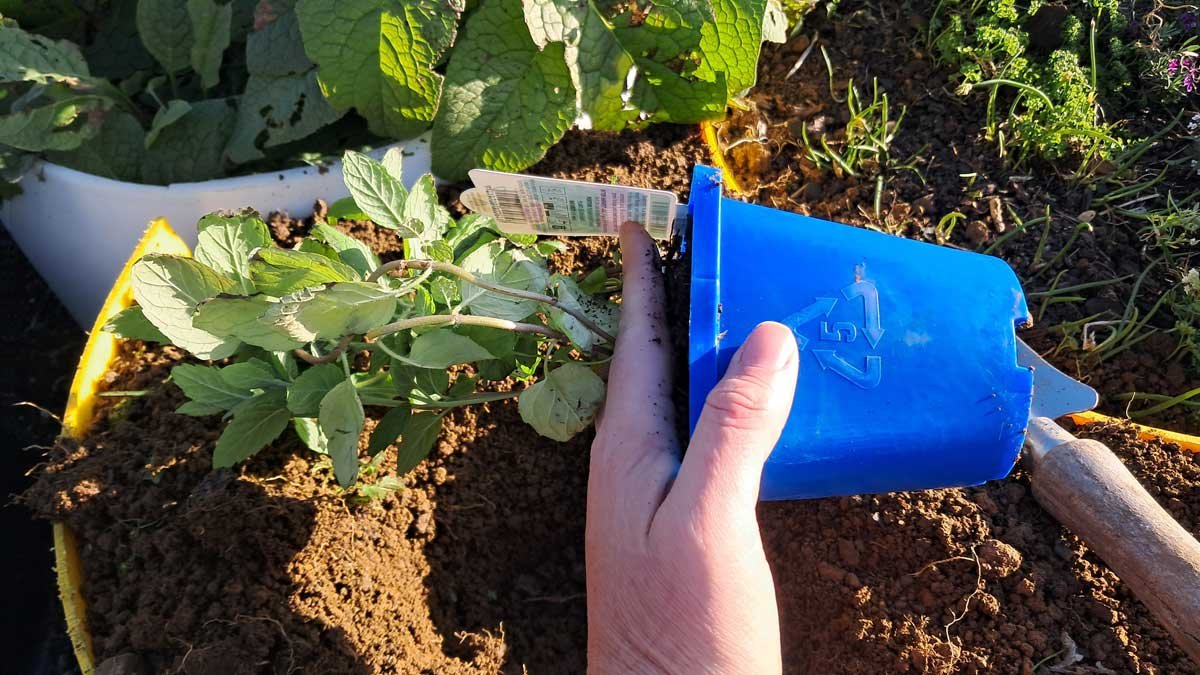
Spread your fingers on either side of the plant to hold the soil in your palm and flip the pot over.
Give the pot a pat on the bum and pull the pot off gently.
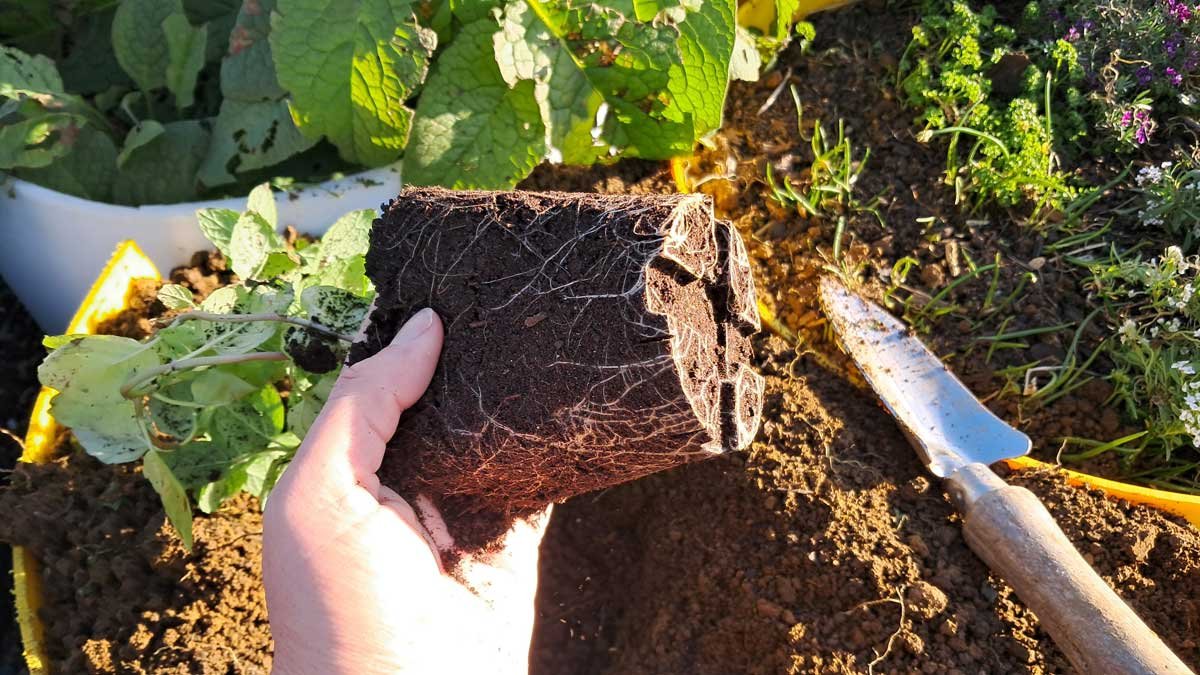
The seedling should be resting in your hand. Gently dislodge the lower roots.
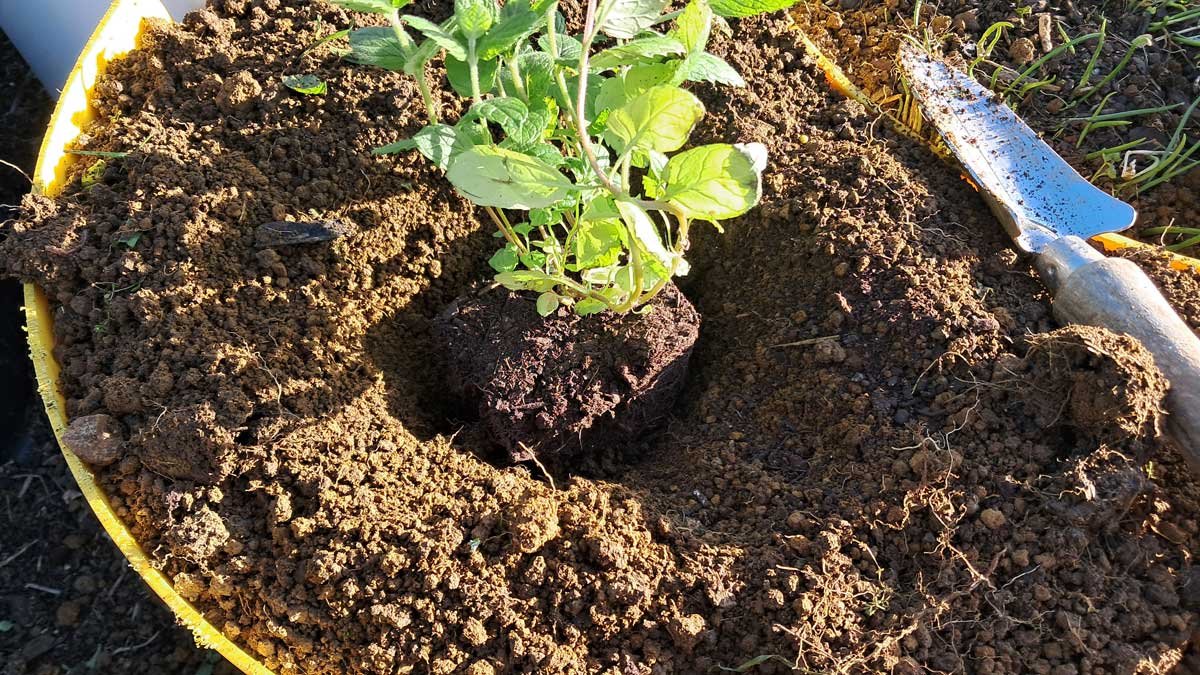
Pop the seedling into your prepared hole and replace the soil around it.
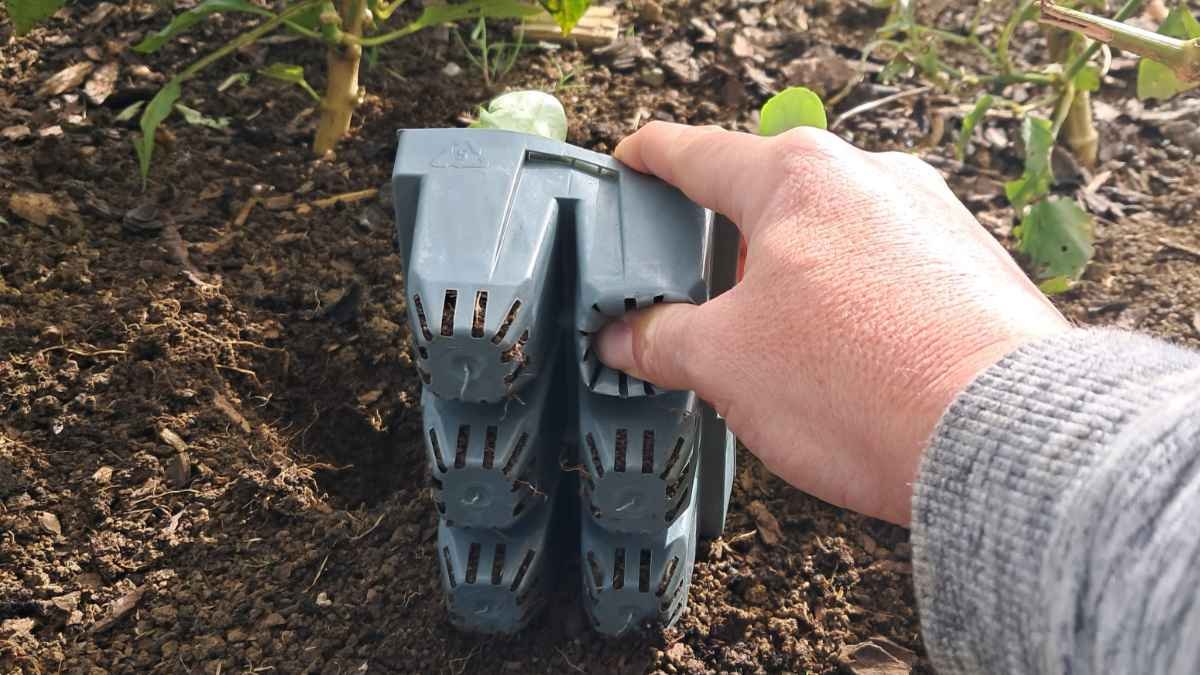
For six-cell seedlings, start by squeezing the bottom of the cell. Then push it up with your fingers.
The seedling should just ‘pop’ out.
Mulch and protect your seedling
Once your plant is in the ground, it needs to be watered in.
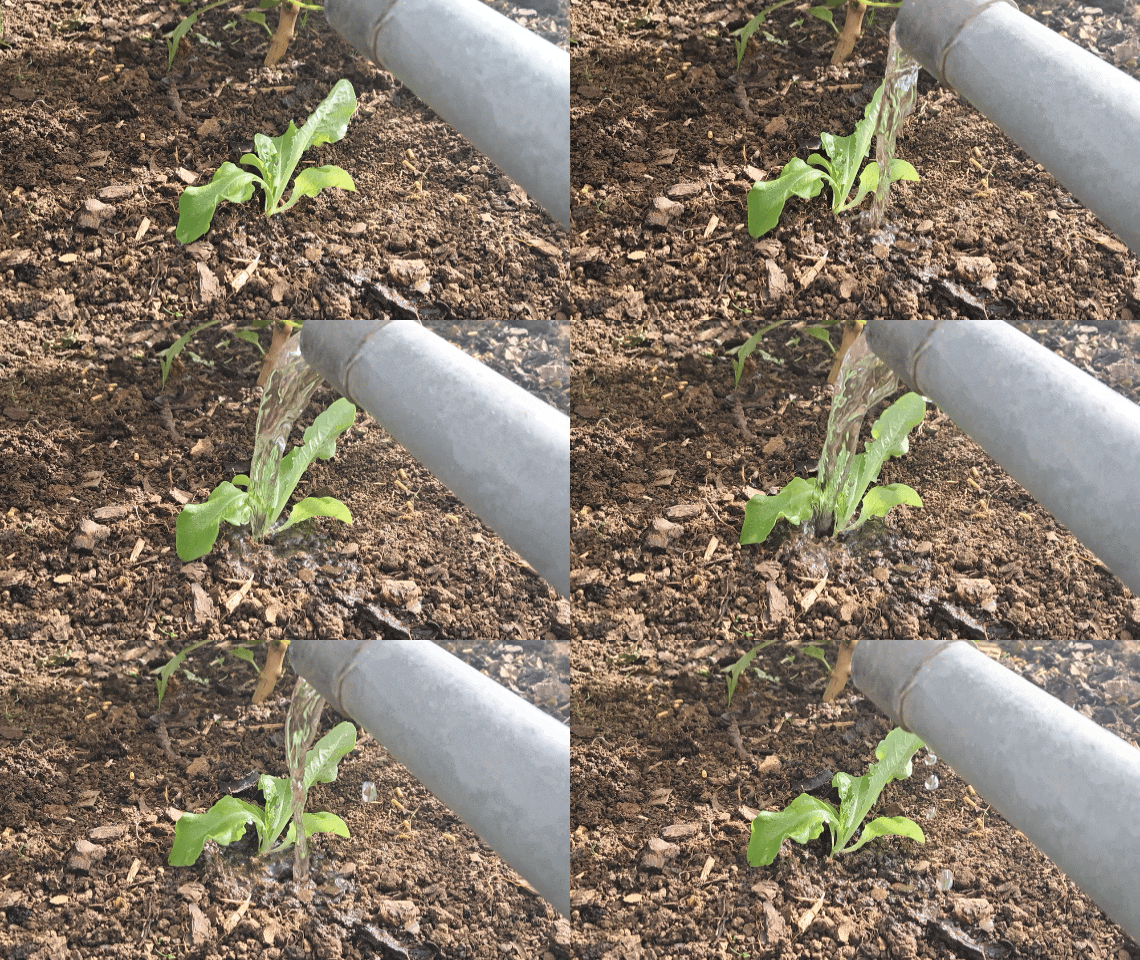
Lay down mulch around your plant to protect the soil and prevent weed growth (we use a lot of lawn clippings for this).
Apply snail pellets if required. The younger plants are, the higher the chance a single snail could entirely destroy them.
Protect with cloches or a mini-greenhouse made from a plastic bottle with the bottom removed and held by a stake.
Remove the ‘greenhouse’ when it is too small for the plant. This means your plant is successfully established.

READ NEXT
Sowing seeds for transplant
Get your seedlings growing inside before transplanting them into the garden later.
READ NEXT
Direct-sowing guide
Many root crops prefer to be sown in the soil where they'll ultimately grow. Get my sowing tips.
Related content: gardening advice · greenhouse · how-to · mulch · propagation · seedlings · soil preparation · tomatoes · transplanting · vegetable garden
Stay in touch?
The Kat's Garden newsletter gives readers an extra peek behind the scenes. It's the best way to know when new posts go live, and what's happened since.
If you like what you've seen, join us and see what we learn next.