
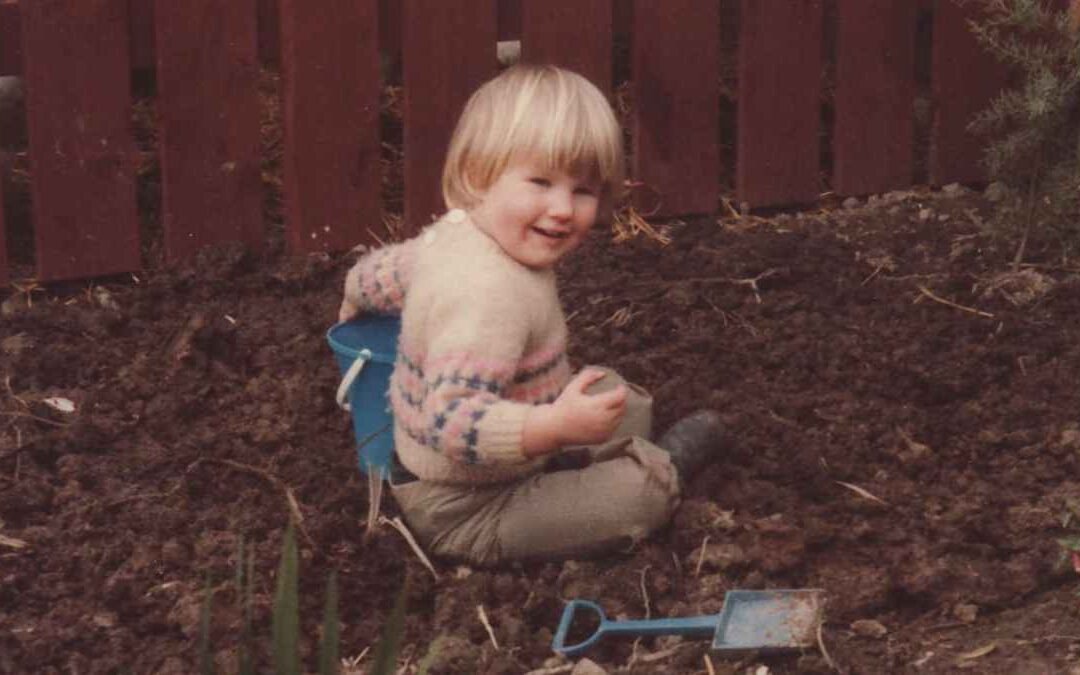
For the last few years I've been a bit obsessed with my family tree. Along the way, I've noticed something: there are a lot of gardeners in my family.
Not just gardeners, obviously. I've also found entrepreneurs, teachers, and a diplomat. There's an actor who worked with Dietrich, Olivier, and Hitchcock. A prize-winning chicken fancier. And I cannot tell you just how tickled I was when I learned about the great uncle who was a UFO expert.
But gardening... just keeps popping up.
In the official records I'll be leaving behind, future family historians will also pin the tag on me. "Gardener" has been listed as my occupation on the electoral rolls for as long as someone has paid me to work in their garden. But I am merely one in a long line.
And it's not just in the 'official' record. It's also in the oral stories, and photographs. I've spent some time working on my great-grandaunt Fan (daughter of Ellen, sister to Tot) and her husband Cliff Bath this year after Fan's photo collection came into my possession.
There are people around who still remember them. As I've been working to return these photos to their respective families, I've talked to a few of them.
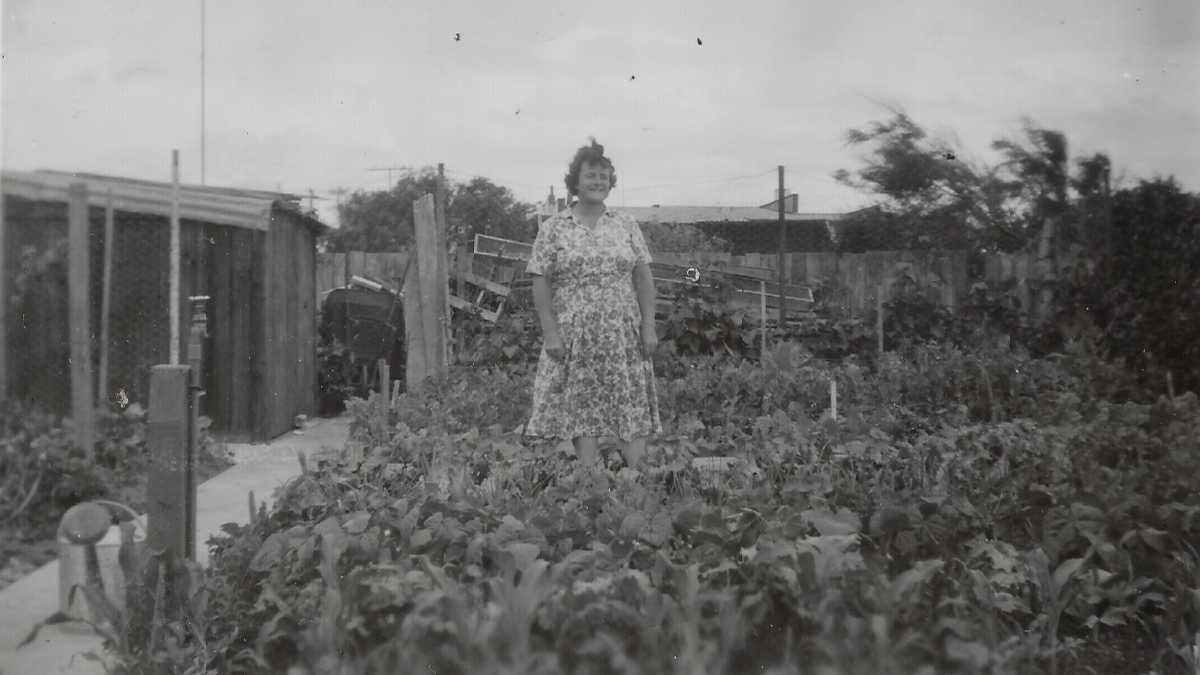
Fanny Alice Bath (née Schaeffer) in her garden. We're not sure how much of the garden Fan took care of; Cliff was generally regarded as the gardener. 1950s-1960s.
Almost everyone has a story about stopping at Cliff and Fan's on the way out of Napier before heading home.
They all remember taking a whole pile of beautiful vegetables from their garden when they left.
The world I grew up in
My house had a vegetable garden—as far as I knew—forever.
My parents grew fruit, vegetables, and actively maintained a compost bin in the backyard. When I was very young they had chickens too.
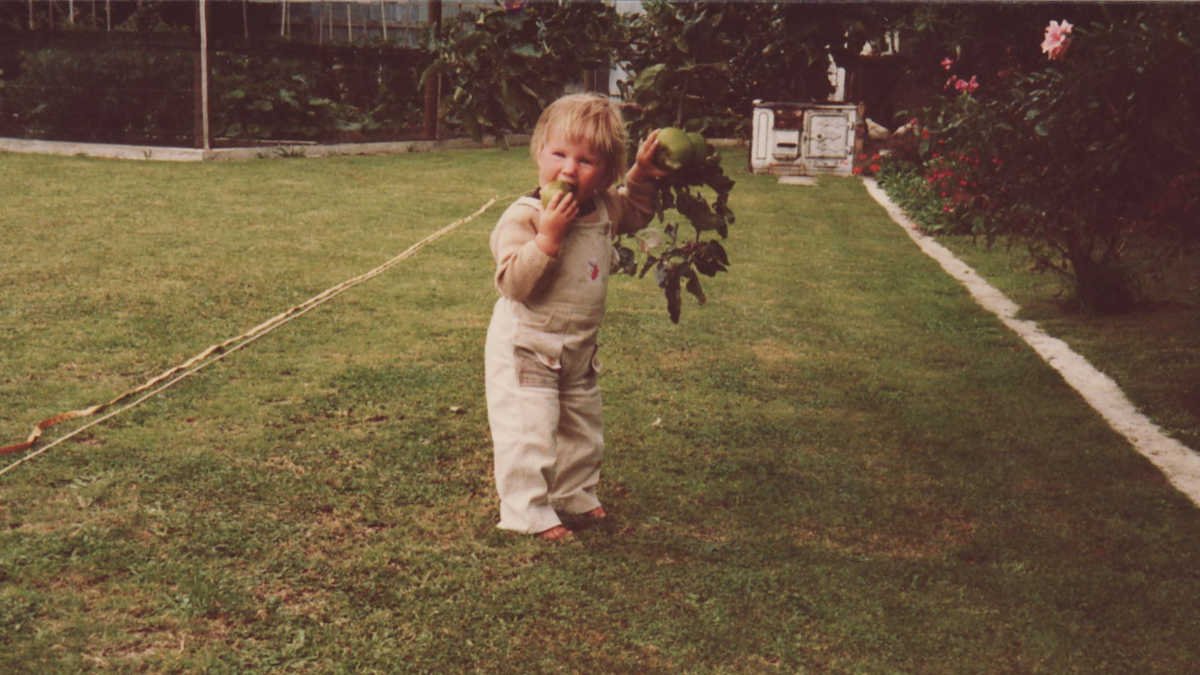
Me, around three and a half to four years old in my backyard. I was an unexpected pest for my father, just biting into apples, still on the tree like some kind of feral possum.
Notable in the background of this photo: chickens, gardens (click to expand).
The garden here at The Outpost is only just beginning to rival the size of the one my parents routinely fed us from as children.
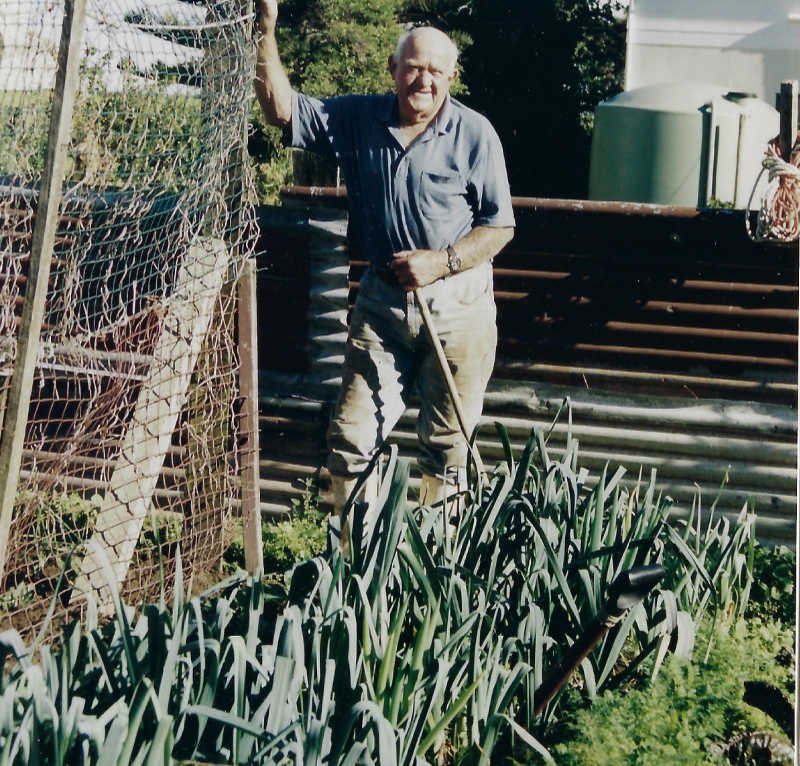
Leslie John Fulton in his garden at Māhia, probably 1990s.
For a while in the 1940s and 50s, my mother's father is listed in electoral rolls as a 'market gardener'. When we visited them in their retirement, Popa Les had a garden in behind his property. You actually couldn't leave without several boxes of vegetables.
Not just for your own household. Les was known to pack the car with boxes for everyone he knew who lived roughly along the way, with instructions to drop them off as you went.
On Dad's side, Grandpa had a garden down the hill from their house. I don't remember his as clearly. When I think about it I get impressions of compost bins, rich soil, and being closed in by hedges.
Nana tended to the flowers, with a beautiful garden I spent more time in, amongst the rhododendrons.
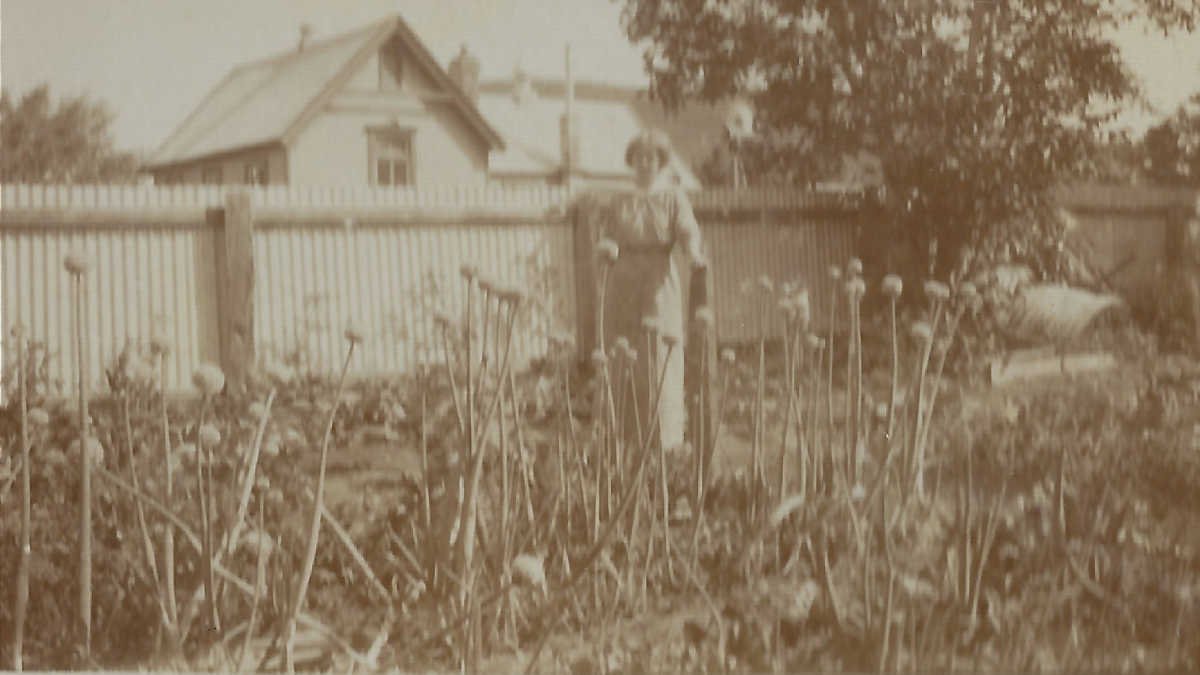
My paternal grandfather's mother (my great-grandmother) Marion Jenkins (née Lomas) in the garden at Puketapu School, early-mid 1920s.
I grew up in a world where gardening was mundane and totally normal. It was how people grew food.
My aunts and uncles? All enjoy growing things. The only thing I know about one of my great-great-great-great-grandfathers is that his name was John Lewis, and he was a gardener in Devonshire, probably in the early 1800s.
Maybe we've all inherited the DNA for "green thumbs". But probably it's just something we grew up seeing and doing. I come from a family of gardeners, on both sides.
Writing it all out together, I'd just like to acknowledge the privilege of that. I was lucky to grow up amongst the kind of generational stability that allows these skills to be passed down, and for gardening to have the opportunity to become innate knowledge.
My first garden
When I was a young child, my parents 'gave' me a garden on the southern side of the house where I could plant and grow what I wanted.
My mother must have given me some bulbs because I remember growing freesias. I also remember raiding my parents' seed collection to raise seedlings in the glasshouse.
It's probable that my parents let me pick out a few punnets at the garden centre, or gave me spares they couldn't find room for along the way. I think to begin with, it was mostly flowers like pansies and alyssum.
I specifically remember growing dianthus. Its flowers were pretty, but the scent always brings back memories of that garden.
And it was on the southern side of the house. Dark, always a bit wet and not really suited to great success. At some point, I got an upgrade to the area between the play shed and the garage, opposite the ever-struggling apple trees.
My second garden
I assume I got permission from mum and dad, but I also wouldn't be surprised if I just did it. I remember physically creating that garden from scratch. Pretty much by myself with the tools and resources available to me.
It was grass behind the garage before I started, and it was a garden between the play shed and the sandpit by the time I'd finished.
I felt real ownership for it. At some point we even added a pond! I'm pretty sure my brother helped with that project. We dug out the old sandpit and used the liner of our paddling pool.
I had better luck there. I grew flowers and—I'm pretty sure—vegetables.
It's worth noting my parents never expected me to work in the family garden. I just faffed about with whatever I felt drawn to. Mum would ask me to empty the compost bin or get some vegetables for dinner, but the work of planting and maintaining the garden was never an expectation.
As an adult, I know why. Mum never wanted us to feel like 'labour'. I never did. My hobbies and passions were supported, but never forced. I wasn't much help in the veggie garden itself, but it formed part of the scenery.
Then I became a teenager. Our family got a computer, and the Internet. I developed interests in other things that weren't gardening. The garden became a secluded and quiet place to sneak a cigarette.
When I moved out of my parents' house at the beginning of 2000, I began over 15 years of renting in places without any ground to dig.
Security
In 2010, I found myself in an interesting position. I had left my office job with no plan. Eight days into what I was calling my 'funemployment', I'd been offered a new contract position which didn't start for four weeks.
I had a little money, and our tenure was pretty secure. We had a balcony that got some good sun. My flatmate had a day off, a car, and was willing to take me to the garden centre.
So we went. I used to blog back then too, and I recently dug this up from 2 March 2010:
"Today, however, has been pretty productive. My flatmate had the day off work so after waking up and having coffee, we decided we'd go get some lunch, some groceries, and I floated the idea of perhaps visiting a garden centre as well.
You see, our balcony has had a collection of empty pots sitting on it for a while now and over the weekend our other flatmate had managed to add to it with some drunken shenanigans. I'm not much of a green fingers but I thought that some herbs and maybe some lettuce or something might provide something interesting on our balcony, plus in the long run maybe even save us some money, so today I organised a little garden.
We now have two kinds of lettuce, rocket, rosemary, chives, parsley, oregano and coriander growing as well as my favourite—coffee!
Hopefully they won't die."
They definitely did die. That coffee plant got horribly infested with whitefly. Still, it was the start of something.
The balcony garden
A week later, on 11 March 2010:
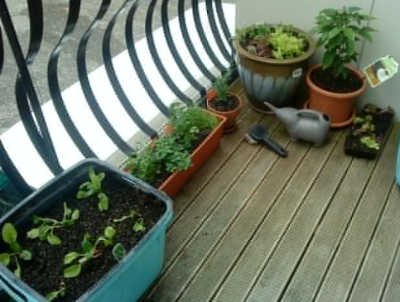
"A couple of days ago I found a disused recycling bin, filled it with dirt, and today I added some more plants to my balcony garden.
I am now growing my own [everything listed above] and silverbeet.
We're now a couple of weeks along and not only is everything still alive, it's even growing."
It didn't stop. 26 June 2010:
"I've managed to pick up 5 recycle bins over the last month or so though family and Freecycle, and the plan for these was to paint them, fill them, plant them and watch them grow."
Two days later, on 28 June 2010:
"After spray painting my bins on Saturday, I had to fill and populate them. This took me on a wee adventure to garden centres, hardware stores and Switched on Gardener on Sunday which cost me a lot of money, but I think the results are worth it.
This means that my little balcony now has a working, portable vegetable garden. We're growing strawberries, carrots, thyme, oregano, parsley, coriander, silverbeet, broccoli, rocket, rosemary, mint, and a few flowers.
At over $300, setting up the garden has not been cheap—and it ultimately would have been much cheaper to just buy the vegetables from the supermarket, but there's a huge satisfaction in picking and eating your own vegetables.
From here on in, however, the only ongoing costs are fertiliser (and not for a while, the bag I picked up on the weekend is probably a years supply) and seedlings."
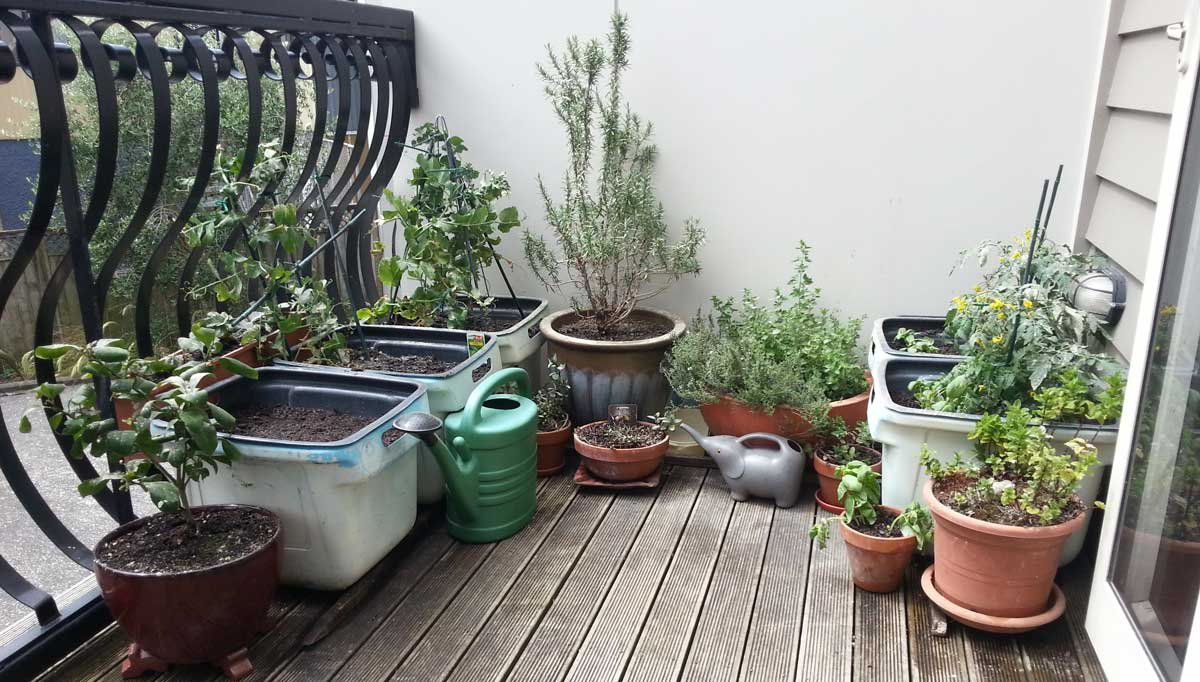
I kept this garden growing in those recycling bins (and definitely spent an even more ridiculous amount of money on it) until March 2014, when we moved out and I went petsitting.
That was the end of gardening for me for a few more years.
Origins of The Outpost
On 8 September 2010, I wrote something that made my jaw drop when I re-read it more than 15 years later.
"One day, I would like to own my own self-sufficient block of land which would have chickens, a giant veggie patch, a dog, a clay pizza oven, some sort of renewable energy source, possibly some cows, a wee orchid [sic] and maybe even a very small vineyard for making my own wine. I would spend my days doing contract writing, pottering in my garden, tending the chooks, and making (and no doubt, sampling) wine."
By 7 February 2012, that idea had evolved:
"If there is one thing I really, really want in life, it's my own self-sustainable property.
I'd like to raise chickens, sheep and goats, operate a large garden, and an orchid [sic] filled with at least one tree of every fruit that I can possibly grow. Pretty much every plant I have planned in my head (and trust me, there's a lot of them), is useful—either for it's physical (bamboo), edible (fruit and veggies), or medicinal (flowers and herbs) properties."
And look, the reality looks different to the dream. Now that I'm here, I don't really want sheep, or a vineyard. I definitely do not want goats.
I'm scared to actually plant my bamboo. I don't have any internal doors, and the size of my kitchen is a nightly irritation. I learned the difference between an orchid and an orchard, and got both.
It wasn't easy to get here. There was a lot of pain and many tears. It took years, generational privilege, and a whole pile of luck to actually step onto the rural property ladder.
But in the end—spoilers—I got most of what I wanted.
Finding The Outpost
While I was petsitting, I'd travelled all about the North Island. As I moved around and lived everywhere from inner city apartments to isolated farms, I looked for the place to live my self-sufficient dream.
For a while, my mother was hunting alongside me. But about 18 months after she passed away, I made the decision to quit petsitting and move back into a house. Richard and I had been dating for about a year, and he had a family friend who offered us a good deal on a vacant rental on his farm. We took it.
I had discovered a love of rural life as a petsitter and some of my favourite sits had been in rural situations. So I embraced it whole-heartedly, investing in a chicken house and our first flock.
I spent my days digging gardens, studying plants, and collecting wild kittens off the farm. I began blogging about my garden and started what became Kat's Nip. A number of my 'how to' posts originally date to this period of my life as I was figuring things out.
There were a lot of duds to reject before we found The Outpost. I rejected properties for being too close to the coast, too low, actual swamps, or acutely infested with ginger.
When we did find it, there were several painful months waiting for all the paperwork to be confirmed, signed, and for all the legal things to fall into place.
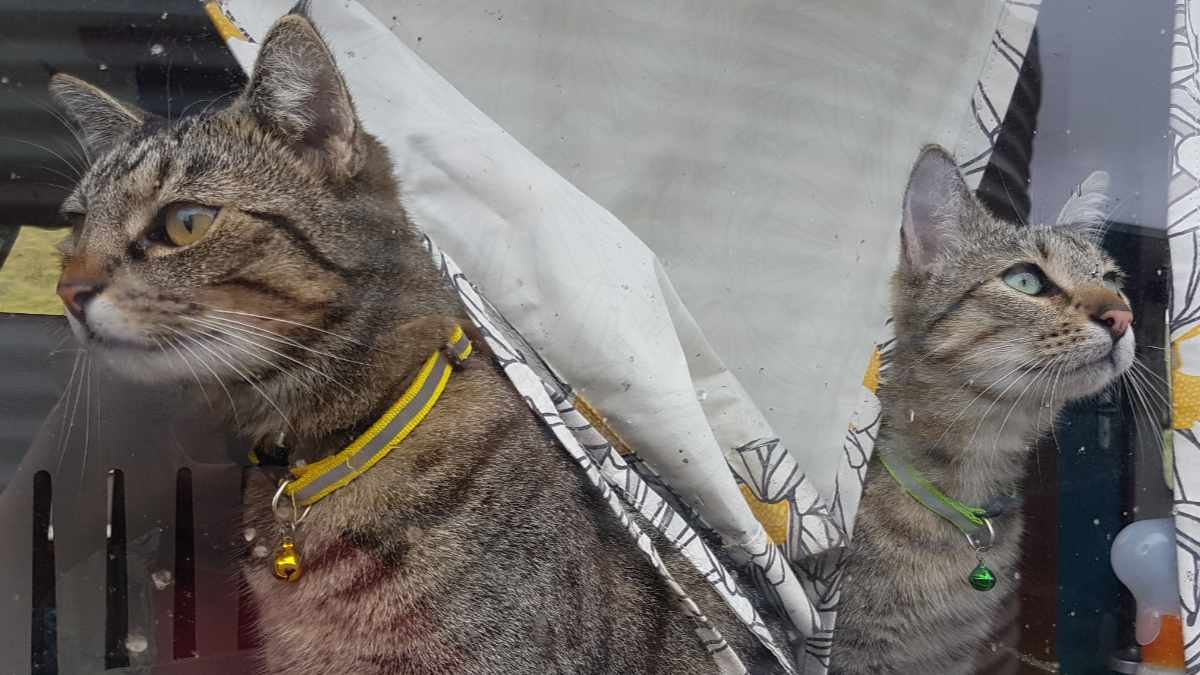
But by the beginning of September 2019, we had moved up with our chickens and our cats, ready to begin our new lives.
Kat's Garden
The Kat's Garden website began for real about a month later, and I've been posting here most Sundays since. Today—this post—is the three hundredth post on this website.
Not every post here is profound or useful. Usually they're mostly a chronicle of what's been going on. But some of my posts appear to be helpful to others. I like that my experience can be of service as they plan their own dreams or solve their gardening issues.
I enjoy watching the seasonal ups and downs in my analytics panel as people encounter the same planting seasons, pest burdens, and disease problems I've had to deal with over the years.
Some posts, such as my study of Paper Wasps or my recipe for Pruning Paste were specifically written to fill a gap I'd spotted in my own experience.
But I didn't write The Dreaded Garlic Rust to rank. I wrote it because I had planted 1,000 garlic plants and they all got infected horribly with rust. It was written in desperation, in the middle of a crisis. And now hundreds of people visit it each winter in the middle of their own crisis.
For me, gardening is instinctual. And the knowledge has accumulated over a lifetime. But I didn't know how a plant actually drank water until I sat down and sought out the knowledge via the formal horticulture qualifications I've gained in the last decade.
Even with over six generations of documented gardeners on both sides, and that stack of quals, I still make mistakes. My first year here at The Outpost was a shocker.
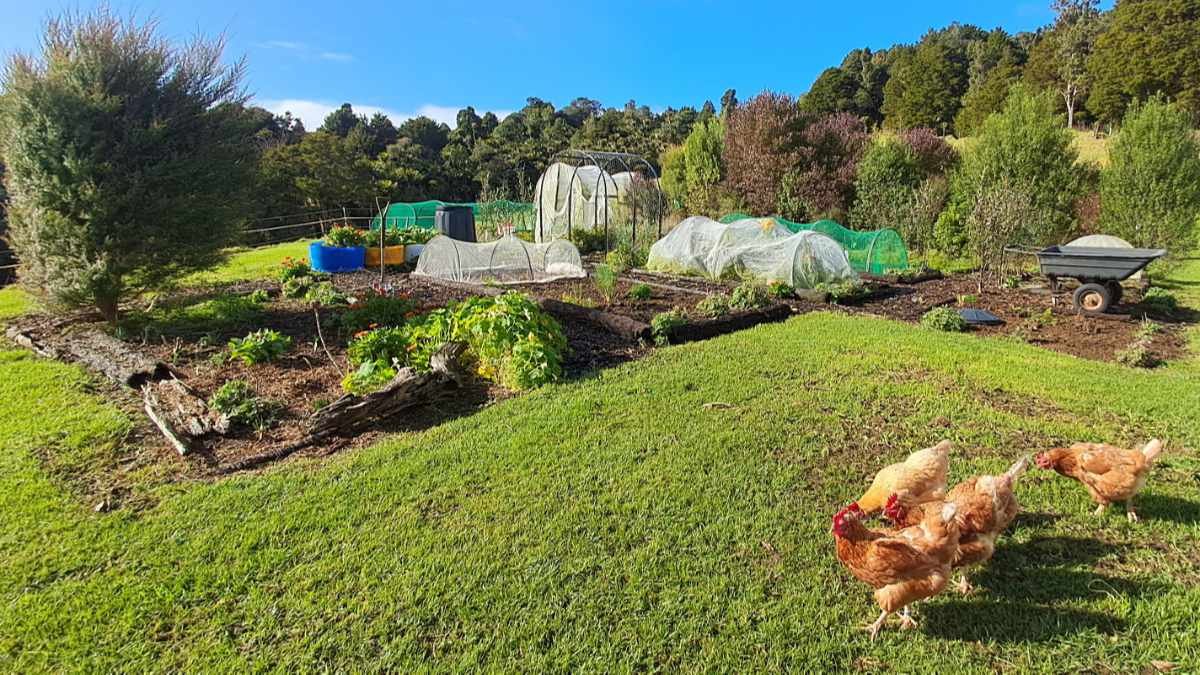
I'd inherited instinct. I remember feeling it as I began that container garden. I had to remember, but a lot of it was already there. But I didn't have the system.
I knew what a garden should feel like, and I had the basic skills and confidence to just start. But the specific procedure to get worthwhile results—continuously, and without investing hundreds of dollars each year—is something I've spent years learning for myself.
At its simplest, gardening is about putting plants in at the right time, and then remembering to eat them later.
There are always complications, and things that go wrong between those two points in time. But without those two actions, the garden is just growing weeds in expensive soil.
Recently, I've been boiling that knowledge down to its essence. I've written Kat's Garden Guide to help other people figure out when to plant the food they want to eat, and then remember to actually eat it.
My goal is to remove the friction between the average Kiwi and regularly eating something they grew.
If you think that sounds helpful, you can take a look at it here.
READ NEXT
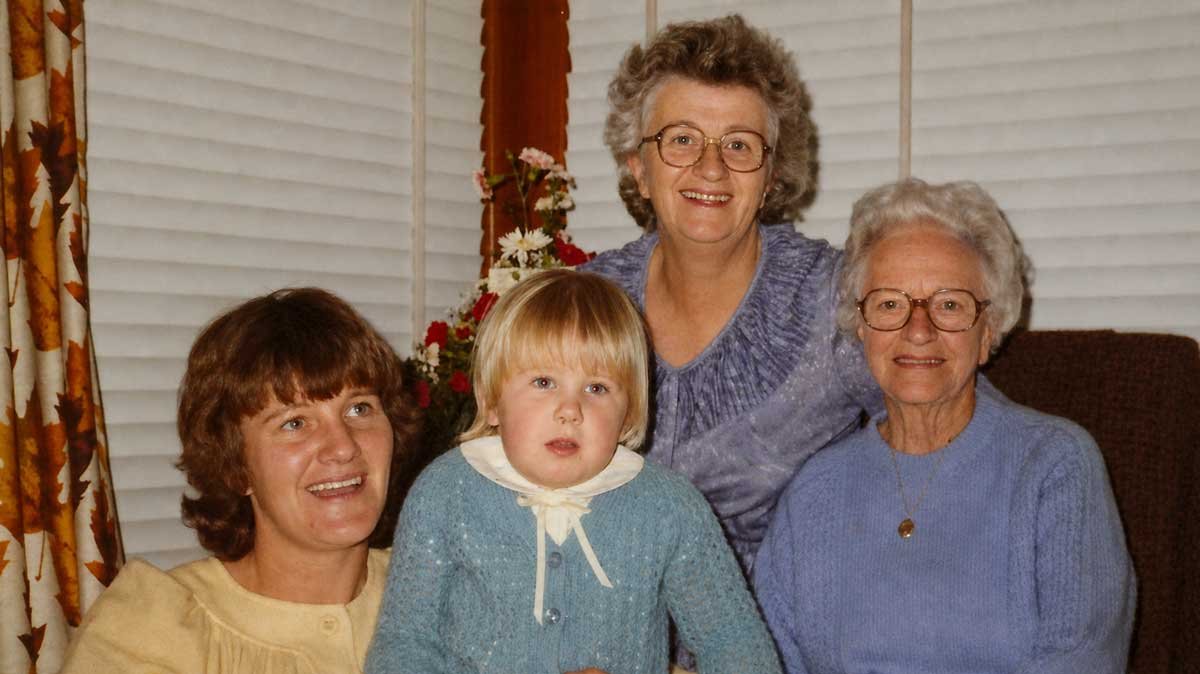
My mother's mother's mothers
A look at the women I descended from. For Mother's Day 2026, I wrote short biographies for the five generations of mothers who came before me.
Related content: Bath · blogging · childhood · containers · dreams · family history · family tree · garden guide · gardening · genealogy · Gran Shirley · Lomas · Māhia · memory · Napier · photos · privilege · research · Schaeffer · self sufficiency · The Outpost · vegetable garden
Stay in touch?
The Kat's Garden newsletter gives readers an extra peek behind the scenes. It's the best way to know when new posts go live, and what's happened since.
If you like what you've seen, join us and see what we learn next.


Hi
Another gardener in our family was grandpop Retter. I know he was a step granddad but your mum and I spent lots of time watching his bid garden grow and probably helps with the harvest when visiting.
I loved the way he grew potatoes. He used old car tires, he placed a tire at the bottom filled with dirt planted 3 spuds on top of the dirt then added another tire and covered them. As soon as they grew thru that soil layer he added another tire and filled it with soil. As the green shoots came thru that layer yep another tire and more soil. And so on and so on. They would endure about 5 tires high.
He would have 3 stacks growing planted about 3-4 weeks apart. They always had tons of new potatoes for Christmas dinner when we celebrated as a big family until we moved to Mahia.
I loved watching him removing a tire and see the potatoes 🥔 magicly appear.