
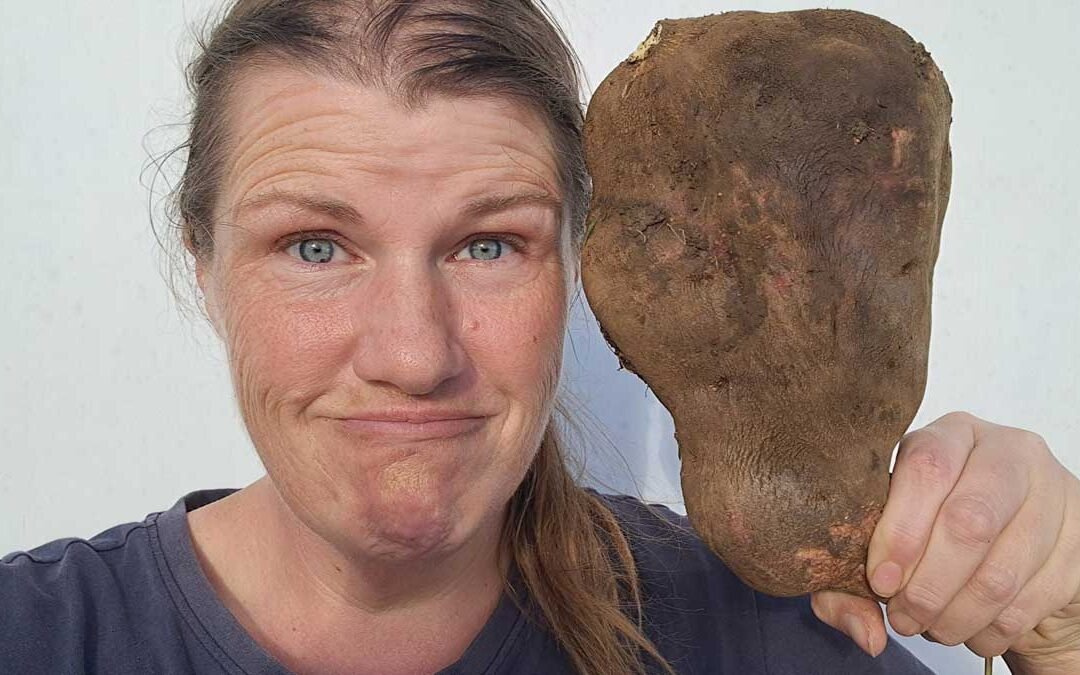
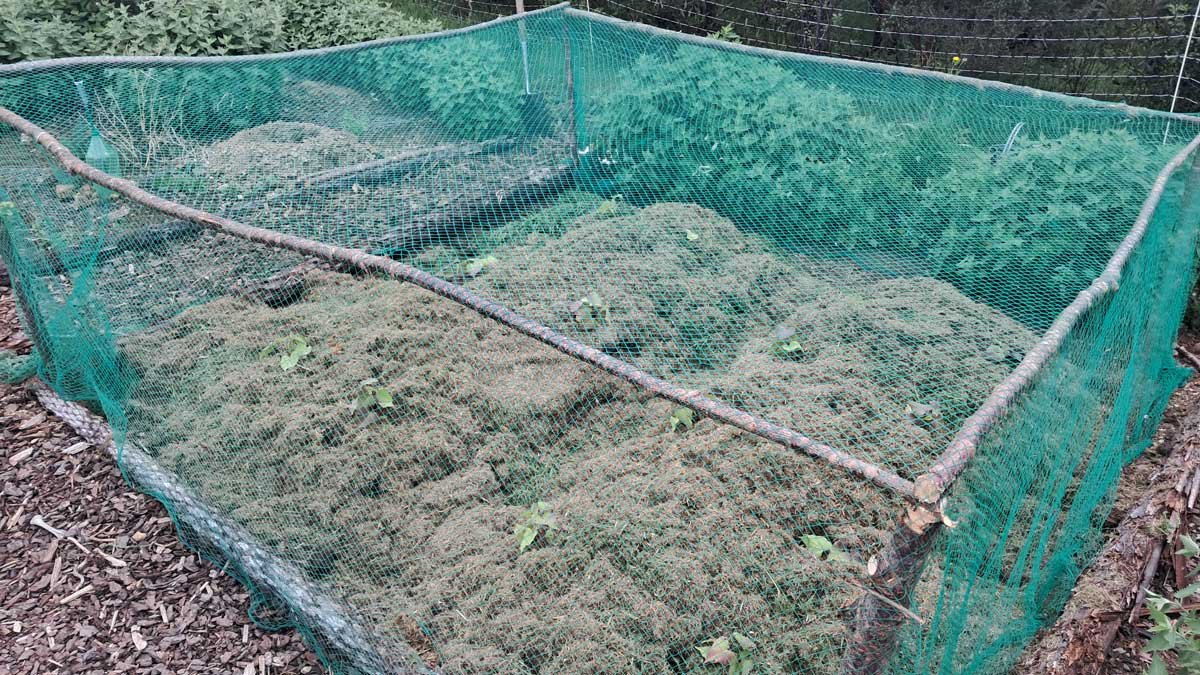
Last year we planted a māra kūmara (kūmara garden). We covered it with bird net to stop our feral chickens from disturbing it. That was draped under a frame made from Taiwan cherry that we'd cut out of the bush block.
Then, as I promised when I first wrote about it, we didn't touch it for months.
Harvesting is a job which was delayed by two things: forecast downpours, and my own intimidation at how absolutely crazy the thing got!
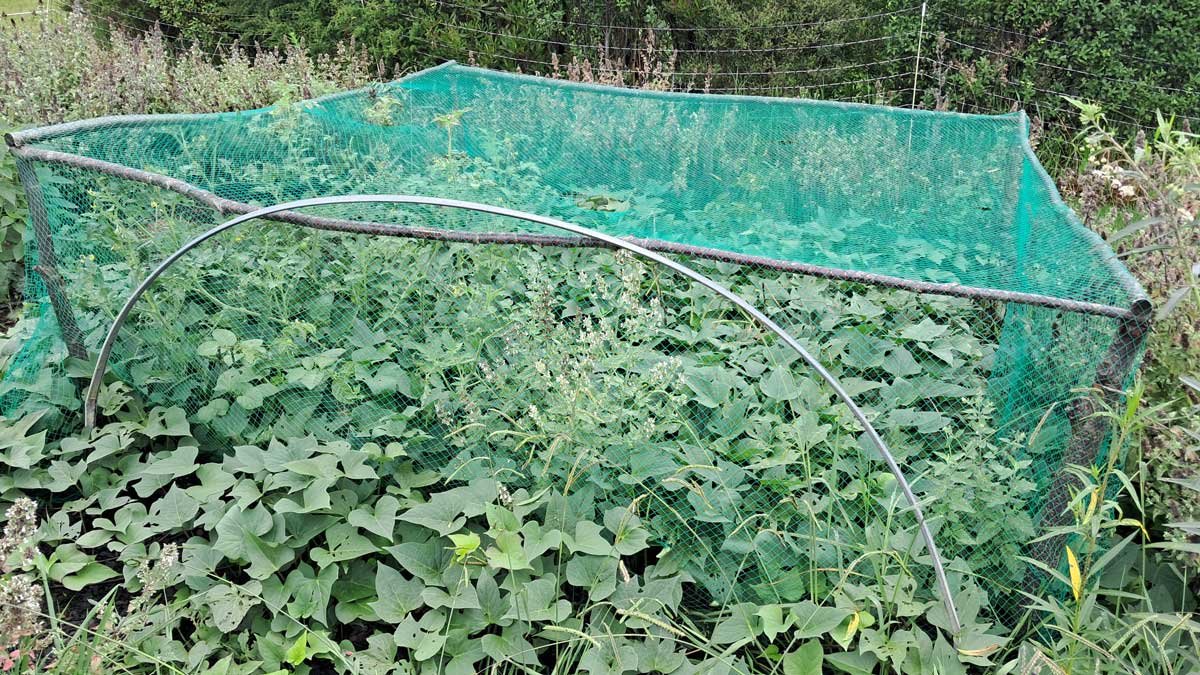
What it looked like in mid-February. I didn't get a photo of what it was like 2 months later before we harvested it.
But one morning recently, I arrived home from work and Richard was all-the-way motivated to lift them and see what was growing under there.
It's impossible to stop him once he's rolling like that, so we ended up lifting them.
Uncovering the kūmara
The first step in the process was to remove the bird netting. And before we could do that, we had to rip up all the vines which had escaped their confines.
If we'd done it a few days earlier, we would have thrown the vines to the cows. But they had recently departed, so everything ended up getting mowed and put back into building soils instead.
Richard's enthusiasm meant that by the time I wandered over, post-work coffee in hand, this step had already been done. It was time to untangle the net.
The net was secured with landscaping pins, which were the easy bit. The vines were far more annoying. If you don't have a flock of feral chickens determined to scratch up all your work, skip the bird net. It was a pain in the butt.
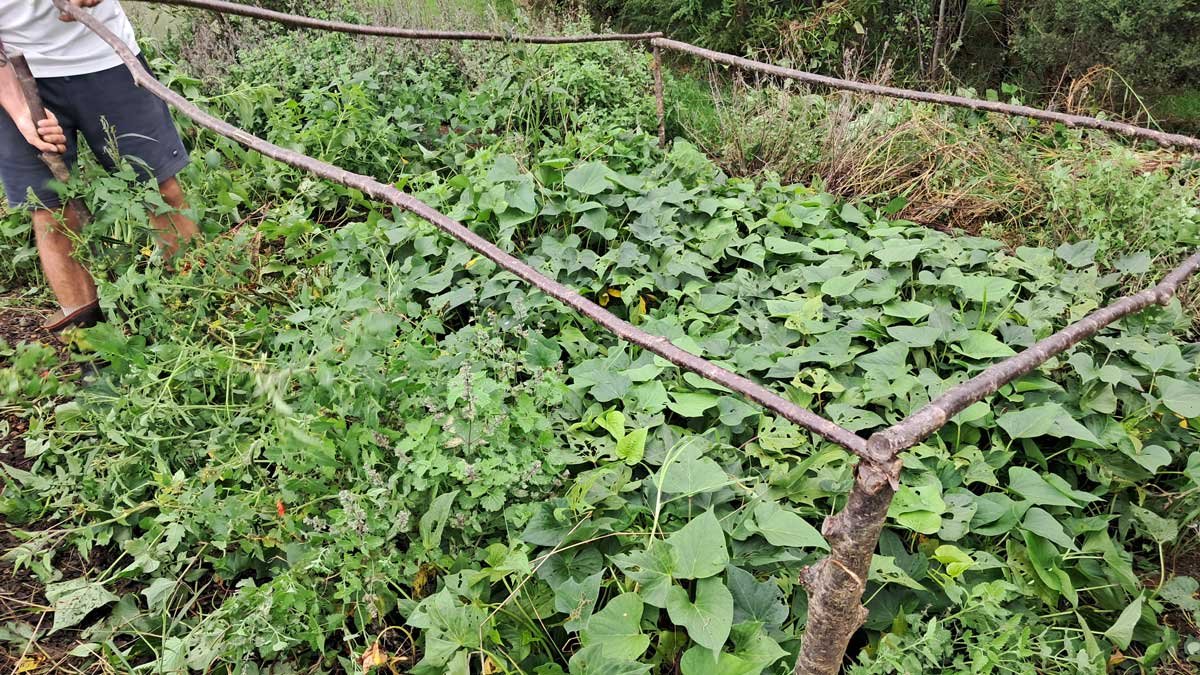
So keen to get stuck in there he wouldn't even let me take a proper 'before' shot.
Still, eventually we rolled it off. The frame lifted and came apart easily, leaving us with a fairly tidy bed to harvest.
Forked it
The first couple of kūmara got forked and became dinner that night. We learned quickly that the fork needs to start fairly far back from where you think the kūmara will actually be.
Then we struggled to see the kūmara in the soil. They were mostly dark and muddy, looking like blocks of soil.
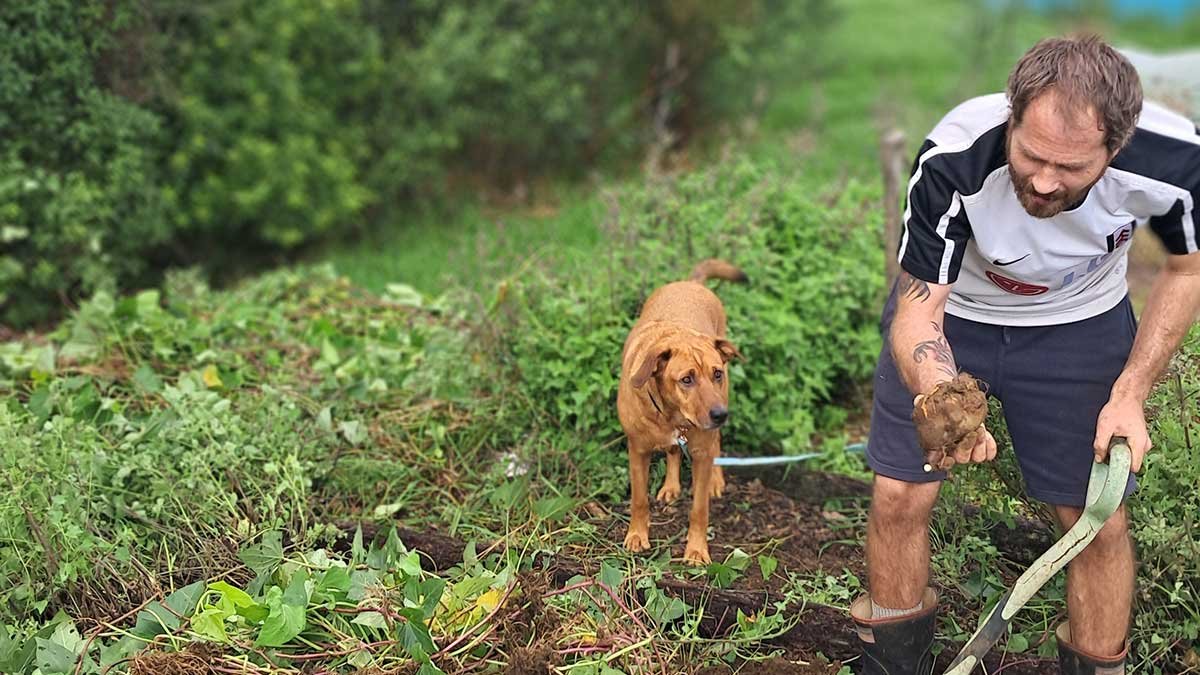
But we soon began lifting kūmara of every shape and size. Little ones, big ones, some as big as my head!
The bucket we were filling soon began to over-flow. I was cackling in delight as these magnificent beasts were pulled from the soil.
Too late
None of the kūmara had actively begun rotting, but it soon became obvious a lot of it wasn't suitable for dry storage.
We found a lot of centipedes living in the folds and bends of the kūmara we were pulling from the soil. I'm not sure if they were actively damaging the harvest or if they had just found a nice place to hang out. But there was a correlation between the centipedes and the damage we saw.
Many kūmara had split. This was likely due to the weeks I'd spent procrastinating the job. The coinciding of the summer harvests and New Zealand's "cyclone season" turns out to be rather inconvenient, to say the least.
It's not a total loss. Many kūmara aren't damaged and can be stored over winter, but rather than mid-April, I think we should have pulled them in mid-to-late-March.
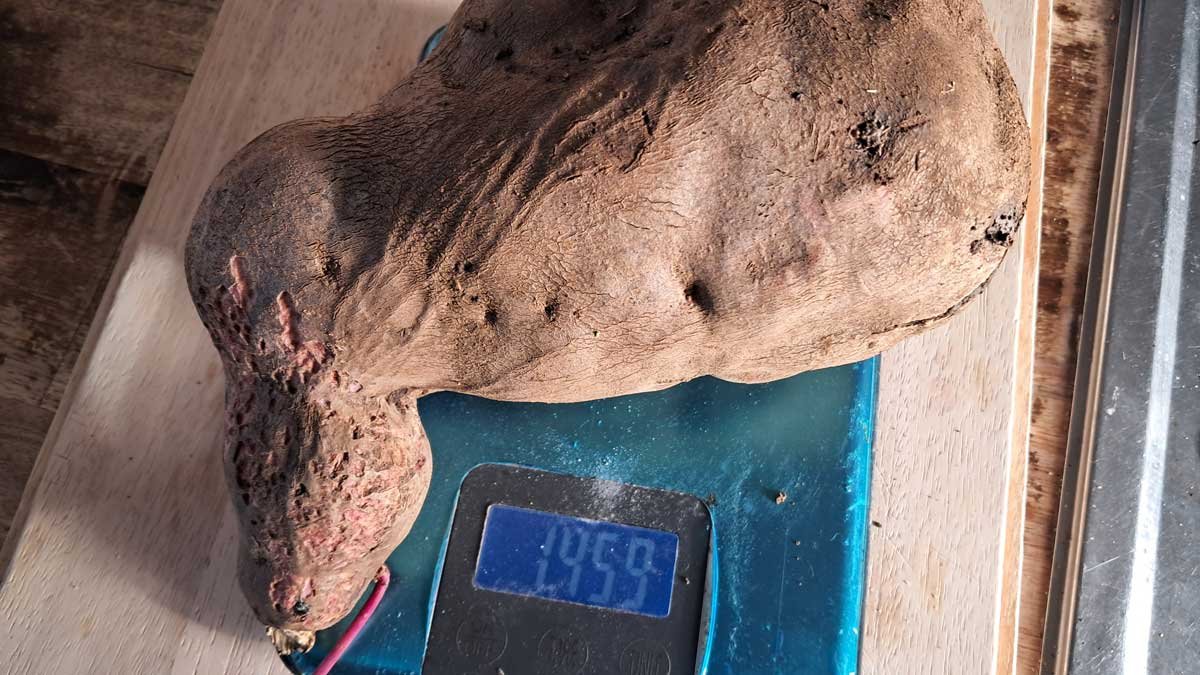
Clock that damage on the skinny bit near the scale's screen.
It would mean smaller kūmara, but I don't honestly think that's a bad thing when faced with a 1.5 kilogram kūmara!

Washing
With the centipedes running all over them, and all the dirt, I wanted to hose them off before we did anything else. So we spread them out on the grass and ran the hose.
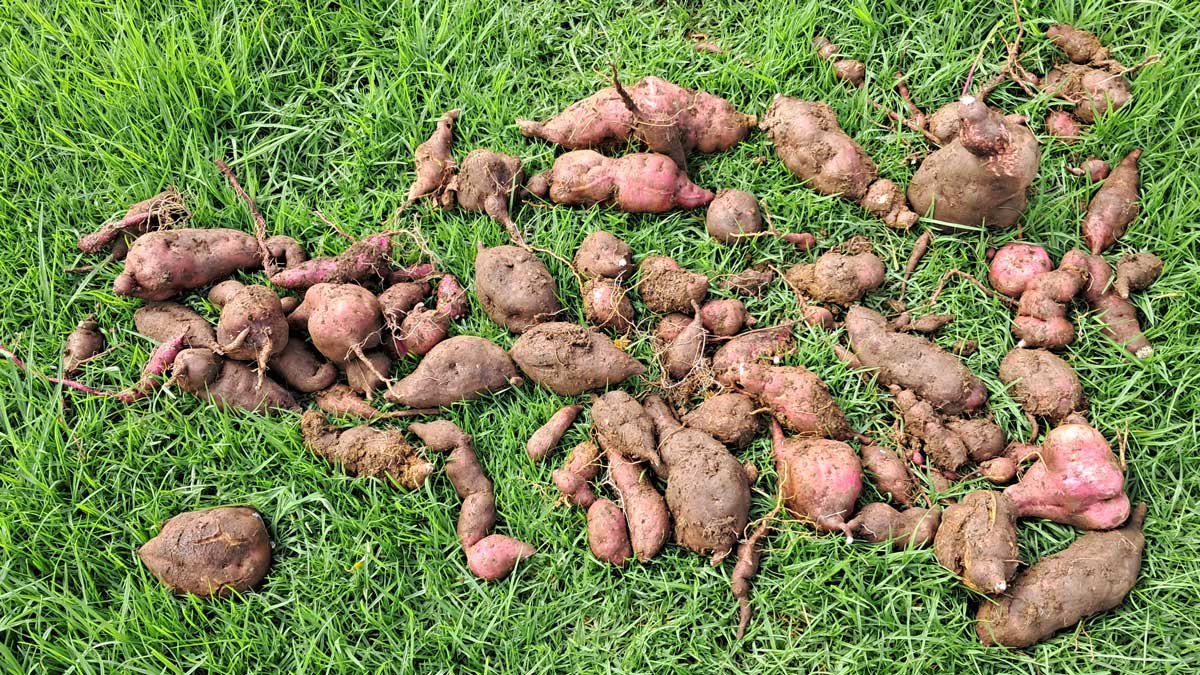
That revealed our colours. The younger smaller ones were bright pink, while the older ones were darker with thicker skins. They are all grown from a single red kūmara purchased at a store, so they're ultimately clones of their mother plant. But age impacts that colouring.
Then we let them dry off, and carted them to our storage in the container before the next rain shower passed over.
Sorting
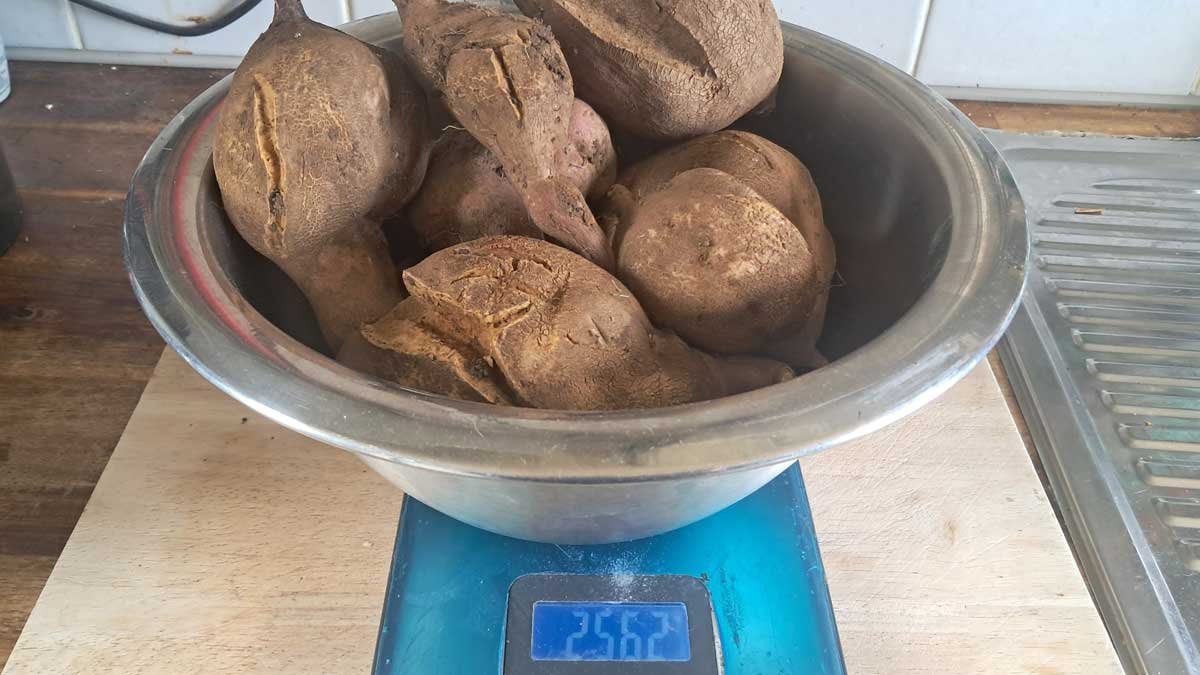
It took a week or so to find the motivation to go sort them. I left the better ones in the container and carted 2.5 kilograms of the worst-cracked kūmara back to the kitchen for a few experiments.
If you're in charge of the household meals, you know the utter banality and frustration of cooking dinner every flipping night. Some nights it's fine, but others you just need some shortcuts.
I decided to try two ideas to freeze my kūmara and make my life easier: mashed kūmara, and kūmara fritters.
I peeled, chopped, boiled and mashed two of the larger kūmara. They were mostly edible. Some parts seem to have some brown areas developing, but I just hacked those out. The rest were fine.
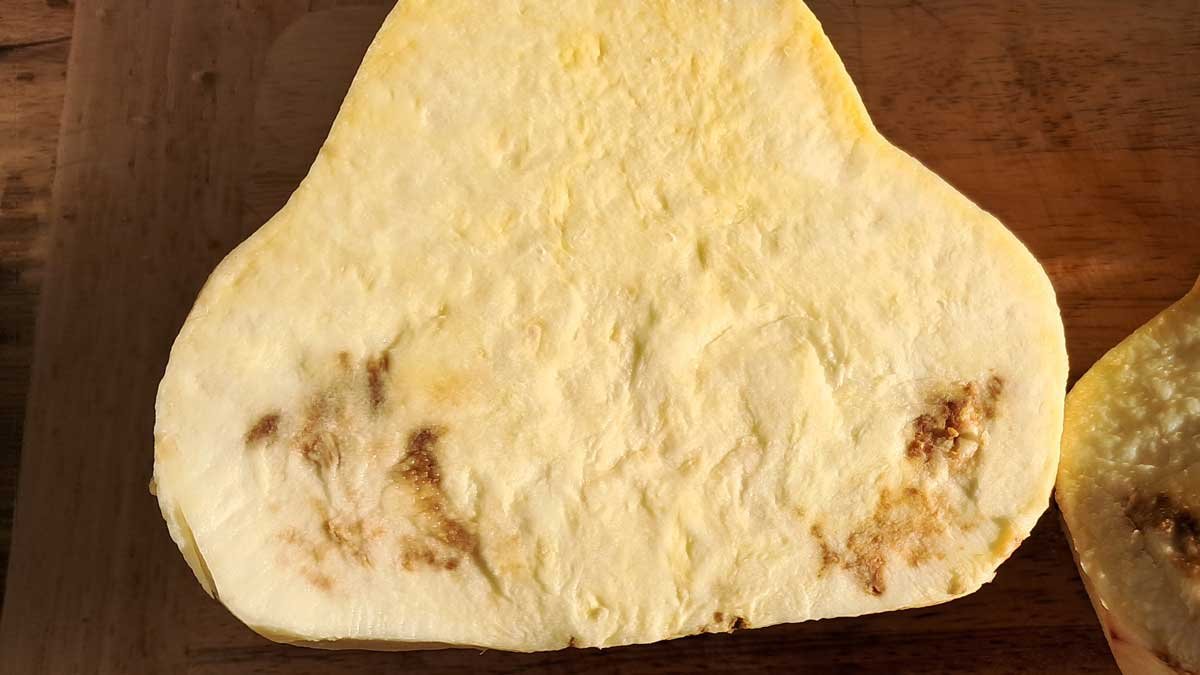
Then I grated up the next-largest 3 and turned them into kūmara fritters.
The ones that actually survived being eaten during cooking got frozen. My hope was that I could use the air-fryer to re-heat them to go alongside meals.
Freezing dodgy kūmara
The mashed kūmara was the first one to be tried. I simply defrosted enough for dinner, and gently heated it in a pot (a microwave would do but it lives in a different building so this was easier for me).
I had mashed it with butter and frozen it. So it needed salt, and a bit of yoghurt helped it along.
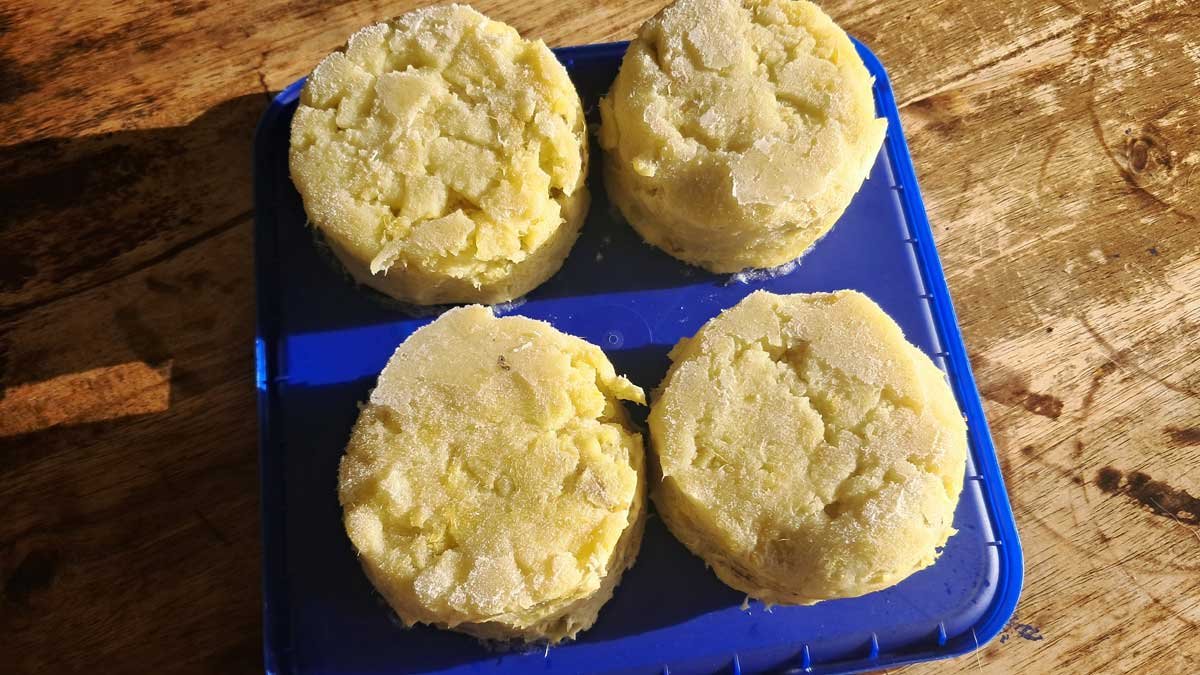
But it worked a charm. Freezing mashed kūmara was a big tick. Convenient, and no loss of volume or funky texture. A perfect future-use for my monster kūmara.
For the fritters, I was hoping to fill a chicken-nugget-shaped hole in Richard's life. Since Roxy's accident we've been trying to save a little money, and that meant nixing Richard's nuggies from the weekly shop.
I wanted to give him something tasty that he could heat-and-eat when he wanted lunch or a more substantial snack. He'd really enjoyed the fritters I'd made the night of our original harvest, so I was hoping he'd approve them.
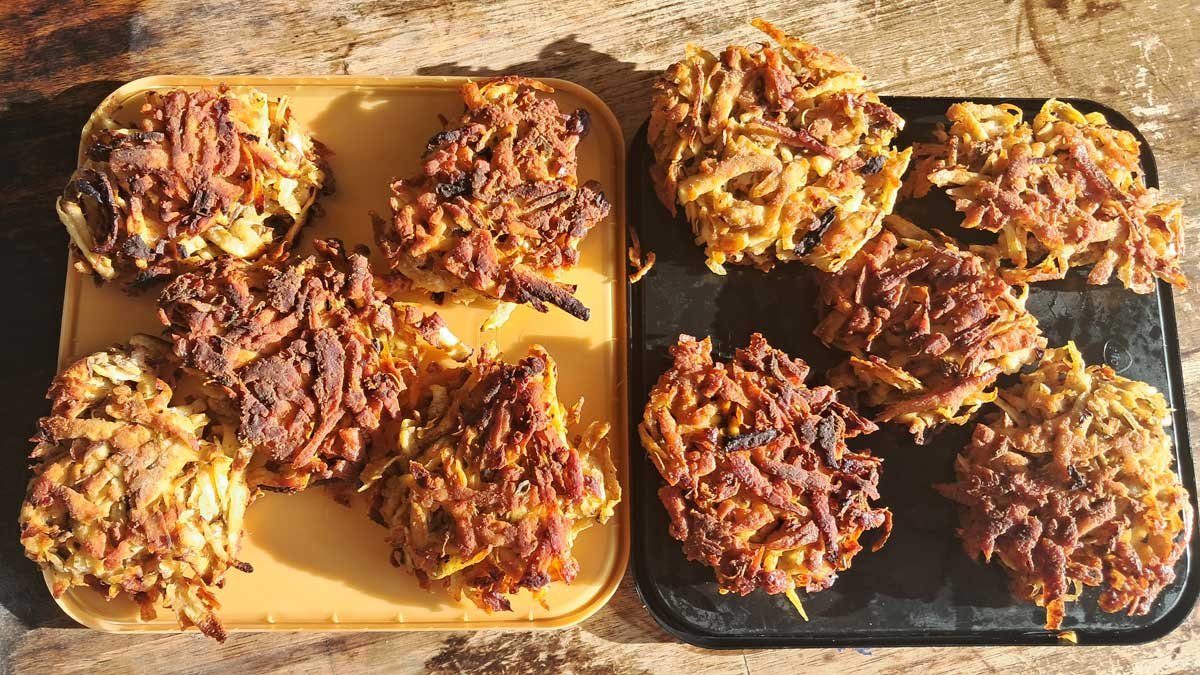
Luckily, he did! We worked out that 8 minutes in the airfryer did the trick from frozen. They almost-certainly take longer to prepare than they do to gobble, but there's probably a recipe coming some time in the future for those.
All-in-all, we have a good supply of kūmara going into the next year, and both Richard and I are happy with freezing the ones that didn't go perfectly.
Future-me will have a few shortcuts for the next few month's meals. And the overall effort-to-gain ratio for this crop is good enough that I'll definitely be growing them again next year.
READ NEXT
Māra kūmara
The origins of this harvest. Read more about growing our tipu and planting and protecting the garden.
Related content: Autumn · bird netting · chickens · cyclone · food preservation · food storage · freezing · harvest · insects · māra kūmara · Richard · Roxy · soil building · Taiwan cherry
Stay in touch?
The Kat's Garden newsletter gives readers an extra peek behind the scenes. It's the best way to know when new posts go live, and what's happened since.
If you like what you've seen, join us and see what we learn next.



I love kumara, and I know lots of folks are starting to grow them here in Canterbury and one day I want to as well so I appreciate the tips. I have to wait though as there are many many other more pressing jobs at hand. I figure I need to get some expertise at the current new to me crops before expanding the experimental ones. I’d love to have successful corn and enough broccoli and get carrots to germinate first lol.
I understand! In many ways I’ve given up on carrots (hard to grow, cheap to buy). We grow broccoli in autumn, but we buy it through the rest of the year because it needs a lot of time and space, and it gets hammered by pests. Corn is so water-demanding, and is the preferred host of armyworm and so cheap in-season that again, I’ve mostly given up! Corn and broccoli are both significantly better super fresh from the garden though. Never been a huge fan of carrots either way! 😅
Whereas kūmara? Growing the tipu inside over winter is the most intensive part. I didn’t touch it all summer long. Planted and harvested, and that’s probably at least $50 worth of kūmara I don’t have to remember to buy. Storage is potentially the biggest hurdle there.
I definitely lean towards crops with lowest effort/highest reward; or stuff I can’t buy cheaply, so it fits my needs much better. But we all have different goals with our garden. I don’t have any magical ideas for carrots, but what’s got you stumped with corn?
Kumara the size of your head! Amazing! I’m trying to get slips from a Japanese sweet potato I bought over the winter, and from another one that I kept from last fall’s crop. They’re the closest I can get to NZ kumara. Hav also ordered slips as a backup. They’ll go into grow bags, so they don’t overrun my limited raised bed space.
I hope your slips grow strong! I wish there was an easy way to compare an American sweet potato to a kūmara because I honestly don’t know the difference, except that there is one. Hearing a lot of good things from my readers about pots, large bins, and even just throwing them into the compost heap!