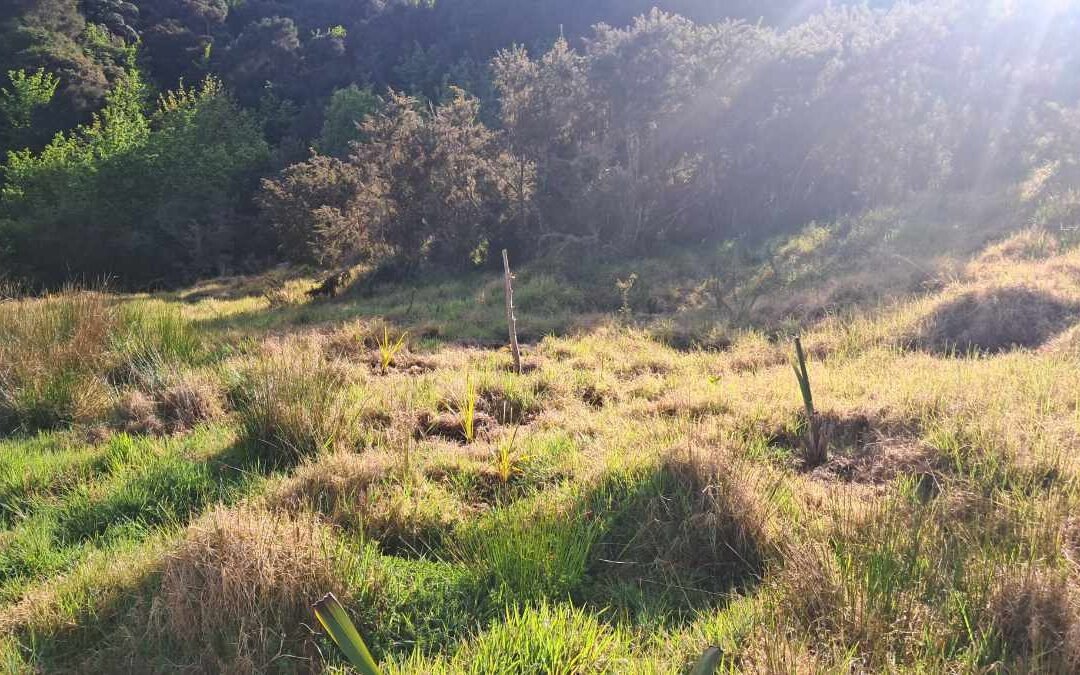
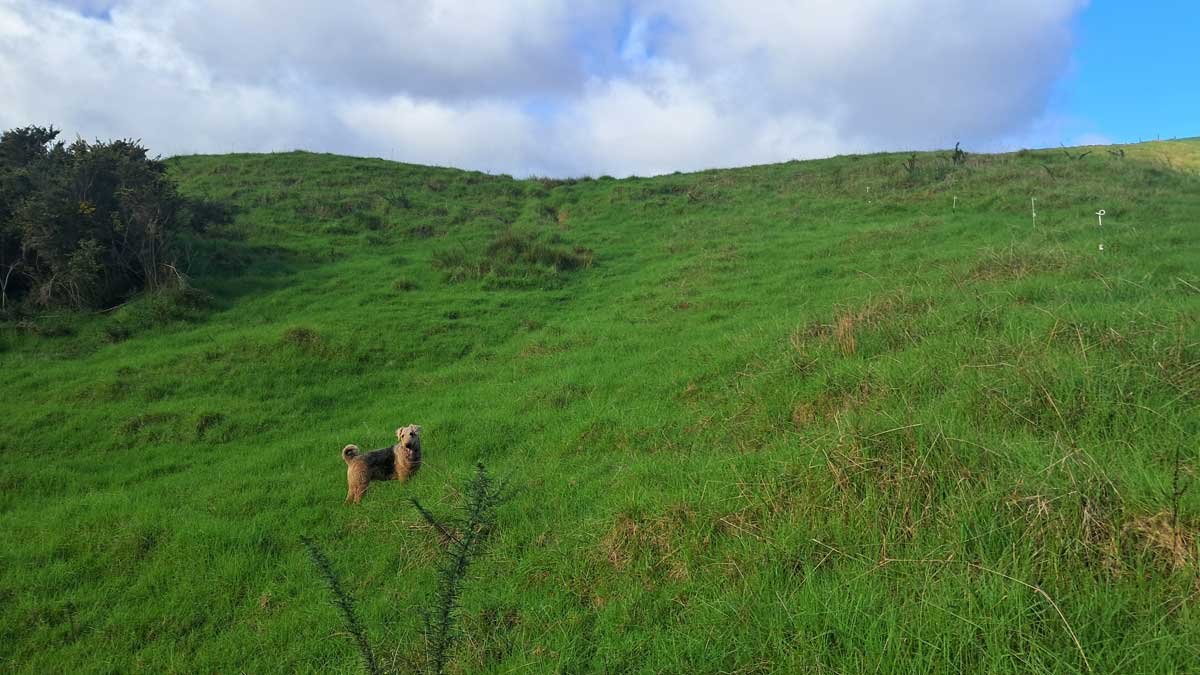
Back in June, I introduced readers to our latest problem, and our newest farm project: a gully which was quietly sinking away every time it rained.
It turned out that our top soil was being pushed down hill very slowly. Eventually that soil would meet a stream, which would take it to a river, and out into the ocean.
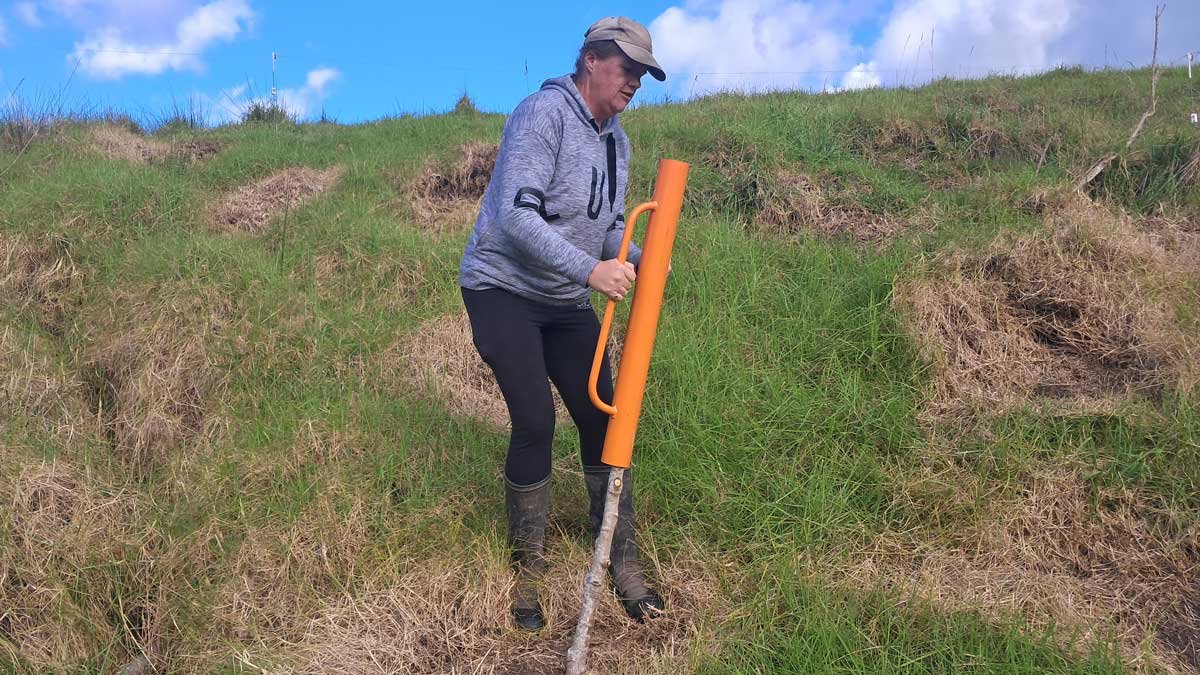
We spent the next month pruning poplars off the driveway and bashing the straighter branches into the soil in an attempt to urgently hold on to it. We also planted harakeke (New Zealand flax) and pōhutukawa, and I put out a call for help.
A handful of very generous readers responded, together donating nearly $200 which I took to a local nursery and used to purchase a pile of native plants in a clearance sale.
Nairis Nursery
We live a hop-skip-and-a-jump from Matauri Bay, where Nairis Nursery raise thousands of native plants.
I had no idea until recently that they were even there, but this very cute community resource are doing an incredible job.
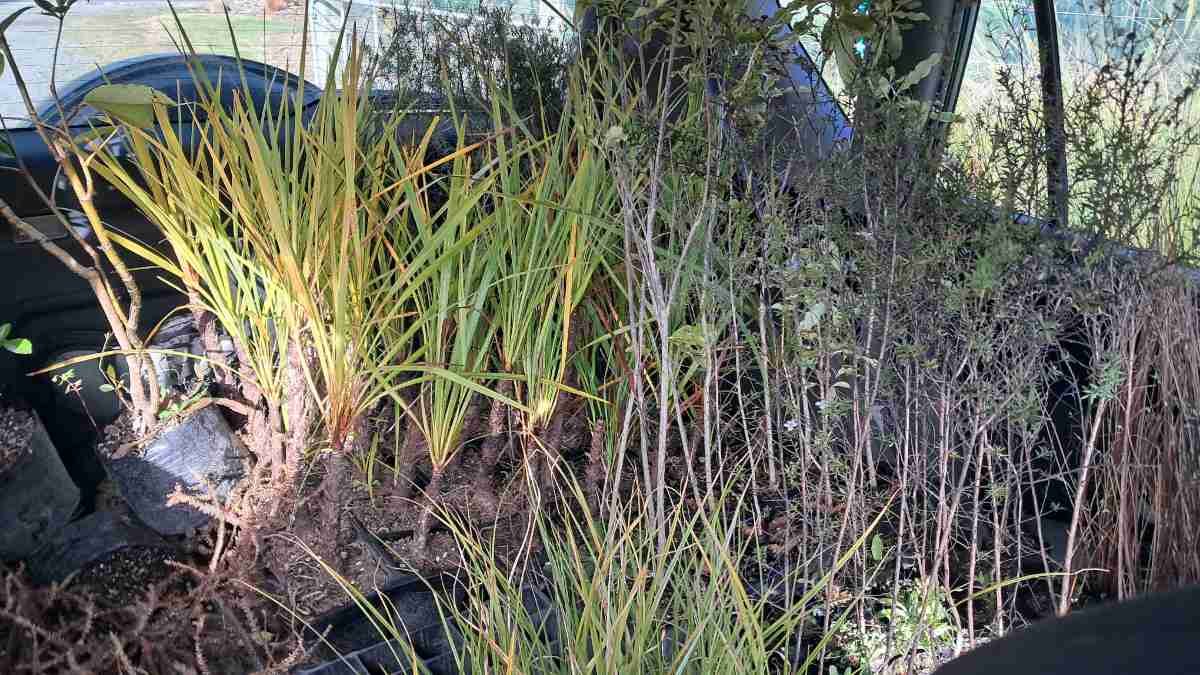
With the budget readers kindly gave me, I picked up:
- 30 x upokotangata (umbrella sedge)—perfect for all that very wet soil in the 'basin' of the gully.
- 24 x tī kouka (cabbage trees)—the plant Richard won't let me grow anywhere else.
- 25 x mānuka—nurse plant to help fill in the canopy.
- 25 x kānuka—nurse plant to help fill in the canopy.
- 8 x tarata (lemonwood)—nurse plant to help fill in the canopy.
- 5 x brown carex—mostly because it's another one I can't plant in places Richard has to mow, and it's pretty.
- 3 x kahikatea—New Zealand's tallest native, to plant under the gorse.
- 2 x whauwhaupaku (five-finger)—nurse plant to help fill in the canopy.
I was delighted to learn that all the seed stock for these plants was collected locally, meaning that even though I didn't personally grow the trees this year, they are still 'local' to this area.
Winter lurgy and other delays
This winter has been an absolute bummer for illness. In late July, not long after I'd managed to visit the nursery and collect the trees, Richard brought one of these illnesses home. Then he gave it to me. So that took us out for a little while.
Then there was rain. And I'm keen, but I'm not getting soggy and degrading my immune system more to get these things in.
And August was just really busy. I was working two off-farm jobs for a little bit there. And I released my Garden Guide—a project which seemed to require every spare minute and ounce of energy for the first half of the month.
So planting was slower than I originally envisioned. But yesterday morning at 7am I left the cabin determined not to come back until the last of them were in.
It didn't even take that long, I was back before 10am.
Steps
Having struggled with the wheelbarrow while planting poplars, I knew that wasn't the best way to shift all these trees to site. The hardest piece of the whole process was actually getting the empty wheelbarrow back up.
So I decided to use grocery bags, carting them down by hand. With the two of us fully-loaded, we could get about 30 trees down in one trip along with tools and water. Which meant we have got these trees to site bit-by-bit over several trips.
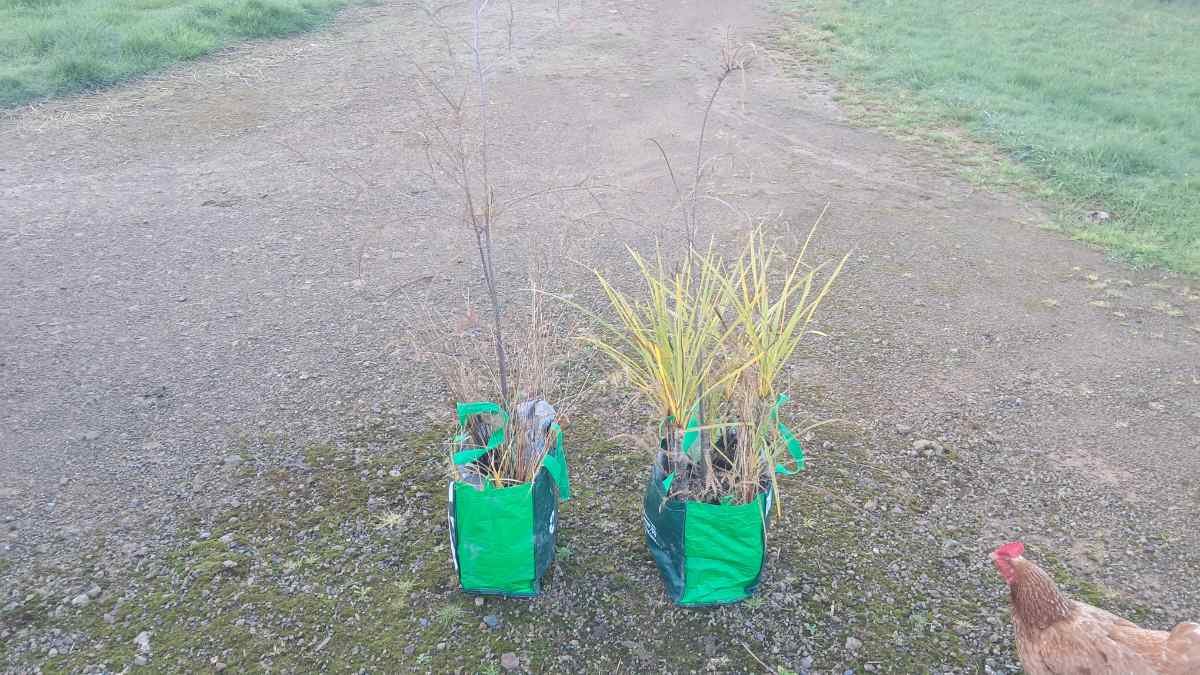
The site is a good trek from the compound, Google Maps tells me it's a 250m walk, but it feels longer.
To get there we head out the gate, down the race, into the next paddock, and down the hill to the gully.
Richard spent one of the trips walking about with the line trimmer to clear up the planting spots I sprayed earlier in the year. I walked along behind him with a spade and a bag of trees, getting them in.
Then, once we were almost wiped out by the planting and activity on site, we had to schlep the 250m back up the hill to the compound again.
New growth
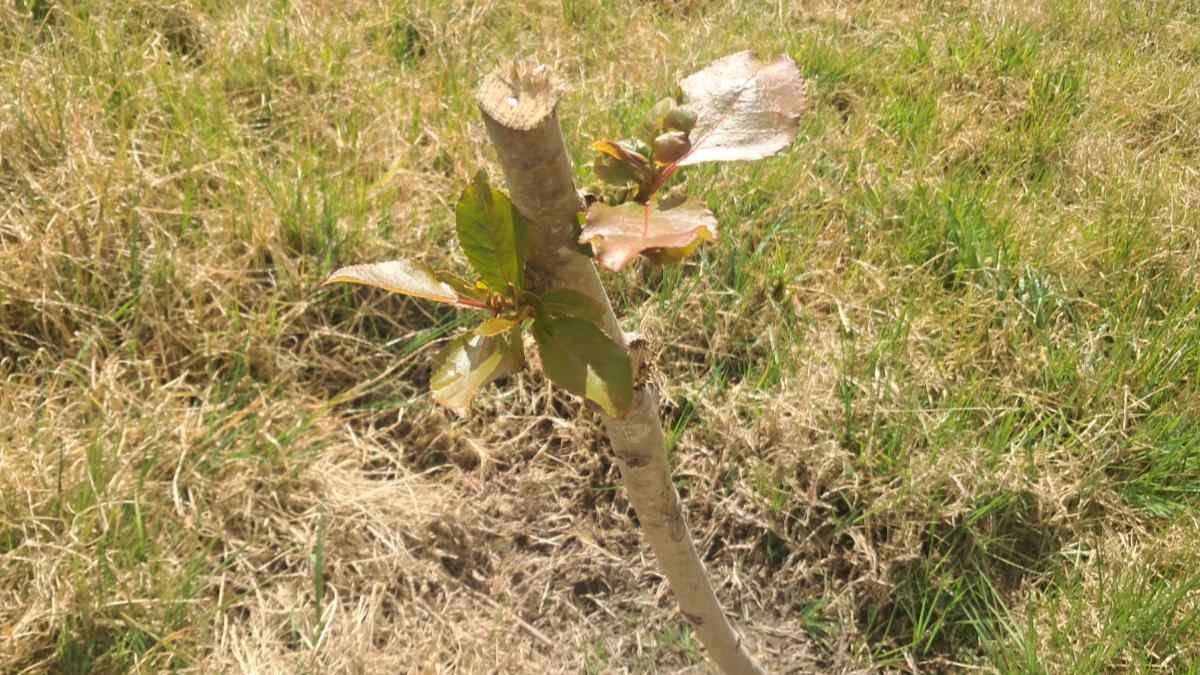
On a recent trip down, I noticed one of the poplar poles had fresh buds. I called out to Richard and told him. He looked around him and confirmed the ones there were also budding up.
As we worked, we realised there were only a couple that hadn't yet begun showing signs of life.
And look, this doesn't guarantee they're going to take. There is a certain amount of vitality in the branch itself which can result in leaves.
It's still a waiting game to see how many establish in the end, but it's a bloody amazing start.
Each time we go back, there are more trees in the ground. Things are showing signs of life.
It's beginning to show the promise of what it will be: an intentional planting to prevent any major environmental disaster on our watch.
From here
That's a wrap on the 2026 planting season, but there are definitely more gaps to fill in this area. So now that it is spring, it's time to turn my attention to the second part of my promise: to grow more trees for next year.
I've got a container of seeds that I've collected from trees on the property including pūriri, black matipo, mānuka, kānuka, and karamū.
It's time to get those seeds growing so this process can begin again next winter, and we can keep working on saving this corner from ending up in the ocean.
The current herd of cows are respectful of fences so they haven't pushed through our temporary fence into the gully, but the fence around the planting will eventually need upgrading too.
So, given there are more expenses for the future, I've popped the remaining 'Grow It Forward' stickers into the shop. If you happen to order one, the income will be put into a restoration fund for buying things like potting mix and fencing supplies.
No pressure, this stuff will tick along either way. But it sure moves faster with a bit of support.
So thank you to the supporters of this project so far. You really are the best.
READ NEXT
The sinking gully
An introduction to the problem this project is aiming to solve.
READ NEXT
Planting poplars
Sourcing and installing trees for the first part of the planting.
Related content: cabbage tree · community · erosion · erosion control · garden guide · gorse · grow it forward · harakeke · kahikatea · kānuka · karamū · mānuka · native planting · native plants · planting trees · pōhutukawa · pūriri · restoration · Richard · The Outpost · tools
Stay in touch?
The Kat's Garden newsletter gives readers an extra peek behind the scenes. It's the best way to know when new posts go live, and what's happened since.
If you like what you've seen, join us and see what we learn next.