
Back in November, we noticed our hand-watered plants weren't happy. We busted out some pH testing strips and discovered our tap water was sitting at about 6—mildly acidic. This was a contrast to the water coming out of our dehumidifier which was perfectly neutral.
Our water tank is roughly 7 or 8 years old, and is filled via a rooftop collection system. We figured we were due for a clean.
The tank is plastic which means the temperature of the water fluctuates with the amount of sun throughout the year (making it impossible to have a cold shower in summer, or a hot shower in winter, but I digress).
The warmer temperatures of late spring presented the opportunity for algal and bacterial growth, resulting in acidic water.
We could see it with our eyes in our animal's water too. The chicken water went green within a few days. And the dog/cat water tower needed scrubbing internally at least once a week or it built up a slimy green residue too.
It was clear that the thing preventing us getting sick was our (more regularly maintained) filtration system. But our tank was sick, and we needed to address it.
A full tank
We're rather proud of having never needed to buy in water. In our time here, we've never had less than 10,000 litres in there, even during droughts.
When I was a child, my father used to start banging on the bathroom door to get us out of the shower. Sometimes from the moment we actually stepped into it! It means that I am now incapable of a long, luxurious shower. I just don't know how to do it (I've tried!)
That turns out to be a huge blessing when you have one tank of water filled off one teeny-tiny roof. It's something I've told Dad I'm grateful for.
Our house doesn't have a lot of laundry. Our toilet is a composting (waterless) toilet, and we wash our dishes by hand. We don't tend to run sprinklers in the garden, instead relying on passive water-harvesting techniques in the landscape. We've been known to turn off the shower while soaping up in drier years.
All of which means we had about 25,000 litres of water sitting in that tank. About $850 worth of water if I were to have it delivered by a truck.
We needed to do something, but without compromising the mostly-full tank we had managed to accumulate.
Safe H2O
Richard and I had both independently flagged one company throughout the years as probably our best choice.
Firstly, we knew this is not a DIY job. Sure, we could try. At best we'd have a terrible time. At worst, one of us could die. So that was never really a consideration. This is a job for professionals.
Safe H2O's business proposition is that you get clean water, with minimal wastage.
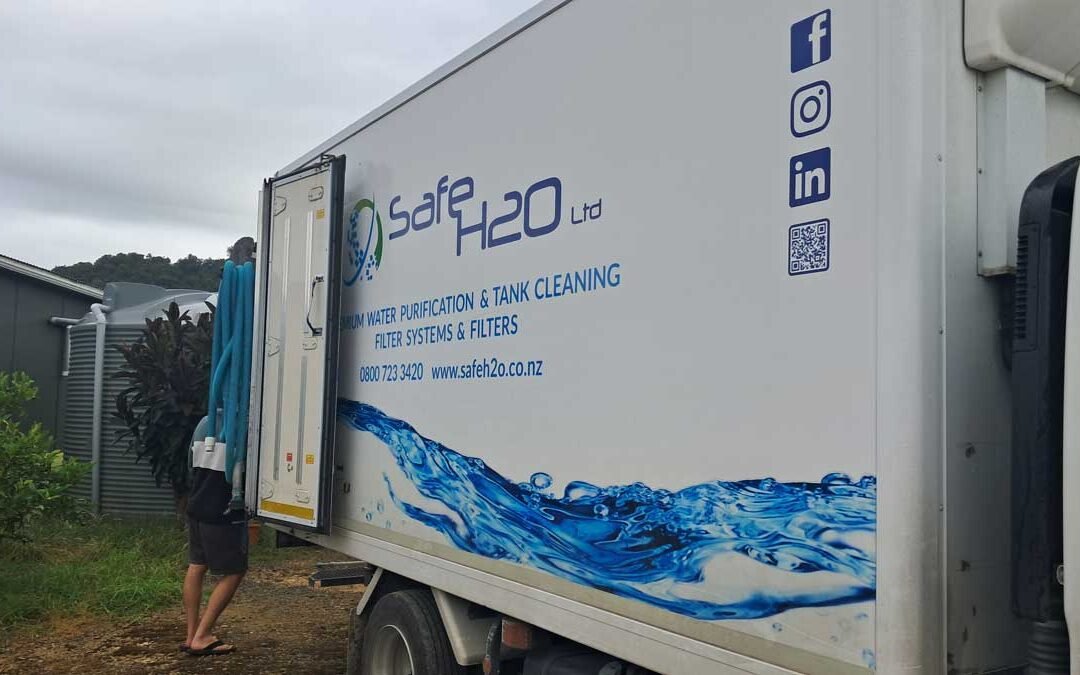
After sucking out the accumulated crap at the bottom of our tank, their truck triple-filters our own water, adds a sanitising chemical, and puts it back in our tank.
We'd probably lose 10-15% of our water, but the tank level was looking good, and we wanted clean water. It was outright cheaper than replacing it, so we went ahead and managed to get a booking a few days before Christmas.
Brad
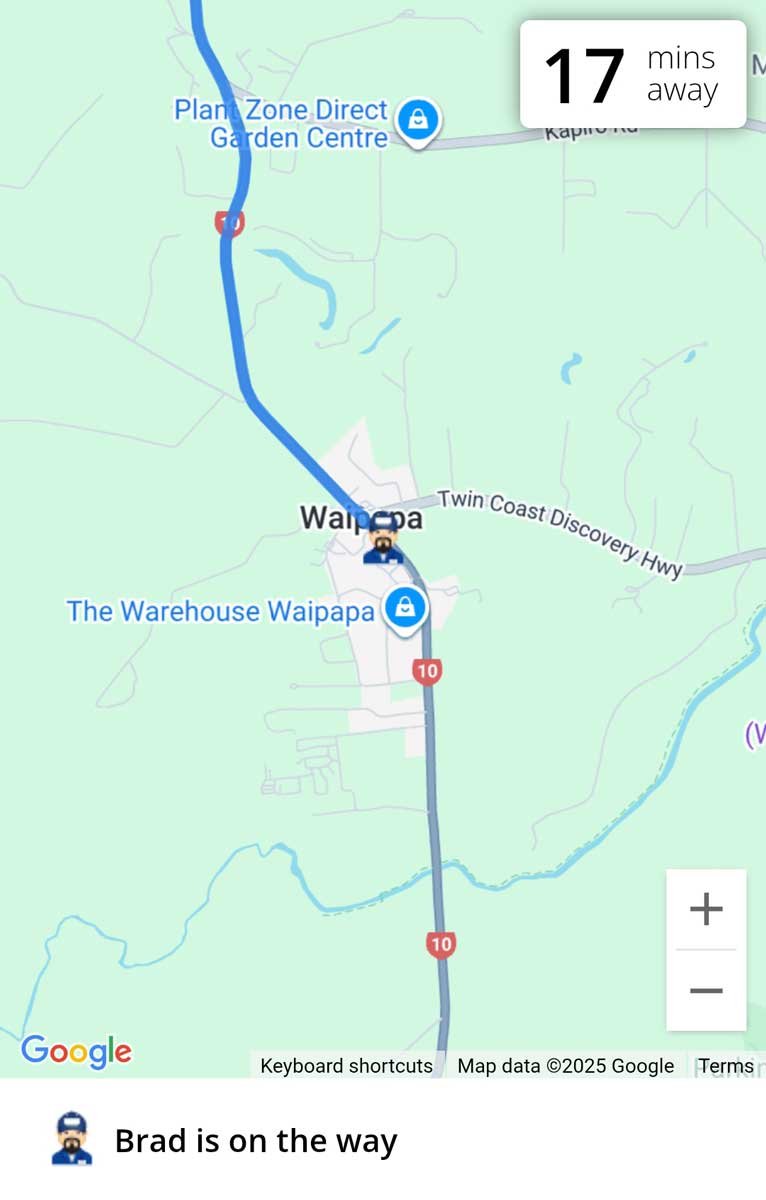
The morning of our appointment, I got a text to let me know that our operator, Brad, was on his way. It included a nifty little link to a live-tracking map and I could see exactly how long I had to give the dogs a bit of a run before putting them away.
After quickly assessing the site, Brad backed the truck up towards the tank and set up his vacuum.
He began by sucking up the crap at the bottom of the tank. We got to aim the overage wherever we wanted and chose to send it towards the berry house. Waste not, want not!
I kind of expected a big pile of gloop, but that's not how it worked.
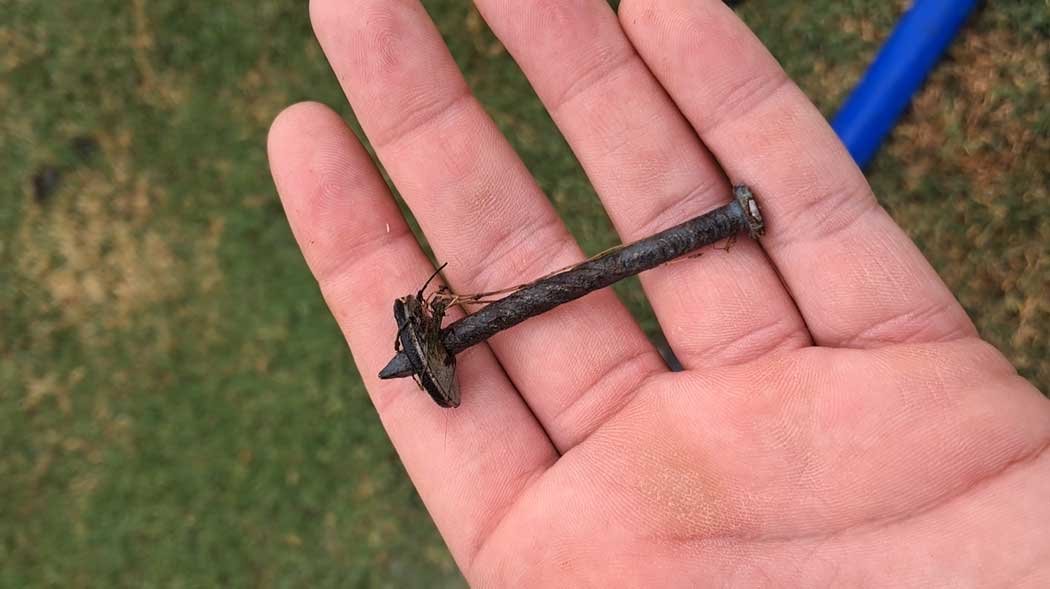
The first thing that happened was the hose spat out a few leaves and a nail. A nail! It's probably been there since the system was installed. Horrifying.
Then the water was mostly clear, with bursts of very brown.
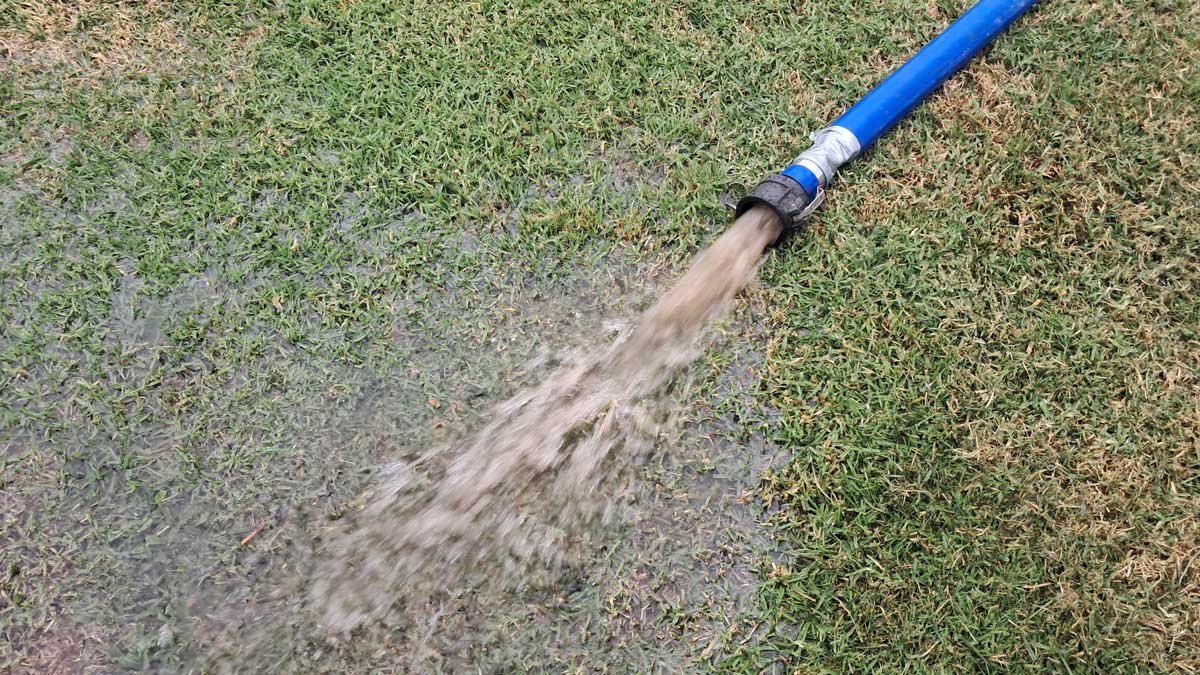
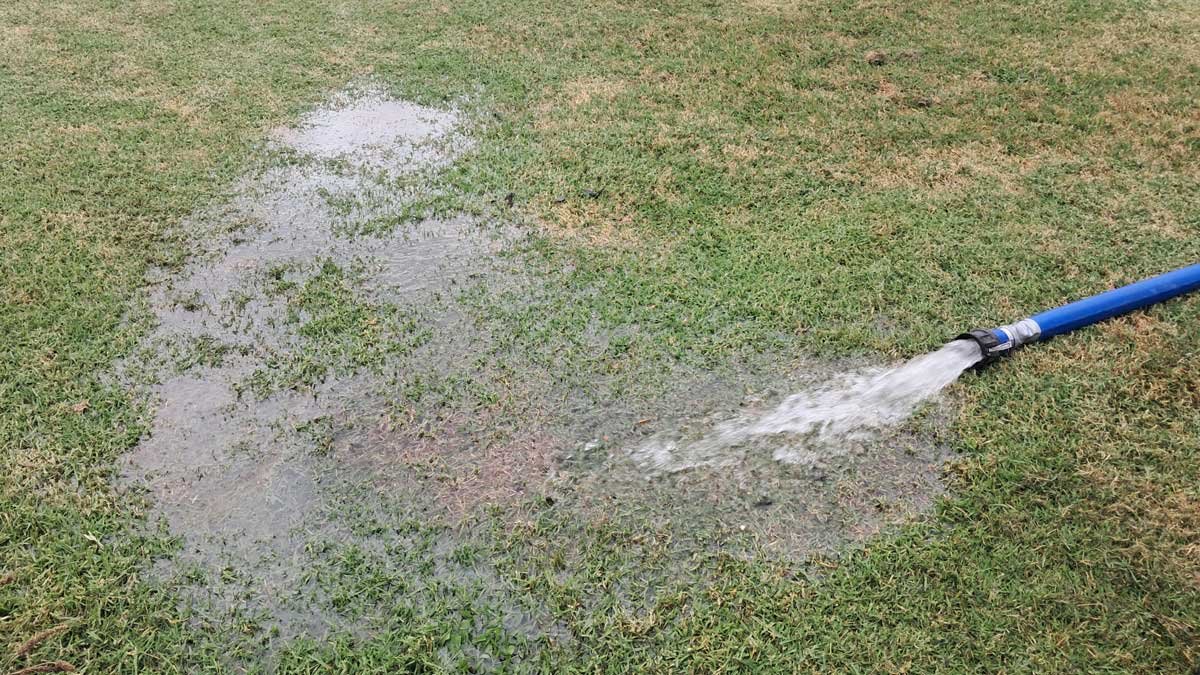
Brad was working up a ladder, vacuuming the crap off the bottom of the tank (like cleaning a pool) for maybe 10-15 minutes.
So fresh and so clean
Then Brad hooked the tank up to his truck, and the real wait began. It was quite loud with a pump and generator going to filter the water.
He told us ours was one of the fullest tanks he'd seen in a while. A proud moment, which also meant we'd be sitting there waiting for it to be filtered for longer.
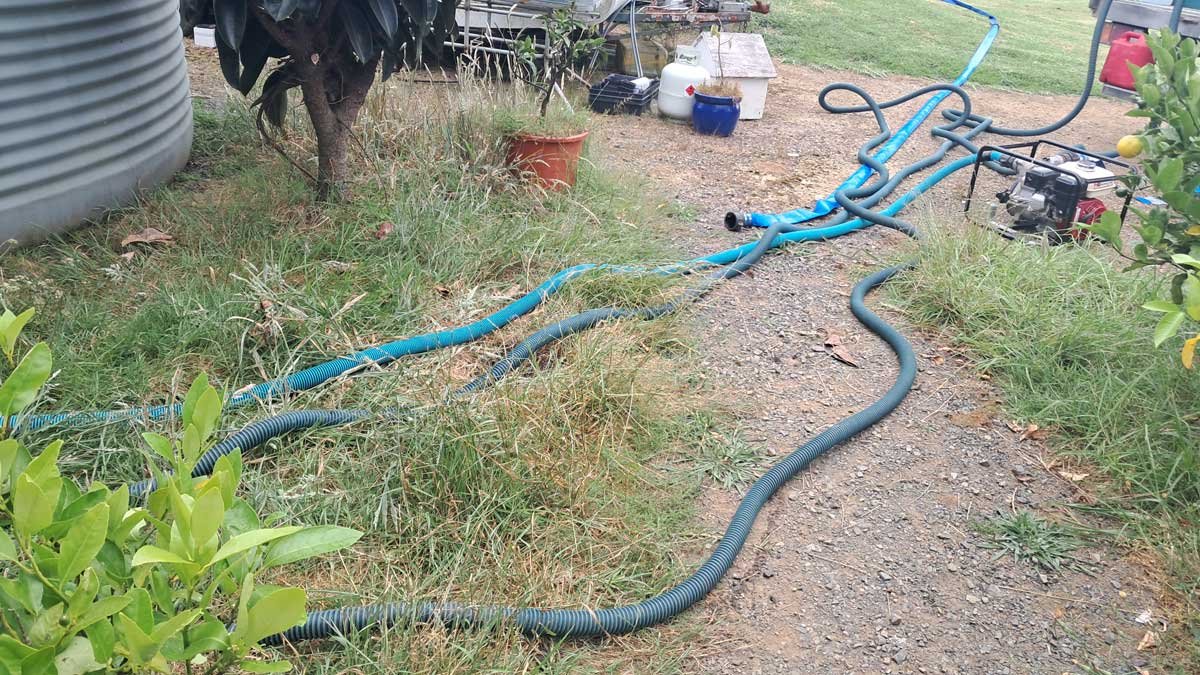
I left to read a book, but Richard was less bothered by the racket and stayed to have a yarn. The filtering process is mostly a wait, so they ended up doing our annual filter change while Brad was here.
He offered us some valuable advice that our quartz sleeve on the UV filter would probably need changing next year too. Truth be told, we didn't even know that was a thing!
Brad was here for about 2 hours with his magical truck, and I have nothing but good things to say about his service. He reckoned we'd called him in at exactly the right time.
The report we were sent later said he'd removed 10mm of crud from the tank, and I'd estimate we lost about 150-250 litres of water through the process. Which was all better than I had expected.
Safe again
Neither Richard or I think our water is worth taking a gamble on. It's so vital for the survival of all the creatures here, as well as ourselves.
We'd hate to poison a loved-one whether they be human, furry, or feathered, and it brings us a lot of comfort to know we're more sorted than we were a few months ago.
Getting Brad and Safe H2O in to treat the tank was not only comforting, the pH of our water has neutralised since. We have peace of mind that our water will be safe in the years to come.
I hugely recommend this as a system to manage the health of your water tanks.
READ NEXT
Outpost Buildings chicken coop review
Almost a decade after purchasing it, how is our Outpost Buildings chicken coop holding up to the conditions The Outpost throws at it?
Related content: algae · cleaning · composting toilet · filtration · fresh water · infrastructure · lifestyle block · maintenance · pH · rain · rainfall · rural life · Safe H2O · self-sufficiency · tank · The Outpost · water · water harvesting · water tank
Stay in touch?
The Kat's Garden newsletter gives readers an extra peek behind the scenes. It's the best way to know when new posts go live, and what's happened since.
If you like what you've seen, join us and see what we learn next.




Ok, I didn’t expect the process of cleaning a water tank to be fascinating! Impressive that you can keep that much water from roof run off alone.
During college, I worked summers at an old hotel on an island off the coast of Maine. Water was pumped from a meadow, up a hill and then distributed to the hotel and summer homes. The first thing the owners emphasized to all the employees was to shower by turning the water on and off between soaping and rinsing, and brushing your teeth with just a glass of water. There were always days when the water would be turned off for most of the day. I still feel a touch guilty taking long, hot showers!
Funny how it’s hard to shake the habit once it’s ingrained eh? I hate seeing water just come out of the tap and down the sink.
Thank s for awesome feed back am glad and happy to help with all your tank and filtration need thanks from brad and our awesome team at safe H20
I usually turn off the water while soaping. My reason is it saved water while living in a motorhome for 6 yrs. It’s a good habit. My other shower routine is actually drying off first with your face cloth. Just keep wringing out the water. Then a second dry with a hand towel before wrapping in a bath towel.
By the time you get to the bath size you are dry so you save on water by not having to continually washing big towels.
I didn’t know it was possible to clean a tank and not lose at the water good to know.
That towel trick is quite genius! Possibly a little overkill in our situation right now, but if we were in a drought with lower levels in the tank, I would absolutely use that tip!
Thanks Kat – useful info for me as we have a water tank and no idea when it was last cleaned – we are also on town supply so water tank not used for all household water – have just sent an enquiry to SafeH20
I hope it goes well for you!