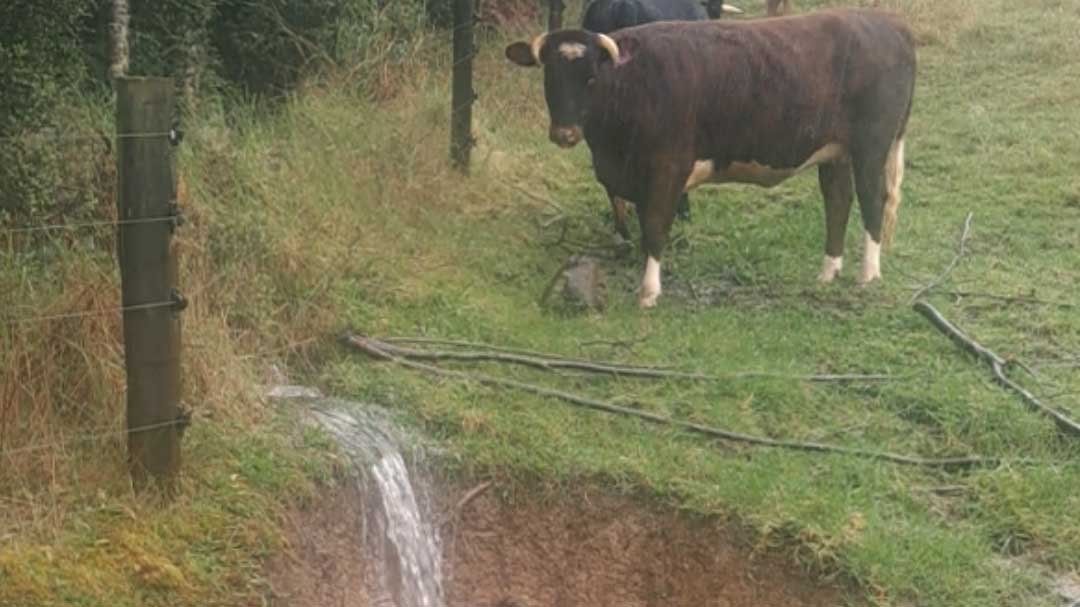
Basically every year since we moved to The Outpost, we've experienced at least one tropical cyclone.
We live rurally, have a big amount of space with infrastructure like a long gravel driveway, culverts, and fences. We also live near Kaeo, which is so prone to flooding that we have a local webcam for these kinds of events.
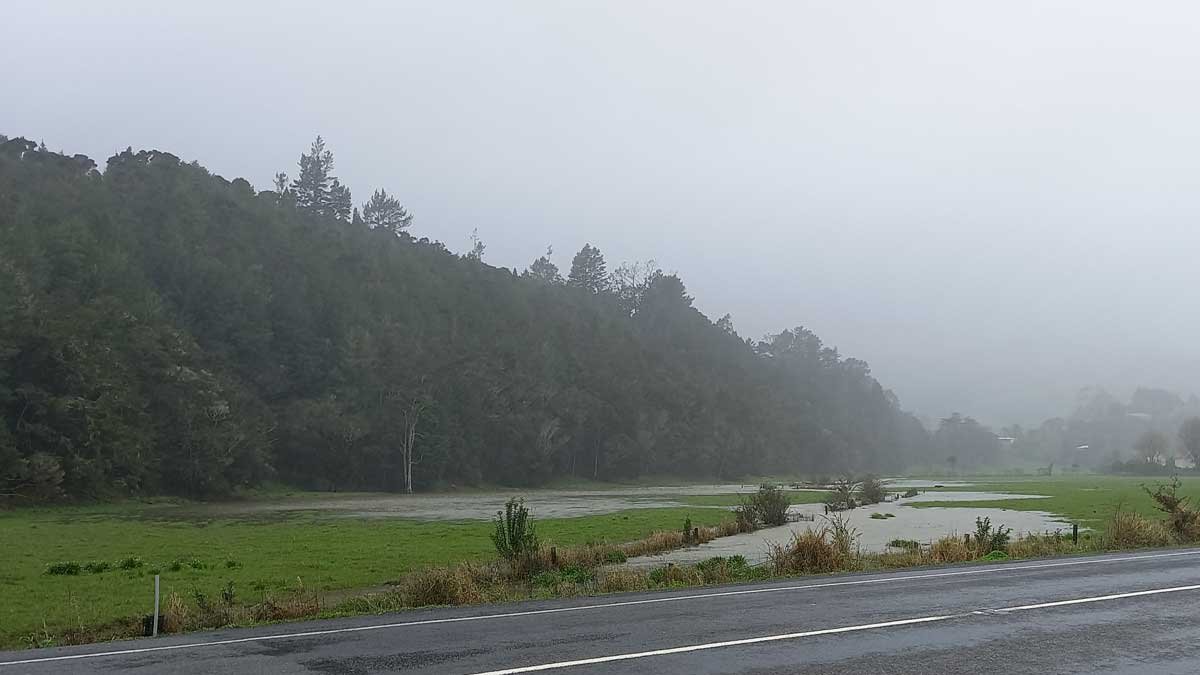
Paddocks flooded in Kaeo in 2022.
So every time a cyclone is forecast, we go into prep-mode. We've learned a lot about what we need to do and what the biggest risks are. It's "Cyclone Season" in New Zealand (I guess), and I was recently asked what we do to prepare. So that's what I'm going to try and explain today.
It turns out that most of our cyclone-preparedness is just regular and routine everyday things. Other things we did right the first time.
There's time-sensitive tasks which are best done when MetService issues a warning. Then there's the bigger goals which will help our future selves during the next one.
The right property
I never thought I'd buy a property in the Kaeo area because inundation was my top priority while property-hunting. But we don't live in Kaeo village where it actually floods.
We live in the hills on the south side of Kaeo, approximately 50m above sea level. We only get cut off from the north when it floods. It impacts my ability to get to work, but as a gardener, I don't work on days where it's raining. So the impact is limited, at least for us.
There is a big mountain to our east that delays our morning sun, but also protect us from the most common winds of most cyclones. The slope of our property means water drains quickly with gravity.
For us, most cyclones involve little to no wind; a lot of rain which drains off in a day or two; and maybe a really long power cut.
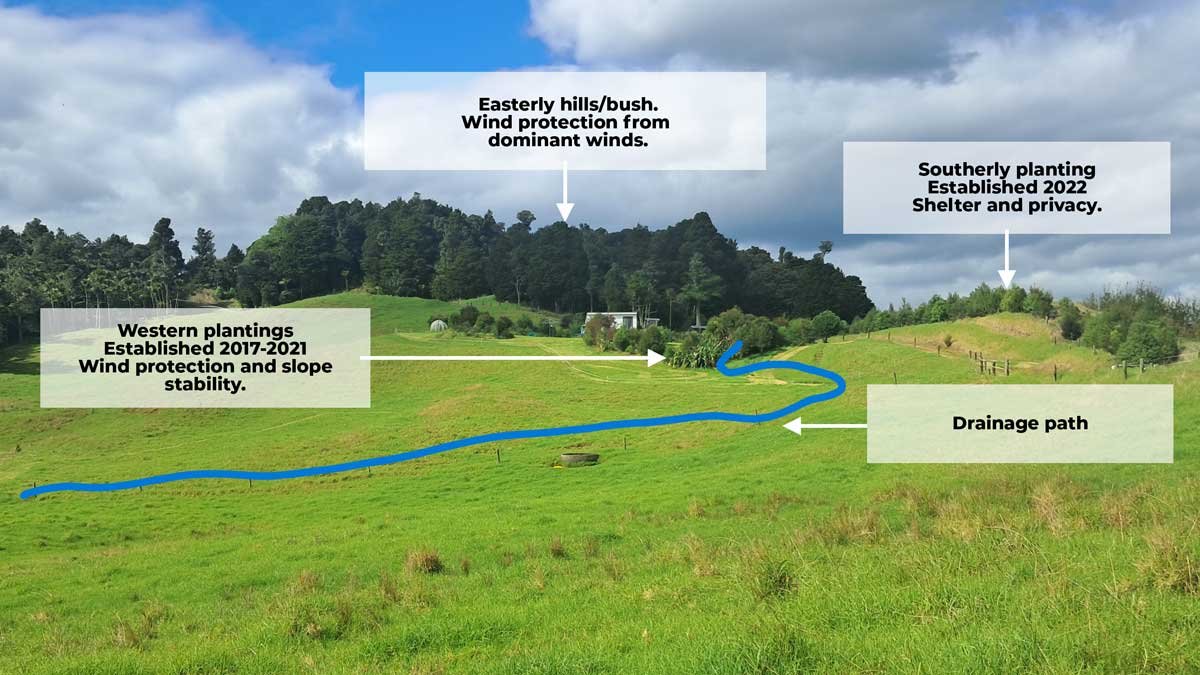
That's not an accident. The physical aspects were all considerations during the purchase of this place.
I got laughed out of real estate offices during our property hunt. A silly girl with her concerns about a changing climate. I was told I was over-reacting and needed to be less stringent about my requirements.
However I've always believed the geography (topography, geology, hydrology; and how humans interact with those things) of a place was the single most important consideration to mitigate risk.
So the resilience of the property I put all my financial security into was my number one concern. I took climate predictions seriously despite the fact everyone told me I'd be long-dead before they mattered.
Which means we don't live on a floodplain or in a swamp to begin with. And that initial decision pays dividends every cyclone season.
It's not perfect. There are other problems I didn't foresee. We're still at risk of landslide. But I got the inundation bit mostly-right.
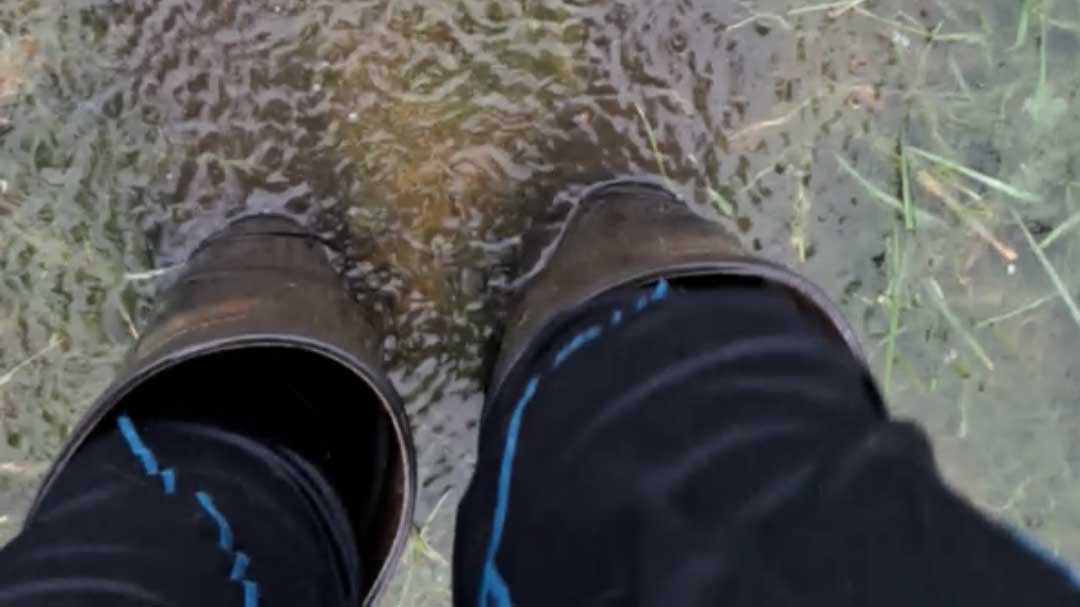
If you happen to be searching for your own piece of paradise, it's the best time to prepare for adverse events. Don't put yourself in a predictable line-of-fire, even if they laugh at you.
It probably won't protect you from every risk, but it can mean the difference between a freak accident, and a persistent problem.
Deep pantry
Living outside of the city is a different beast. Our everyday routine takes us past the supermarkets about once a week. We almost-never just 'pop into the dairy' in the same way we used to. We do one big shop, and aside from the occasional bottle of milk on the way home from work in the meantime, that's what we've got.
After the bare-shelves and long-lines associated with lockdowns in 2020, I began a 'deep pantry'. Essentially I have at least two of everything shelf-stable that we use regularly. There's the container we're currently using, and the spare.
When we finish the current container and crack into the spare, that's when I shop for the next one. A benefit of this is I buy almost-everything on promotional prices because I can afford to wait for them. Nothing is ever so urgent that it requires a trip into town immediately so we don't run out. It's all organised as part of our everyday lives.
Everything—human food, pet food, toilet paper, toothpaste, washing powder and more—is on this cycle. It all has built-in redundancy in case we can't get to the shops, or the shops don't have what we need when we get there.
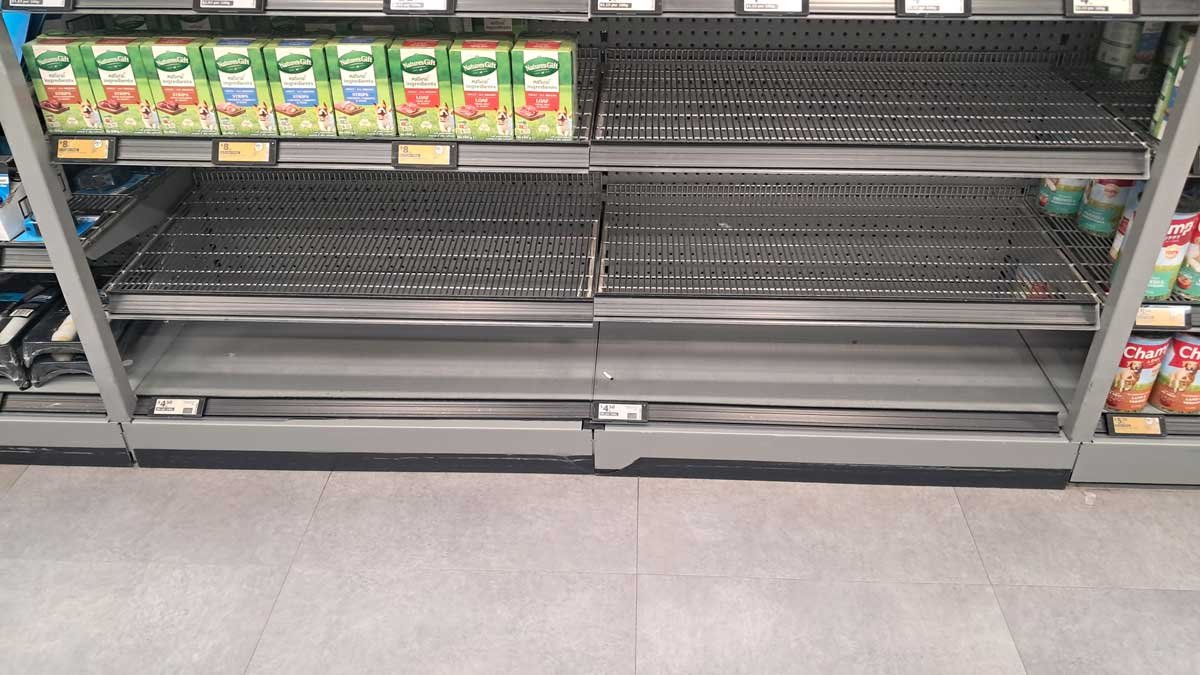
Taken April 2026. Our usual dog food has been out of stock for 2 weeks now. Good thing we have a few week's supply tucked away.
I've built this up slowly over years adding one or two products when I find a good promotion. As well as keeping us prepared for emergencies and supply-disruptions, it also saves money on our grocery bill.
If you had more storage space, you could have 2 or even 3 spares. The key point is to keep cycling through it as part of your everyday life.
You don't need a special separate pile of cans and rice if your regular stock of food involves a few cans and rice anyway.
You know what would suck? If you end up needing it, to find it ruined in some way because you bought it once before a potential emergency and never looked at it again.
A quick escape
Our car has some secret compartments. If you looked in them, you'd find normal stuff like a tyre jack and the car manuals.
You'd also find a bag of clothes and two pairs of shoes. If you dug around other corners, you'd find chargers; blankets; a few snacks; a first aid kit; medicines like painkillers and antihistamines; a roll of toilet paper; sunblock; a pocket knife; hand sanitiser; and spare dog leashes.
One thing we have to be prepared for here is wildfire. Thankfully that's never been a direct threat, but a fast evacuation isn't outside the realms of possibility.
We were reminded of that early on in January 2020 when the Australian bush fires felt like (and have seemingly proven to be) the Harbinger of Doom.
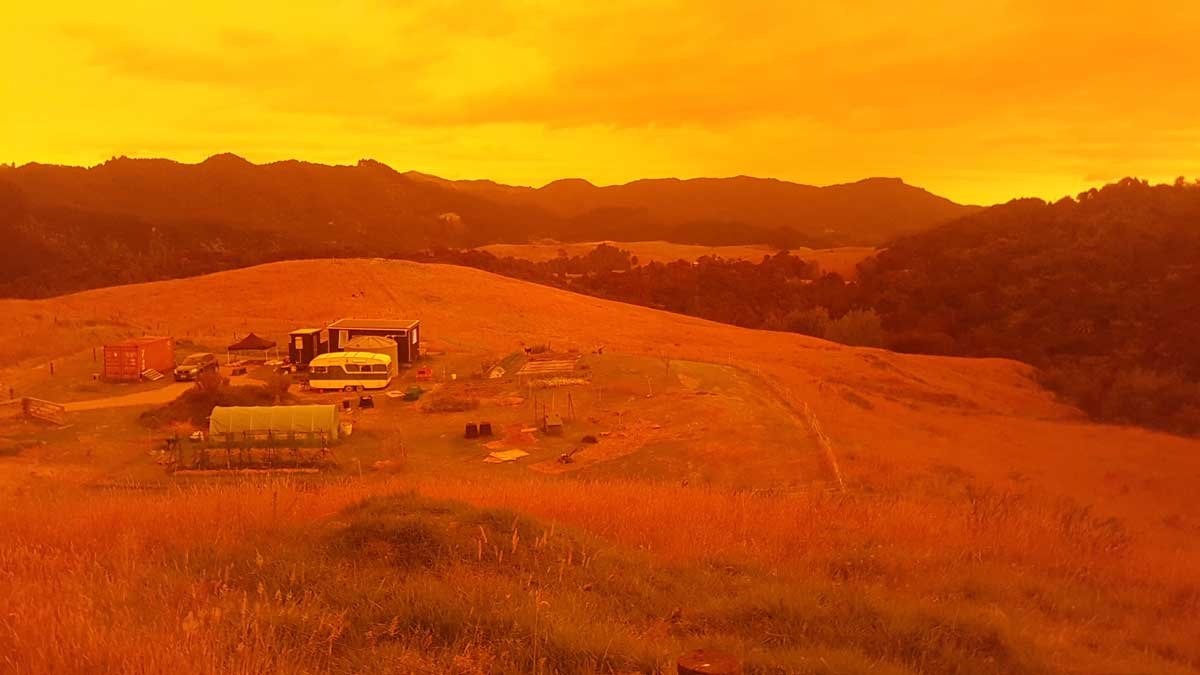
So the car is always prepared. Throw the animals in, and go. There are three cat cages for the backseat, and the dogs in the boot. All the most essential things are already there. The petrol tank almost-never goes below half-full.
To be honest, a lot of this is helpful on the day-to-day. Almost any minor inconvenience is probably solvable with what I cart around in my car. Yes, I guess it's more weight to be carrying around in a fuel crisis, but none of it is precisely heavy on its own.
And it genuinely comes in handy at least once a month. Ever been in a situation and found yourself wishing you had a spare pair of underwear? Or a more practical pair of shoes? Those pills you forgot to take this morning? A dry pair of socks? A snack? Some bog roll?
When I lived in town, I carted around a handbag with my essentials. These days if I'm leaving the property, it's in our car.
So our car is an emergency kit in and of itself, and it is prepared for the big emergencies, as well as the little ones.
Alternate fuels
Loss of grid-power inflicts the biggest damage on us. We blew up a fridge with a dodgy generator during Gabrielle. Cyclone Tam saw us lose the entire contents of the freezer.
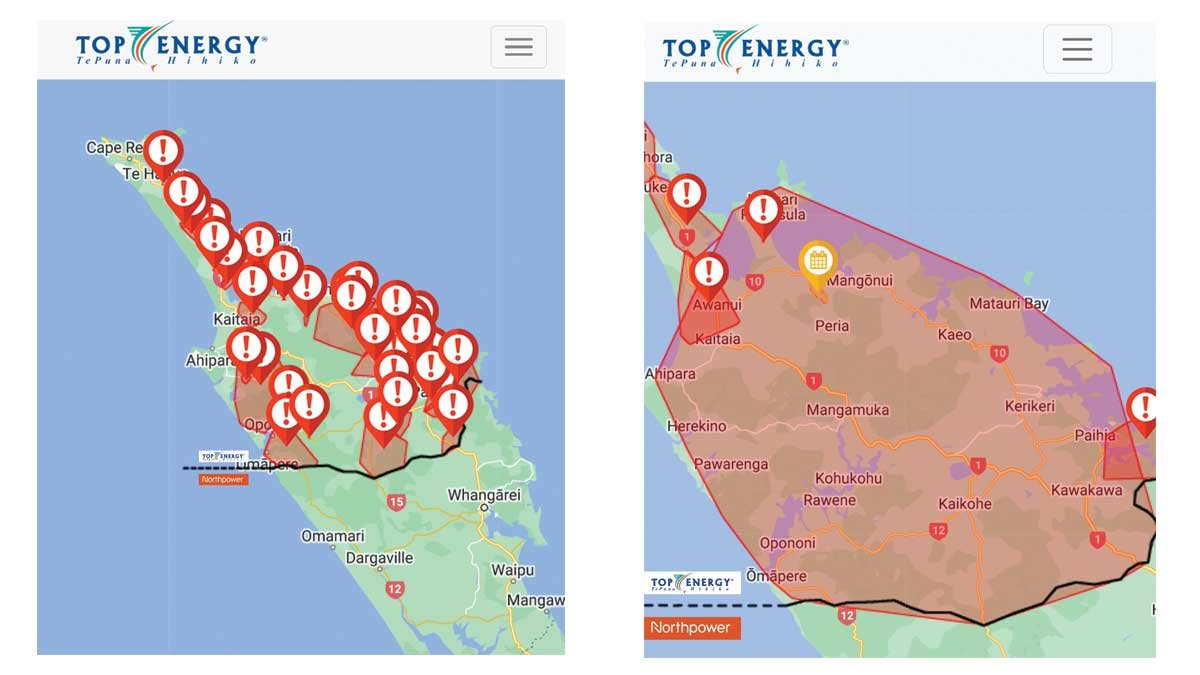
Left: outages during Cyclone Gabrielle. Right: when the power pylon fell over and took out all of Northland's power in 2024.
A cyclone is almost a nice way to lose the power. At least I have some warning about it.
We had four major outages in 2025 and only one was a cyclone. In 2024, a maintenance crew took out too many bolts on a pylon, causing it to fall over and take out the power for the entire region for most of the day.
That unpredictability means we have a pile of dry firewood (mostly collected after Gabrielle) despite not having a fireplace. We have two butane stoves and extra fuel for them.
We routinely keep a little petrol on hand. Mostly for the lawnmower, but it's been helpful when a neighbour has let us borrow their (not dodgy) generator. There's an LPG barbeque and a charcoal barbeque. We have my mother's old camp oven tucked away too.
We have a little stockpile of batteries (thanks Costco!) and candles. And we use torches on a daily basis anyway, so we already know exactly where those are—right beside the door.
Would going 2-3 weeks without the outside world, or grid power suck? Absolutely. Would we survive it? Probably.
So far, all of this is just ordinary life. We stay prepared because disaster could strike on Tuesday, and we're not always given days to make a run on the supermarket.
When the warning comes
When Metservice issue a warning, I pay attention. We try to hibernate as much as possible: batten down the hatches and find something to keep busy.
Just like everyone else in the cyclone's path, we secure things like bins, outdoor furniture, and plants in pots.
We charge up a powerbank, the batteries for our chainsaw, torches, and the wireless speakers.
I download a few extra podcasts because those are handy during a long power cut. I keep a few second-hand books on the TBR pile for long power cuts too. Short and easy ones.
When the power goes out, our pump stops working, so it becomes harder (but not impossible) to access water. We have sealed bottled water for consuming ourselves or for when we don't get a warning.
But for cooking or washing up, I fill a bunch of plastic bottles with water, just in case. A clean milk bottle is fine for a few days until the emergency passes.
Once all that's done, it's time to put the freezer into cyclone mode.
Cyclone mode
We don't have a deep-freeze, we have 3 drawers in a fridge-freezer. So when there's warning the power might go out, I've started putting the freezer into 'cyclone mode'.
This is something that has evolved as a result of losing all our food during power-cuts. So far, it's all theoretical and hasn't actually been tested. It's designed to keep our food frozen as long as possible and involves re-stacking the freezer.
Normally our freezer is arranged in a way that makes it convenient to use. But when a cyclone is coming, it's arranged by how much I want to keep it.
- Everything we'd like to stay frozen goes in the bottom drawer, tightly packed.
- Anything we can risk defrosting a bit goes in the middle drawer. Again, tightly packed.
- Anything we're OK losing or allowing to defrost sits in the top drawer.
Any extra space in the top and middle drawers is filled with big blocks of ice. I use Jimbos containers. Just fill them with water (leaving room for expansion) and stack the empty space.
When the power goes out, the fridge and freezer get taped shut immediately to keep them insulated as long as possible.
Hot air rises, while cold air sinks. Filling the space at the top with extra blocks of ice will (hopefully) keep the important things frozen at the bottom for as long as possible.
All this re-arranging is also a good opportunity to evaluate what food we have on hand. If the goal is to not open the freezer for up to 4 days, then a bit of cyclone meal planning is a good idea.
Otherwise I end up standing there trying to decide between eating now or saving the next month's worth of protein.
Cyclone meal prep
One power cut I had a very nice side of venison on the slow cooker that ended up being wasted. Ever since, I've applied some meal prep to my cyclone preparedness.
There is value in a hot meal. But getting one when the power is out can be a challenge. You can give future-stressed-out-you some quick nourishing options if you know you might need them.
Sometimes I cook some bacon and egg pies the night before a cyclone. I don't mind them cold but maybe you'd prefer a quiche. A batch of muffins will use some of the frozen fruit, and provide another quick, easy option to keep us fed no matter what's happening.
If I do cook while the power's out, it'll be on the butane stove. That means I can use one frying pan or one pot. It pays to have a think about what's achievable with that before it happens.
So during the most recent alerts for Cyclone Vaianu, I cooked up a cup of rice and stored it together with some frozen veggies ready to make fried rice.
I've also prepared/defrosted a bolognaise-sauce ahead of time to reheat with a pot of pasta.
A good meal goes a long way to clearing a befuddled and stressed-out brain. We can do better than a tin of baked beans with a bit of forethought.
Sit tight
When all is said and done, we just have to wait it out. Cross our fingers that all our preparedness is enough. Keep notes about what we wished we had for next time, and remember to implement them when things are calmer.
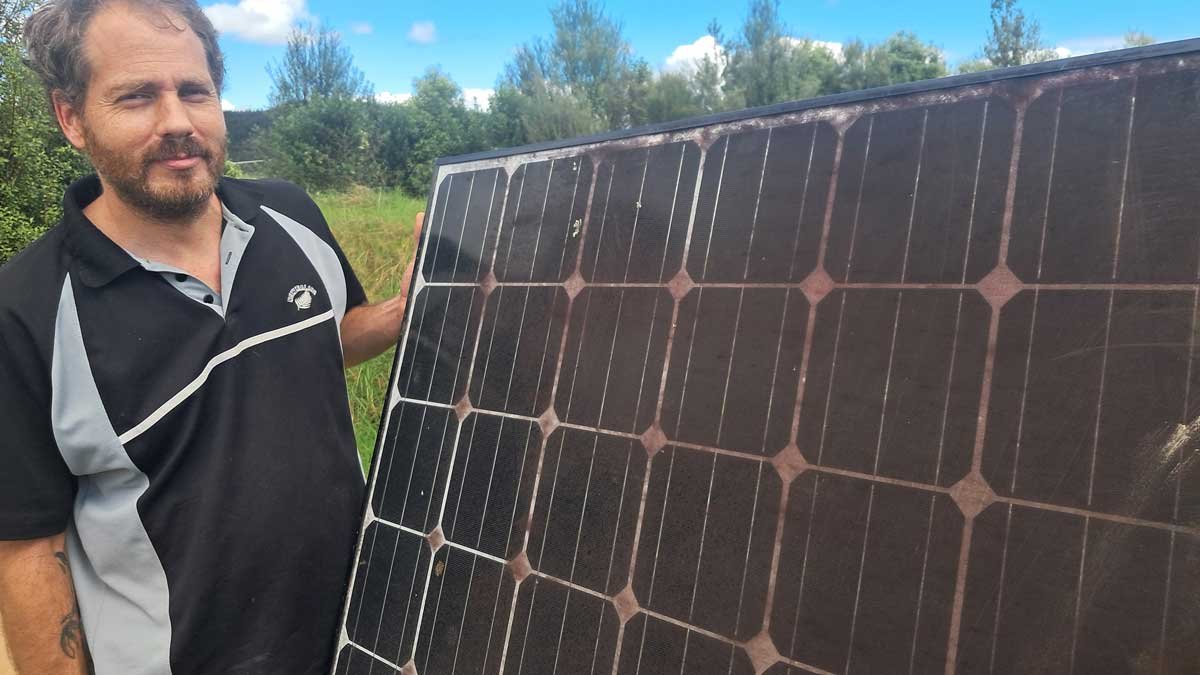
Recently we were given eight second-hand solar panels. With a little elbow grease and some investment in the right inverter, they could probably generate enough power to at least keep the fridge-freezer and the router going in a power cut.
It would be a huge step towards resilience against our biggest and realest problem. But as always, there's a path to clear before it can be fully implemented.
Compared to others around the country, or even in our own community, we usually have it pretty easy. Part of that is our own silly preparedness, part of that is sheer luck.
It pays to be prepared in every way, on every day. Not just when the warnings start sounding.
READ NEXT
Raining in my head like a tragedy
A more in-depth look at the rain that falls on The Outpost, and what we ultimately plan to do about it.
Related content: alternate fuels · animals · climate change · cyclone · Cyclone Gabrielle · Cyclone Tam · deep pantry · emergency preparedness · Far North · flooding · food storage · infrastructure · Kaeo · lifestyle block · power outage · property · resilience · rural life · self-sufficiency · solar · The Outpost
Stay in touch?
The Kat's Garden newsletter gives readers an extra peek behind the scenes. It's the best way to know when new posts go live, and what's happened since.
If you like what you've seen, join us and see what we learn next.