
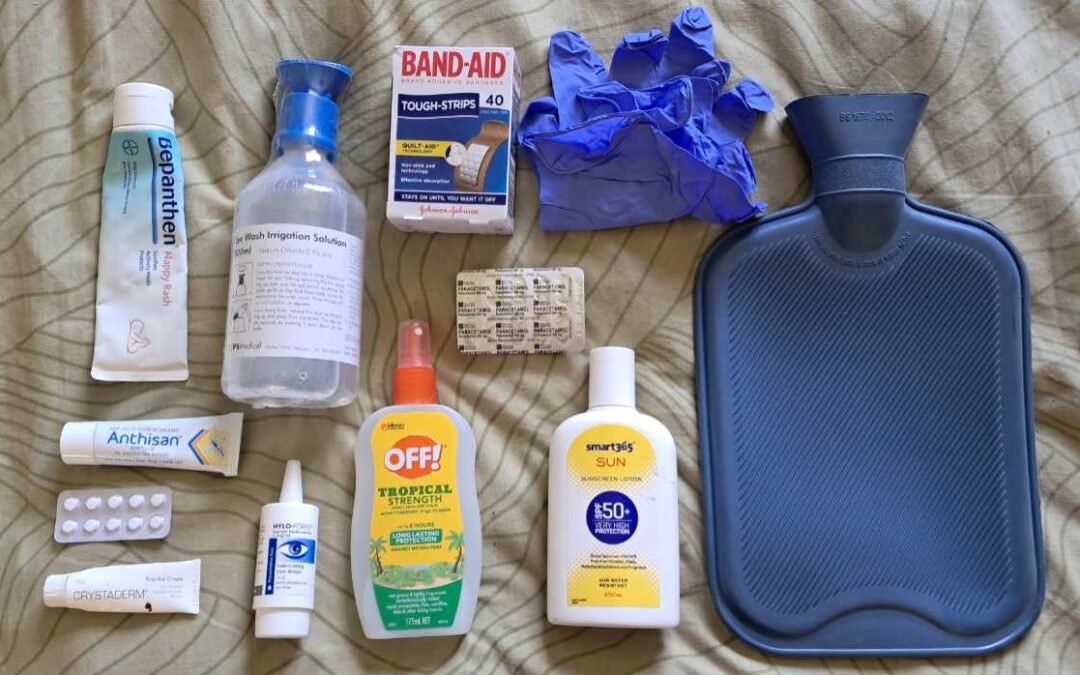
Earlier this month I was planting my peanut crop, and I don't know exactly what happened, but I probably flicked some dirt into my eye? This kinda stuff happens way more than I'm comfortable with, so I was prepared when the discomfort hit me.
A quick saline eye bath took care of it. But I was left wondering how many gardeners have a first aid kit oriented around their hobby (or, in my case, job)?
Probably not enough, was the conclusion I reached. So today's post is about the items I have prepared just in case a garden accident befalls me, and the risks I'm generally aware I need to be mindful of while I grow stuff.
We live far from medical care, and the public health system is chronically overloaded. It pays to be prepared. Gardening just isn't an easy pastime on the average body, and having these things makes it easier on mine.
All of these things are available without prescription, and many of them are in a regular supermarket. None of this is sponsored, it's just stuff I genuinely recommend.
Surviving the garden
Sunscreen and insect repellant can be a proactive approach to preventing problems in the first place.
I use a specialist face moisturiser, and then 'Smart 365' on my body. Smart 365 consistently comes in good in the Consumer annual sunscreen tests, it's available nationally at The Warehouse, and it's also cheap.
For sprains and strains, a few ice pads live in the freezer, and I swear by my hot water bottle for nights when all my muscles are yelling at me. Having spent the first half of my life mostly sitting in front of a screen, my body hasn't been maintained for gardening. Building stamina for it has taken years, and it still hurts.
So a vibrating massage gun has proven a lifesaver for my legs after doing some of the really hard yards in the garden. A stash of painkillers like paracetamol and ibuprofen help with the sore muscles, and also headaches from heat, exertion, and dehydration.
Electrolytes can be more helpful to recovery than a post-gardening beer on a hot afternoon too. I like VitaSport 99% sugar-free electrolytes, which are in supermarkets in a range of actually-delicious flavours.
If you're a bit prone to feeling dizzy when you stand up from the garden, these are a cheap (and tasty) solution to try (and if they don't work, please see a doctor).
And a good hand cream (I love Apicare's Very Hardworkers Handcreme) is also a must with all the hand washing that comes with gardening.
Eye care
Having a disposable eyewash in the first aid kit literally saved my eyesight this year. It's also helpful when you accidentally flick some dirt into your eye.
It might seem a bit overkill to have a couple of these in your kit, but when unopened they have a long shelf-life, and honestly it is better to be safe than sorry.
And if you happen to poke yourself in the eye with something like tī kouka (cabbage tree), harakeke (New Zealand flax), or a yukka, lubricating eye drops are good to have on hand. Eye pain is probably my least-favourite type of pain, and these accidents are something I'm perhaps a bit too prone to.
My optometrist recommended Hylo-Forte lubricating eye drops, available at most chemists. I've found they help a whole lot as your eye heals from the damage.
Absolutely avoid drops that contain disodium edetate, which my optometrist explained is also in bathroom cleaners. There is a much cheaper, more-widely available eye drop containing this ingredient. If you have poked yourself in the eye, it will irritate the wound and makes things worse. Not remotely 'soothing'.
Your eyes are worth the money.
Antiseptic
At any given time, you'll find Bepanthen (soothing and healing), Crystaderm (hydrogen peroxide cream), and antiseptic liquid in our house (because brand-name Dettol wasn't worth the additional cost to me).
Both antiseptic liquids and creams get regular use on cuts and scratches, and occasional use for larger accidents.
A good, healthy garden is filled with all kinds of bacteria and fungi. That's kind of how you get the best results out of your plants.
But open cuts and unprotected skin is exposed to that. And I'd hate for my cause of death to be an infected finger for want of a bottle of antiseptic, you know?
Good plasters
A couple of years ago I was trimming back the thyme when I cut the tip of my finger off. Yup.
And thankfully, I'm prepared. Richard called the neighbours down to help and they were surprised at the sheer size of our first aid kit. They found everything they needed to carefully bandage me up, and for the next couple of months I went about my life with at least two plasters on my finger as it healed.
Over the following six months, whenever my favourite plasters (Band-Aid Tough Strips) went on special, I picked up a box to re-stock. Which means I'm pretty sure we have a five year supply of good plasters now.
Some people have three unopened bottles of soy sauce or balsamic vinegar in their cupboard. I have three unopened packets of good plasters.
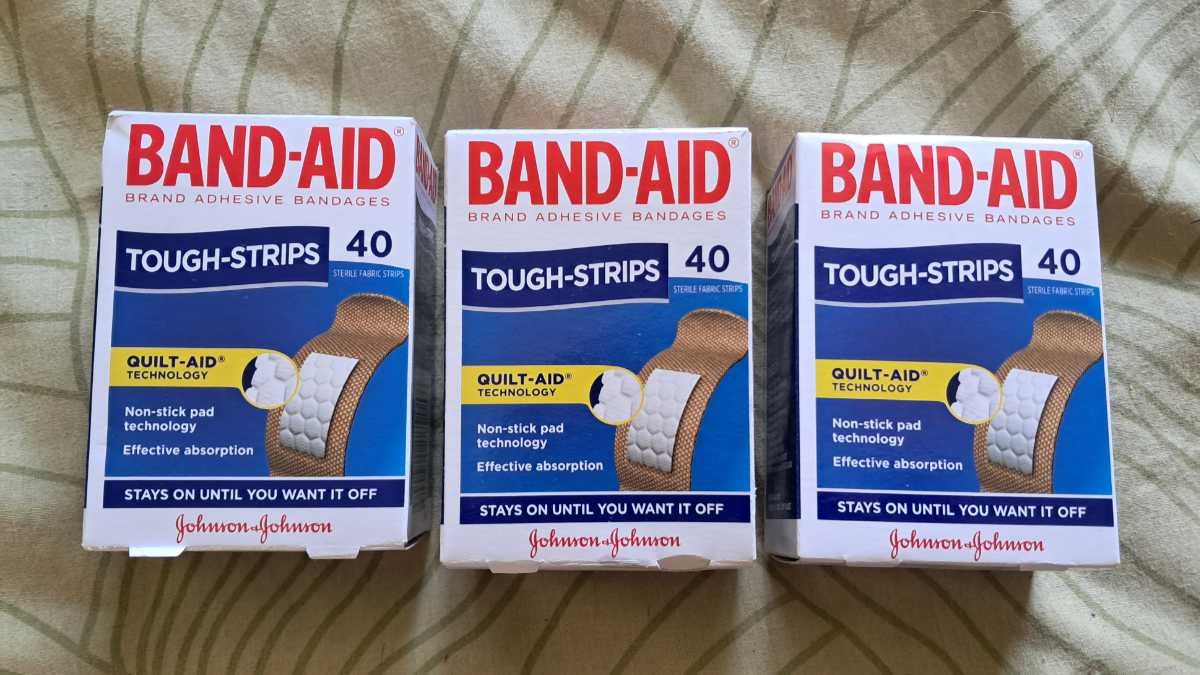
I like Band-Aid Tough Strips, specifically, because they actually stick to my skin—even on my finger. They can take actual use and at least a little water or sweat.
Whether it's a stubbed toe, run-in with a sharp tool, or an enthusiastic pet, they are helpful to have about.
Antihistamines
Yes, for the pollen. But also for the bites and stings. This one it helps to get your doctor on board with because they're considerably cheaper on prescription.
I keep two oral antihistamines: 10mg of Loratidine (sold over the counter as 'Loraclear') for general pollen problems, and Telfast 180mg for bigger problems, like wasp and bee stings. Or for when the pollen is going particularly hard.
I'm allergic to bees, and my experience is that antihistamines can quickly calm any hives. I always take a preventative dose immediately following a bee or wasp sting, and I find it helpful. But if you have a life-threatening allergy, seek actual medical advice about what you should have on hand.
We also keep a stock of Anthisan cream for itchy bites, and it's a miracle.
Gloves and masks
Gardening gloves are a must in the actual garden, and it's worth finding a pair you can work with. I have been a loyal user of Showa Atlas 305 gloves for a very long time now. Whether I'm working with tiny weeds or hulking gorse bushes, they have saved my hands a lot of trouble over the years.
But gloves—I think—are a personal thing. It can take some time to figure out what you like to work in. I hope the risks discussed in this post convince you that it's worth the perseverance to keep yourself protected.
A box of disposable gloves come in handy for a range of things as well. Messy jobs, processing chillis, and tending bloody wounds, for example.
Honestly, if you have access to Costco, a box of their disposable gloves is worth picking up. We don't use them a lot, but often enough that I prefer to just own a big box of them.
And take those warnings about masking up around bagged potting mix and composts seriously. Legionnaires' disease is no joke. A 2025 Consumer test of 20 bags of potting mix found four (20% of the sample) contained low levels of Legionella bacteria. Infection can cause severe pneumonia-like symptoms and land you in the hospital.
There are a lot of things you can do to reduce your risk, but especially if you tend to work inside a greenhouse, it's worth having a P2 or higher particulate mask on while working around loose soils.
And always wash your hands after working with soil and compost.
Bonus points for: an up-to-date tetanus vaccine
Tetanus lives in soil. You can get it if the bacteria enters an open wound. It causes your jaw to lock and your muscles to spasm so hard that your bones can break. About 10% of tetanus infections are fatal. And it's preventable with a vaccine.
It's a real risk for a gardener, and anyone taking their gardening very seriously (e.g. you spend more than 10 hours in a garden each week) should really consider a tetanus vaccine. Effectiveness can wear off over time, and boosters are recommended after 10 years, or 5 if you present to a medical professional with a gardening wound.
In New Zealand, it's part of the Boostrix vaccine, which also prevents whooping cough and diptheria; as well as a couple of other formulations. It's not funded for everyone, but it is funded for a lot of people, so check your eligibility.
This one I consider quite important as I'm quite clumsy and work in a risk-prone situation. I am happy to pay to stay boosted every 6-8 years.
For rural folk: a St John membership
We live ages from a hospital and have one driver (me). And in 2025, we learned that an annual St John membership for us both is less than the cost of a single ambulance ride.
So we decided to start investing some of the Christmas money we are lucky enough to receive into an annual St John Ambulance membership.
And I mean, hopefully it works if we ever need it? The best-case scenario is we never need it and it's a donation to a service that should be fully funded for everyone.
For us, it's peace. It's not a properly-funded health service, but it is the permission to prioritise our health. If we need it, the service is there—paid for—and all we need to do is call.
Growing in the garden itself
For minor burns, I turn to a plant I grow called 'burn jelly' (Bulbine frutescens). It basically sucks the pain right out of burns.
As a plant, it's tenacious, and tolerant of both neglect and drought. For me, it grows better than aloe, and I swear, works better for pain.
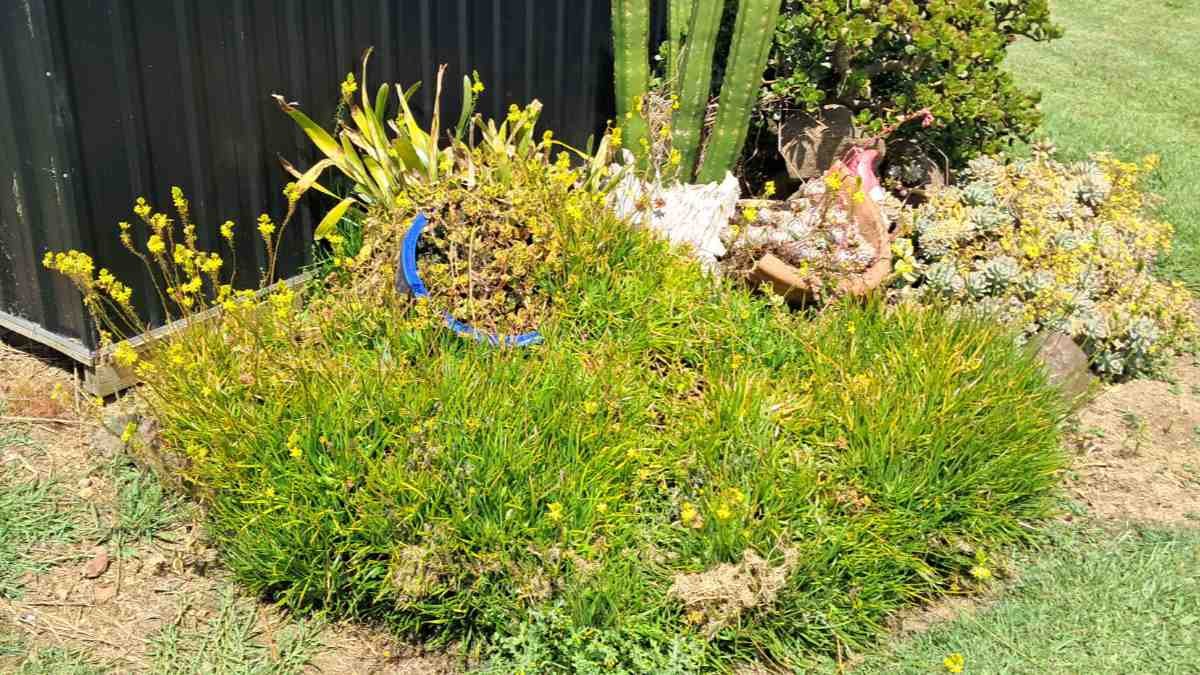
In the case of some kind of global destruction, my garden grows a small apothecary of other natural remedies. I've done the learning to know how to use them, and my physical library of books is literally 20% about herbs and herbal medicines.
I own more books on this specific topic than I do physical fiction books.
But until that time comes, I'll keep appreciating the miracles that come alongside this capitalist hellscape, and keep us stocked and subscribed to the things that make it all a little more survivable.
READ NEXT
Preparing for a cyclone
How do we prepare the farm when a cyclone is approaching?
READ NEXT
The dangers of weeding
My first aid kit comes in handy when I almost blind myself while weeding.
Related content: accident · allergies · antihistamines · antiseptic · bees · emergency preparedness · eye care · eyewash · first aid · garden safety · gardening · health and safety · homesteading · Legionnaires · lifestyle block · paper wasps · PPE · resilience · rural life · St John Ambulance · sunscreen · tetanus · The Outpost
Stay in touch?
The Kat's Garden newsletter gives readers an extra peek behind the scenes. It's the best way to know when new posts go live, and what's happened since.
If you like what you've seen, join us and see what we learn next.




Great advice, and thanks for the plaster recommendation. I always have some Soove cream on hand too, a combo antiseptic and lignocaine, perfect for Hubby, who is beloved by sandflies (who isn’t) and immediately develops outrageous itchy pustules at every bite.