This post originally written in 2020 and updated in 2026.
Pest management can mean a shelf full of sprays, poisons, or doodads designed to deter or kill the little beasties attacking your crops and keep bugs off your plants.
But it doesn't have to. You have a range of options available to you at home already. Control methods are at your fingertips if you know what it is you're fighting.
This week I thought I'd talk about what you can do to control pests the natural way.
Jump to section
1. Integrated pest management
2. Identify your pest
3. Manual control
4. Other control methods
5. Physical barriers
Integrated pest management
Integrated pest management is about reaching a balance with nature so that you don't feel the impact of the pest burden as much. This is the goal I think we should all be working to achieve in the long-term.
When you reach this point, your soils are healthy. That leads to healthier plants which are more resistant to attack.
You know how when your immune system is beat up, that you catch everything going around? It's the same for your plants, and building their immune system begins with healthy soils.
Birds, spiders, wasps, and "beneficial insects" become your partners in your pest management.
Creating a garden full of diverse species, with flowers, water sources, and places to hide means you create a garden that invites these creatures in to feast on your plagues.
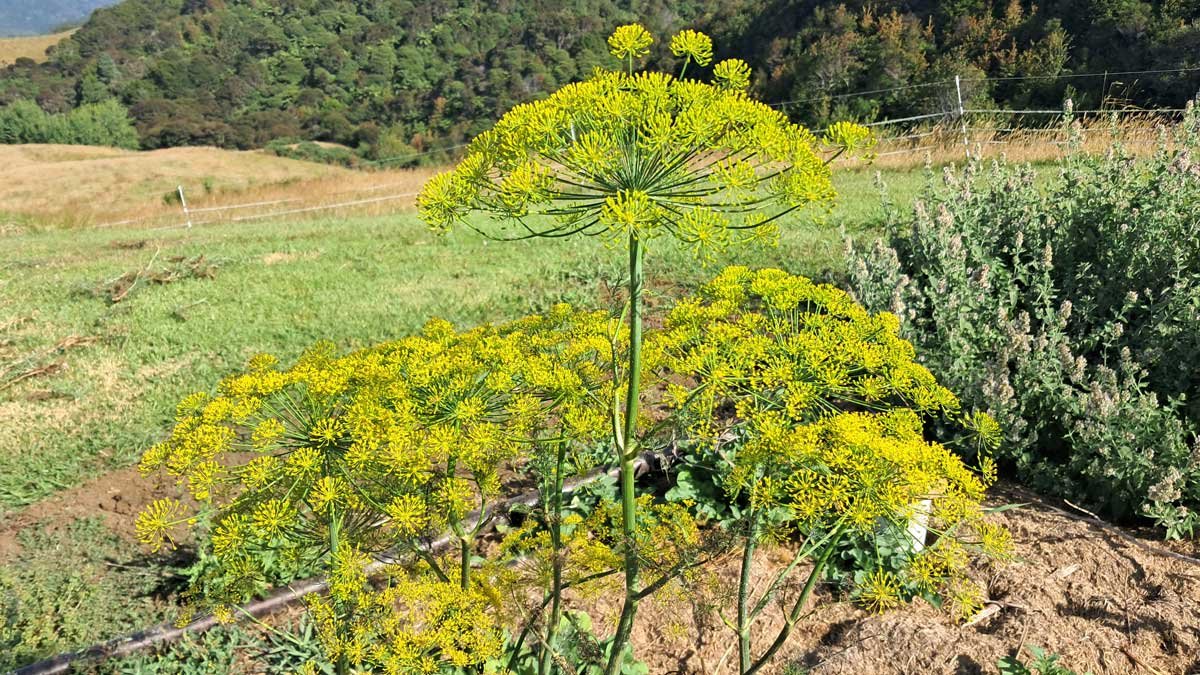
Think about adding flowers like calendula, alyssum, and marigolds to your garden. Herbs like coriander, dill (shown above), and parsley should be allowed to go to seed.
Not only will you get a sustainable supply of fresh herbs, these 'umbel' flowers are also good for inviting predatory wasps and ladybugs into your garden.
Identifying your pest
To choose a control method, you should begin by identifying what kind of pest you have. Here's how I identify the common pests in my garden right now.
The pattern of the damage on your leaves can tell you a lot about who is eating them.
(Click the images to expand).


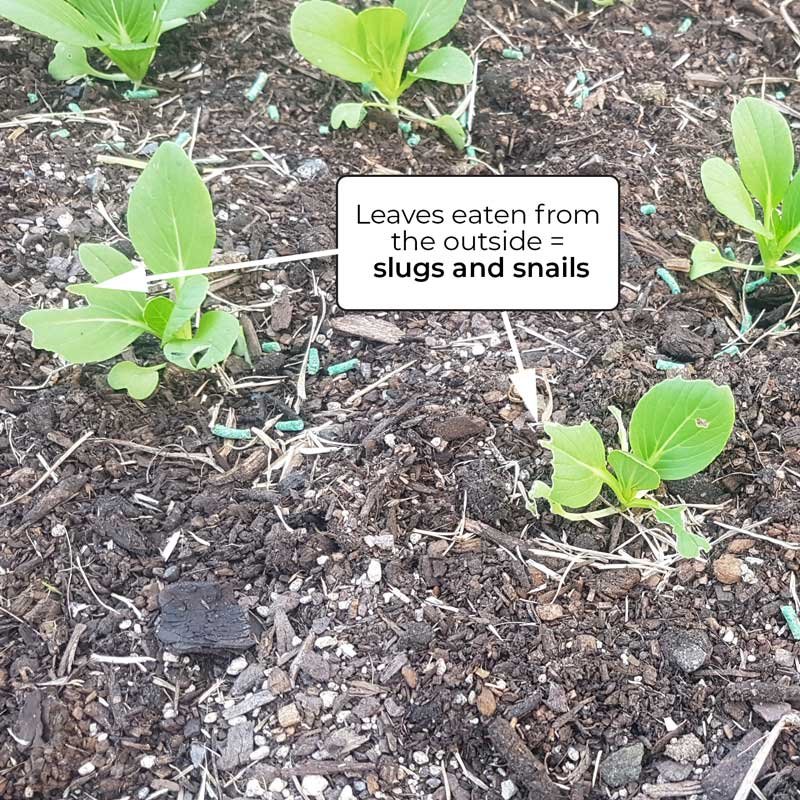
If the leaves are being eaten from the outside > in, or your seedlings disappear overnight, you probably have slugs and/or snails.
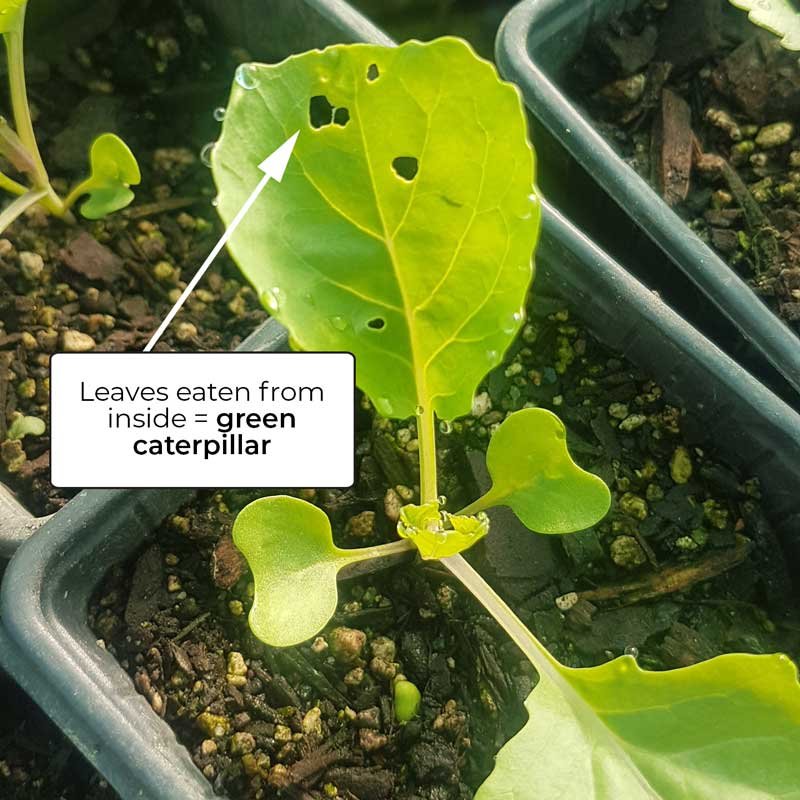
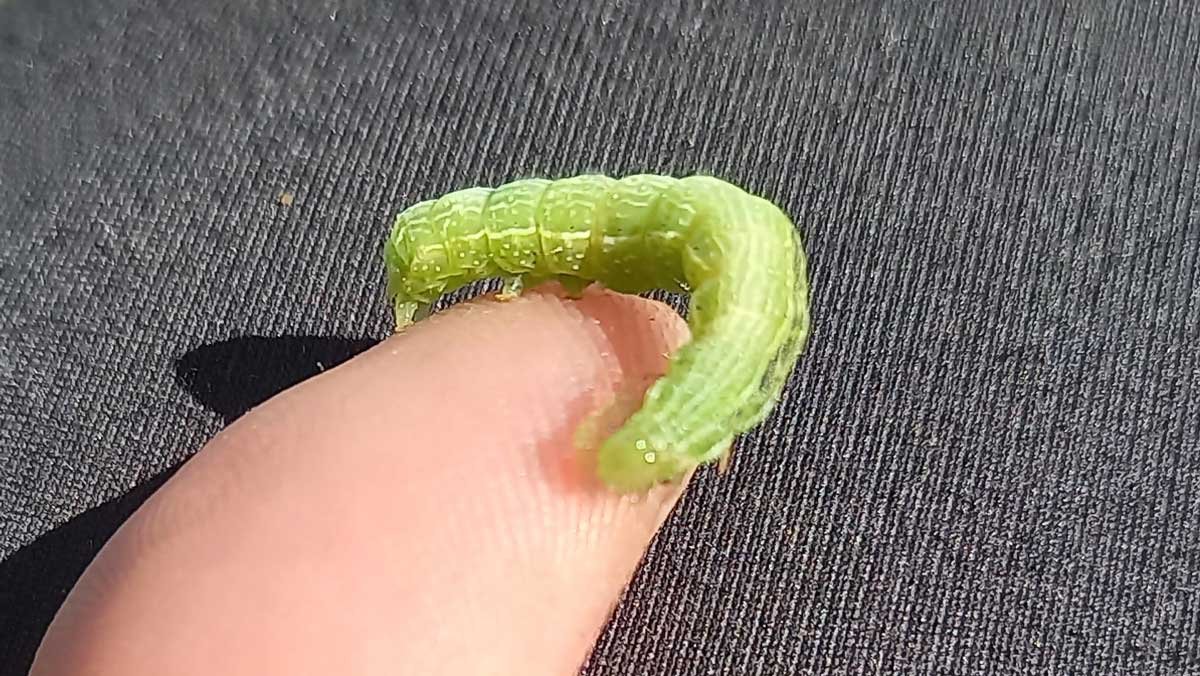
If the leaves are being eaten from the inside > out, leaving small holes, you probably have green caterpillar.

If your fruit/vegetable looks a bit spotty and has 'corky' areas on the skin, or you're not getting any vegetables at all, you probably have green vegetable/"stink" bug.
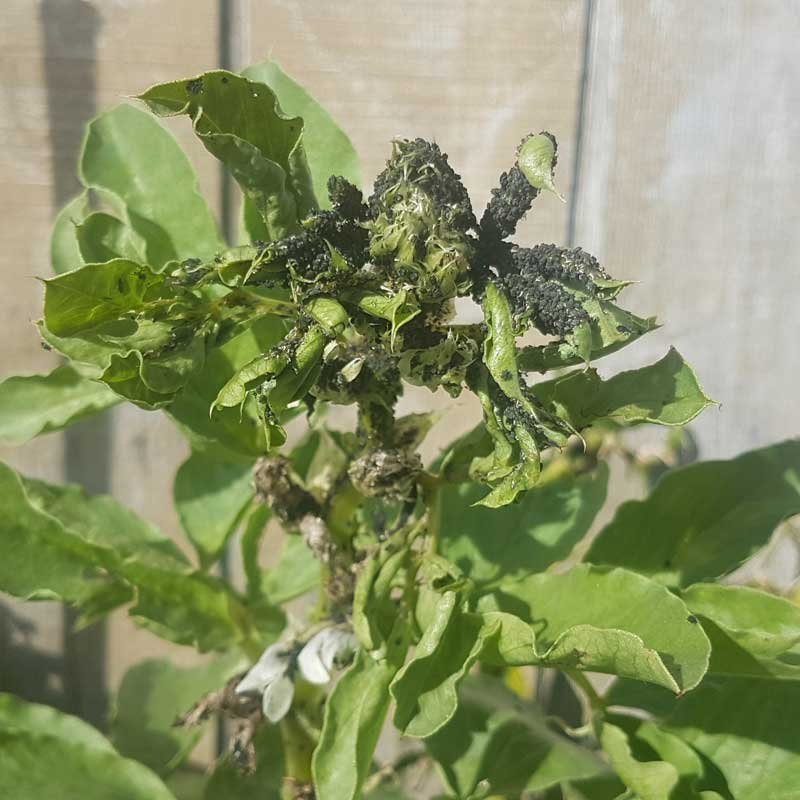
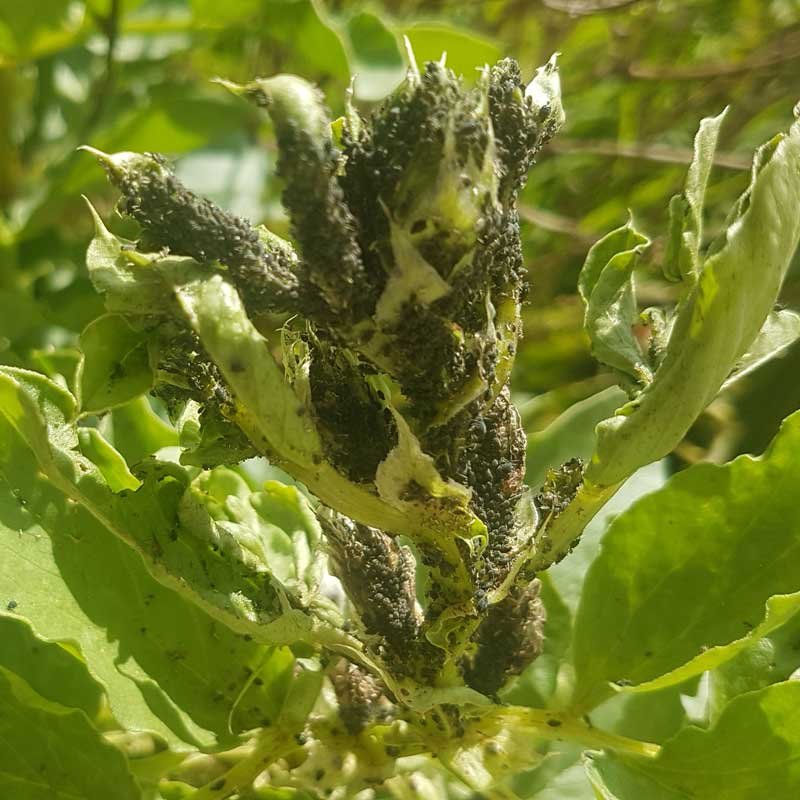
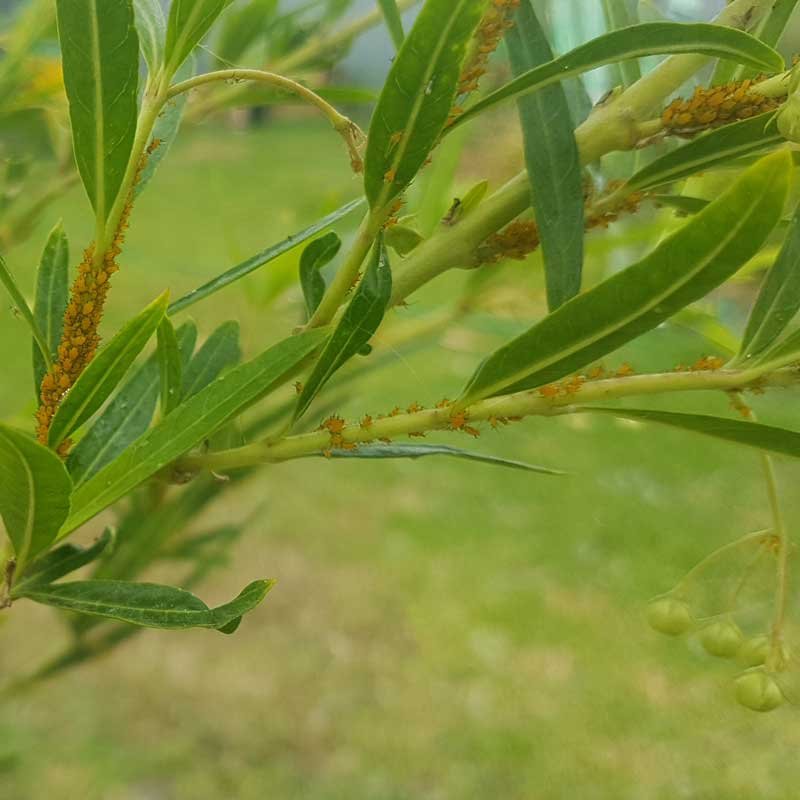
If you have a black, sooty substance collecting on the plant, and lots of small black, orange, white or red insects, you probably have aphids.
Manual control
The most straight-forward and effective way to rid yourself of most pests is to go and pick them off, or squash them with your hands. If you've got them, I recommend gardening gloves for this. Tongs or chopsticks might also be helpful.
For slugs and snails, go out an hour or two after dark. Take a torch and a lidded-jar of soapy water. Pick off the slimy bastards and plonk them in the jar. Check under leaves. The soap and the lid will stop them crawling out the sides of your jar.
For green caterpillars, the moment you see holes in your leaves, run your fingers over the underside to squash them. Keep an eye out for eggs underneath leaves (shown below) on nearby plants and squash them too.


Green vegetable bugs can be drowned like slugs and snails (shown above), but best to do it an hour or two after the sun hits your garden. They seem to like to sunbathe. Don't squash them as the stink they let off will tell all the others to hide.
Aphids can be squashed. Run your fingers over the plant and just squash them all.

Other control methods
Some of these methods are more unusual than others. Their effectiveness may vary. They also require you to have some sort of equipment at home. I've collected as many as I can that use the most common of ingredients in order to give you some choices.
Slugs and snails
An upside-down pot will provide refuge for your slugs and snails during the day. Go out at your leisure, turn over the pot, and drown any who have chosen to hide there in soapy water (as talked about under 'manual control'). Place a few pots around the garden. Bowls will probably work as well.
Coffee grounds and broken eggshells sprinkled around your plant in quite heavy amounts will reportedly deter them. Dry your eggshells in the oven on the lowest temperature for an hour first. You'll need quite a lot. They don't like the jagged qualities of the eggshells, but I don't know why coffee might work.
If you're lighting the fire already, apparently a circle of the ashes around your plant is an effective deterrent, They'll need to be refreshed after rain though. This will affect the pH of your soil if done too often and that will affect how future crops grow, so be careful with this one.
A beer trap may catch a few (instructions here). Yeast with some sugar and flour in warm water may work too (instructions here). If you try it, place your traps on the edges of your garden—before they reach your plants.
Salt will basically melt slugs by absorbing the moisture from their skin as they move over it. It will also kill your plants. But if you have a lot of salt, and maybe some paved areas you can use to put a barrier on, this might help reduce the population. Salt will not work for green caterpillars though as they, like us, have a skin barrier.
Green caterpillar
The green caterpillars munching into your brassicas come from white butterflies.
Apparently, butterflies are territorial and won't go into another butterfly's patch. I don't know if this works, but one method I've seen is to make decoy butterflies (instructions here) as a caterpillar deterrent. If you try this, I'd love to know how it goes.
If you've got some fresh or dried chilies, you can try making a chili spray (instructions here). The caterpillars don't like their leaves spicy. Make sure to spray under the leaves as that's where they eat from. You'll need to reapply after rain.
Companion planting garlic (or onions, or spring onions) near your vulnerable crops may help too.
Green vegetable/stink bug
It pays to learn what this one looks like at different stages of its lifecycle. To the untrained eye, juveniles can look like a ladybug.
It's possible the chili spray mentioned above might deter them, but you're going to have to drench every plant in your garden as it is only a deterrent.
As the temperatures are dropping, I'm noticing the numbers are dropping off. If you happen to have it, neem oil looks like it might work. Derris dust, or products with pyrethrum might work too.
If you don't have those, manual control is your best bet.
Aphids
Aphids will suck the life out of your plant, but they're not very hardy. You can spray them off with a hose (unless you are under water restrictions, I guess).
Aphids don't seem to like garlic much either. You can give the garlic spray a try. Or companion planting onions, spring onions, or garlic near problem crops might work too.
Physical barriers
"Bug net" (or insect net) is a physical barrier that will stop most pests reaching your crops in the first place. I've come to the conclusion it's the only way we'll get crops of corn, tomatoes, or capsicum in the future as armyworm has become such a massive pest in my garden.
It can be pretty expensive, but a good one will last several seasons. I recommend the one you can get at The Warehouse, which have been going for years in my garden, or the Cosio bug net—which is available in 4m widths by the metre, in 30m rolls, and in 4m x 4m pieces at Mitre 10.
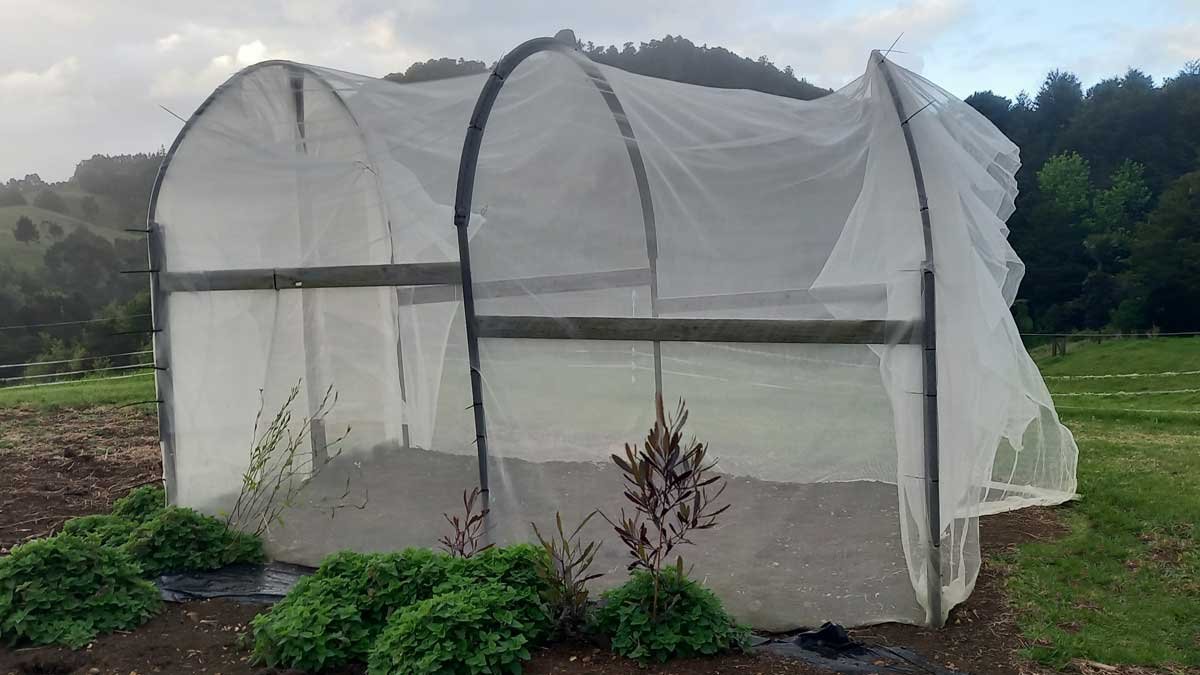
In 2023, we decided to go ahead with buying a roll, and built this bug net house over an entire garden bed.
While the original untreated Taiwan Cherry poles have rotted out, the bug net is going strong in 2026 and has made a huge difference to both our overall pest burden, and the quality of our crops!
Still, you don't have to build a huge structure. Cloche hoops will hold the net above your crops.
Number 8 wire attitude
Do remember we're a nation of creative thinkers. We've spent years filling our houses with stuff and things, so the solution is probably available to you if you look.
Gardening was possible before garden stores existed, it is possible without running there for solutions to every problem.
READ NEXT
White cabbage butterfly
A deep dive into the lifecycle and control options available for green caterpillars.
READ NEXT
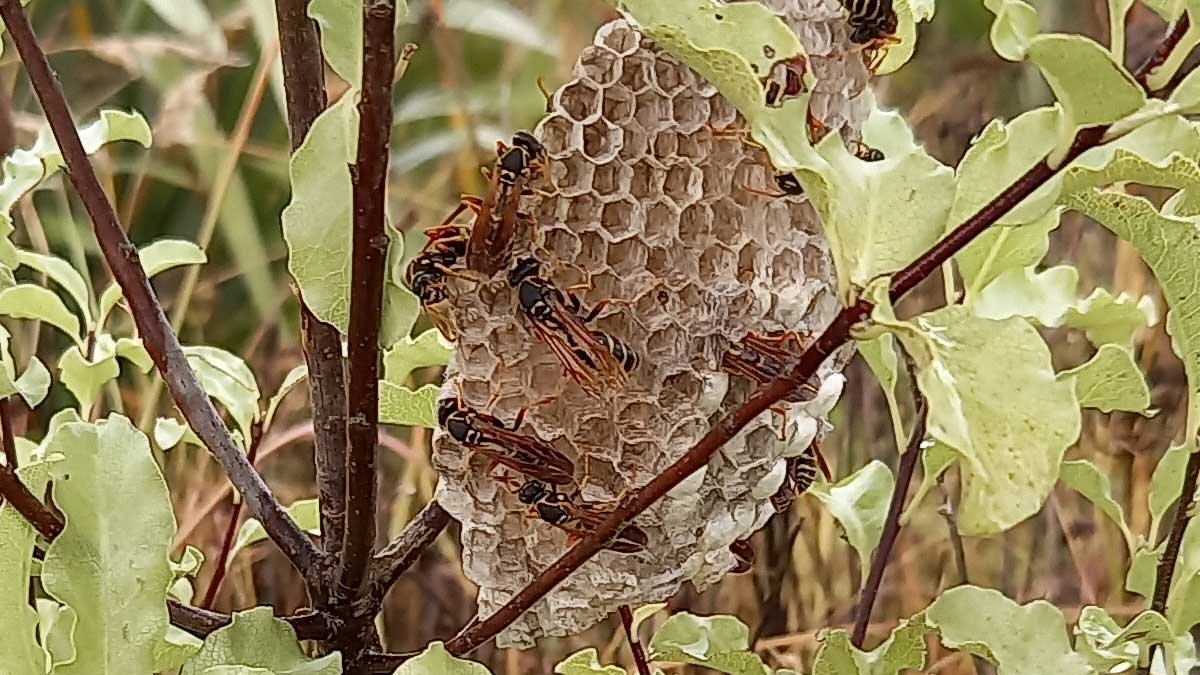
Paper wasps in New Zealand
Learn more about the habits and control methods of paper wasps.
Related content: aphids · armyworm · brassica · caterpillars · companion planting · gardening advice · garlic spray · green caterpillar · green vegetable bug · how to · neem oil · pest control · pests · slugs · snails · white cabbage butterfly
Stay in touch?
The Kat's Garden newsletter gives readers an extra peek behind the scenes. It's the best way to know when new posts go live, and what's happened since.
If you like what you've seen, join us and see what we learn next.